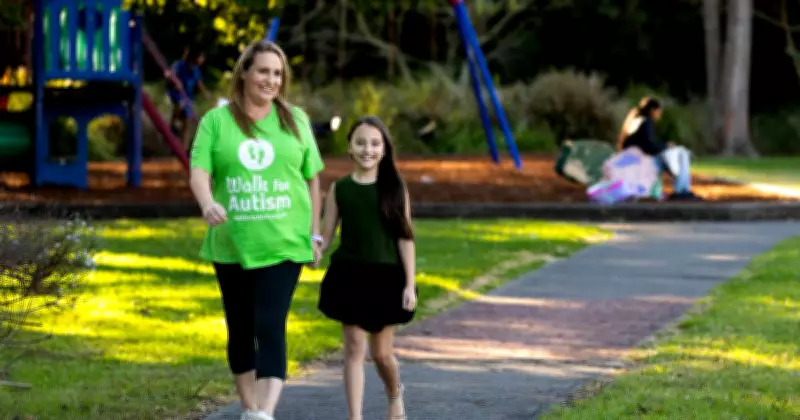
When Hope Day was two years old, she stopped speaking. Her mother, Amanda Keyes, recalls the early signs and the eventual diagnosis that changed their lives. Hope, now eight, was diagnosed with autism at age four, but her mother had suspected it much earlier.
A Mother's Intuition
Ms Keyes said she knew something was different about Hope when she was about 18 months old. 'I had a gut instinct. I said to my family I'm pretty sure she has autism,' she said. Hope initially met her developmental milestones, but at age two, she regressed. 'She started off hitting normal milestones. When she regressed at age two, everything paused. I couldn't brush her hair or put her clothes on,' Ms Keyes explained.
Walk for Autism
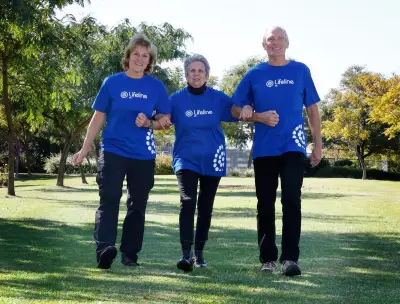
This month, Ms Keyes is participating in the Walk for Autism, aiming to complete 7000 steps a day. The event raises funds for inclusion initiatives and research through Autism Spectrum Australia, also known as Aspect. Ms Keyes said she is doing the walking challenge to help create a more understanding and inclusive world for Hope's future. 'Every step represents advocacy, visibility and support,' she said.

Open Conversations About Autism
Ms Keyes has been open with Hope about her diagnosis. 'I told her straight away. I didn't want her to think there was anything wrong with her,' she said. Hope views her autism as a gift, which her mother encourages. 'If we guide her the right way, then 100 per cent that's what it is. An example is that it makes her more creative,' Ms Keyes added.
The Role of Therapy
Speech pathology played a crucial role in Hope's development. She did not speak again until age four, but now she is talkative. 'Now she does not stop talking,' Ms Keyes said. 'She does a lot of work on volume and constructing sentences in the right way - not just blurting something out.' Occupational therapy at the Willow Tree Clinic in Kotara has also been instrumental. Hope has sensory issues, particularly with lifts, which she avoids due to sensory overload. 'She won't get in a lift, so we have to take the stairs everywhere we go,' Ms Keyes said. Through therapy, Hope works on challenges related to her vestibular system.
Progress and Support
Ms Keyes said Hope has made enormous progress, thanks in part to her school, Glendale East. 'She has come a long way,' Ms Keyes said. Hope approaches life with a sense of awe and wonder, which has profoundly affected her mother. 'She has really opened my eyes. It's like experiencing everything for the first time with her. She's completely changed me,' Ms Keyes said. 'Now I meditate three times a day because Hope feeds off my emotions so much. It's for the better. I wouldn't change a thing.'
Hope's Magnetic Personality
Ms Keyes describes Hope as magnetic, drawing people to her. 'We called her Hope because we all need a little hope in life,' she said. 'I say to everyone, in this case we got a lot of hope because she brings so much joy into all our lives.'
The Importance of Inclusion
An Autism Spectrum Australia statement noted that the fundraiser brings together individuals, schools, workplaces and communities. The statement highlighted that 70 per cent of autistic people face mental health challenges because the world is not autism-friendly. 'By joining Walk for Autism, your steps and fundraising will go a long way to help create autism-friendly environments and deliver services that support autistic people to thrive,' the statement said.
Support Ms Keyes' fundraiser at walkforautism.org.au/fundraisers/amandakeyes.