
More than 80 commercial ships have turned off their tracking systems in the Strait of Hormuz over the past five weeks, a tactic known as 'going dark,' but maritime experts warn it is unlikely to restore normal oil flows or reduce fuel prices.
Marine intelligence company Windward has been monitoring the strait and revealed to the ABC that vessels are switching off their Automatic Identification System (AIS) in an attempt to navigate the conflict zone undetected.
What does 'going dark' mean?
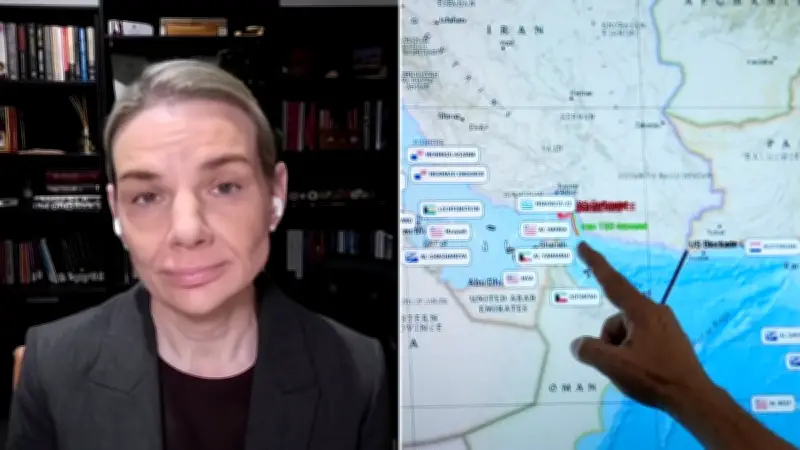
Maritime security expert Jennifer Parker explained on Sunrise that 'going dark' refers to ships deactivating their AIS transponders, which are required under international law for vessels over 300 tonnes. 'It gives their location, their speed, where they're going,' she said. 'We're seeing that in the Strait of Hormuz some ships are turning it off in the hope that Iranian forces won't be able to detect them.'

While dozens of ships have successfully transited the waterway, Parker noted that the numbers, which are yet to be verified, remain well below normal levels. 'Normally you see about 130 ships going through the Strait of Hormuz a day, about 30 to 40 of those being oil tankers,' she said. That number has now dwindled to 'five or six a day,' which is consistent with what has been observed throughout most of the conflict.
Stranded ships and sea mines
Many of the vessels making the journey are among an estimated 2,000 ships, carrying 20,000 seafarers, that have been stranded in the Persian Gulf for months. The situation is further complicated by Iranian sea mines deployed in the traffic separation scheme, the designated shipping lane used by vessels traveling through the strait. Some mines have detonated simply from the sound of a ship, prompting many vessels to avoid the traffic separation scheme until the mines can be cleared.
'This isn't going to be returning oil flows to normal at all,' Parker said. Discussions are underway involving UK and European forces about potential mine-clearing operations, but those efforts have not yet begun.