
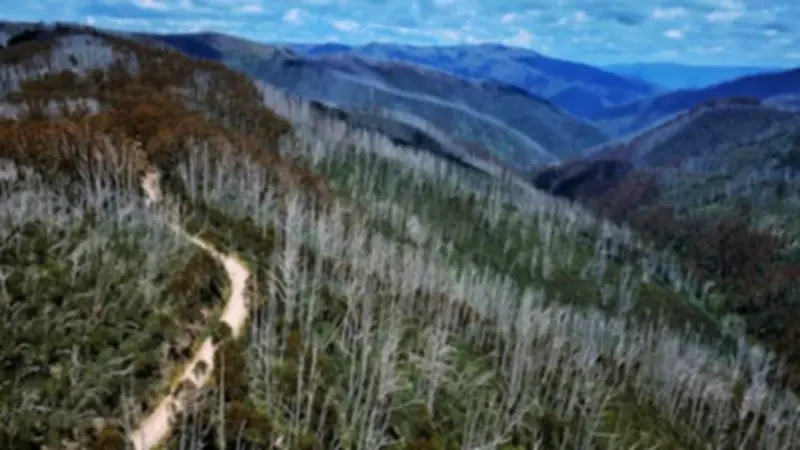
A new study warns that Australia's alpine ash forests, already listed as endangered, could decline by 49% to 65% over the next century under current climate and fire conditions. The research, published in a leading journal, uses computer modelling to simulate the fate of these iconic ecosystems in the Australian Alps.
Alpine Ash: A Unique and Threatened Ecosystem
Alpine ash (Eucalyptus delegatensis) is a tall eucalypt species found in the cool, wet mountains of southeastern Australia. These forests store large amounts of carbon, regulate water flows into major rivers and dams, and provide habitat for diverse birds, mammals, and insects. However, increasing bushfire frequency and severity due to climate change threaten their survival.
Alpine ash is an "obligate seeder," meaning it can only regenerate from seed after a major disturbance like a bushfire. Adult trees die in fires, but heat opens their seed capsules, releasing seeds for regeneration. This strategy fails if fires return before young trees mature and produce seeds—a process called "immaturity risk." The devastating Black Summer fires of 2019-20 exemplify this threat, as some regions burned repeatedly within years.

Study Methodology and Key Findings
The research team used a powerful computer model to simulate alpine ash ecosystems over the next century under different climate scenarios. They focused on the Australian Alps, the country's highest mountain range, and examined three main questions: what drives alpine ash decline, how important is reproductive age, and how effective is aerial resowing at a landscape scale?
The results were striking. Across all scenarios, alpine ash forests shrank dramatically—by 49% to 65%—over 100 years, even without considering future climate change. The main drivers were aridity (hot and dry conditions) and current bushfire frequency and severity. However, the age at which trees first produce seed proved critical.
When the model assumed trees could produce seed at seven years (rather than the typical 15), about 96,000 more hectares of alpine ash forest would survive in a century—approximately 14% of existing mainland forests. Surprisingly, aerial resowing after fires only boosted survival marginally, saving between 1% and 3% of forest area over 100 years.
Hard Decisions Ahead
"Our findings show even current climate and fire risk are enough to push Australia's alpine ash forests towards long-term decline," said lead author Benjamin Wagner. "Therefore, authorities have to make hard decisions about which areas can be saved—and which can't."
To guide these decisions, the study recommends the resist–accept–direct framework. In high-value areas, managers can "resist" change through fuel management and targeted resowing, though resowing is less effective at large scales. In high-risk areas, they may need to "accept" that alpine ash will be replaced by more fire-tolerant vegetation, such as resprouting eucalypts. In remaining areas, managers can "direct" change by introducing fire-resilient species like mountain gums or snow gums, or by planting alpine ash in new locations.
Conclusion
The future for alpine ash is likely to be a mixed bag. Landscape-scale models like this one can help map which areas can be protected, which cannot, and what actions are most effective. As Wagner noted, "It also means we can't wait for the future to unfold. To protect this important species, we must make targeted decisions about which regions to prioritise now."