
The admissibility of a viral video in which two Sydney nurses allegedly threatened Israeli patients has become a key question before a bombshell trial this year, with the court being told the pair were recorded in the interests of “vigilantism”.
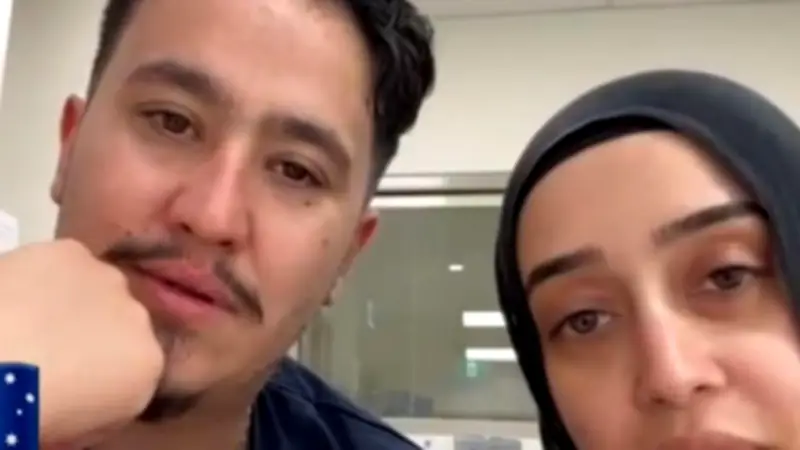
Sarah Abu Lebdeh, 27, and Ahmad Rashad Nadir, 28, made international headlines last February after a video of the pair spread online in which they allegedly threatened violence against Israeli patients at Bankstown Hospital, in Sydney’s west.
The pair attended the Downing Centre District Court on Thursday for a hearing ahead of their trial at the end of August.

The admissibility of the video is a key part of their defence, with an argument unfolding in court again on Thursday as to whether the video was recorded without consent, and will therefore be inadmissible at trial. In the two-and-a-half minute video, recorded by Israeli influencer Max Veifer, the nurses allegedly threatened violence against Israelis who came to the hospital.
Mr Nadir’s lawyer Zemarai Khatiz told an awaiting media scrum on Thursday afternoon it will be a “devastating blow to the prosecution” if the video is thrown out.
“We have argued that it was a private conversation that was unlawfully recorded,” he said. “The judge has heard detailed submissions and arguments and will consider it in due course.”
Lawyers for the nurses have argued the video, which took place on an online random video chat website, was part of “a private conversation”, and was posted in the interests of “activism” and “content creation”.
“It’s vigilantism,” Barrister Greg James AM KC said. “He’s an activist … he’s seeking to draw out opinions … and he’s not protecting himself from them, he’s capitalising on them. It’s not simply just a recording, but he urges his followers to identify the people concerned and the circumstances so he can use this material against them.”
The argument that the video was recorded for Mr Veifer’s protection is disproportionate, Mr James said, given he was in Israel and the nurses were in Sydney. “In doing so, in the purpose of his activities as an activist and content creator … to say (the recording) is for my protection could mean, at best, ‘so I get it right’.”
While the Crown argues the recording of the video took place in Israel, where Mr Veifer was at the time, the defence argues the recording took place where the sound of the nurses’ voices were originating from, in this case Sydney. The Crown claims the argument that the video was recorded in NSW because that’s where the sound originated from through a microphone connected to Israel is the equivalent of saying you’re using “the same microphone as Mick Jagger at a concert”.
“Yes, it seems … a bit of a stretch,” Judge Michael McHugh said.
In NSW, under the Surveillance Devices Act 2007, it is illegal to record a “private conversation” or activity without the consent of the parties involved, and carries a maximum sentence of five years imprisonment.
Ms Abu Lebdeh has pleaded not guilty to using a carriage service to menace, harass or offend and threaten violence to a group. Mr Nadir has pleaded not guilty to using a carriage service to menace, harass or offend. The pair remain on bail.
The video attracted widely circulated criticism at the time, and made international headlines. The pair, who have both been stood down from their jobs by NSW Health, have also been hit with a two-year ban from working with NDIS participants.
The trial is expected to span over five days. Judge McHugh reserved his decision on the video’s admissibility, and is expected to hand down his judgment on June 23.