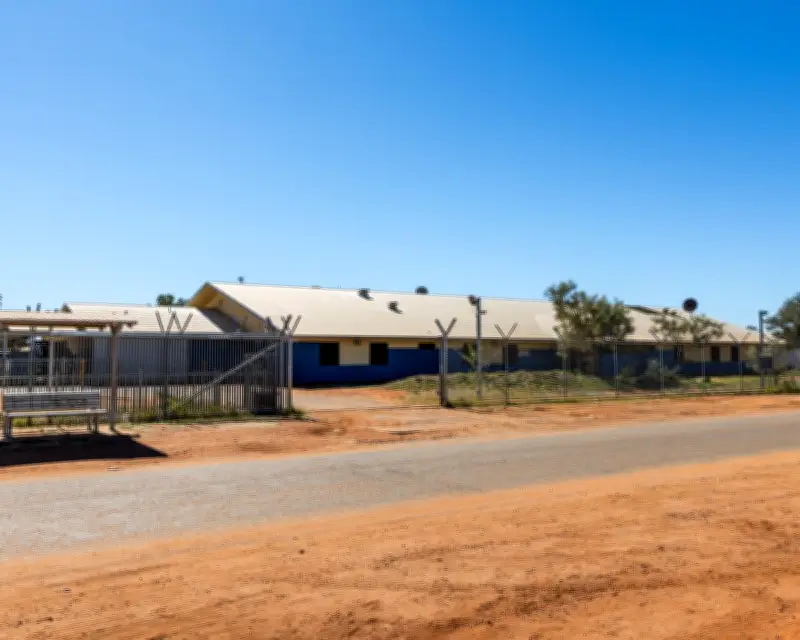
The remote Aboriginal community of Yuendumu, at the centre of the Northern Territory's diphtheria outbreak, is struggling to cope with rising case numbers. Locals report that the health clinic has no hand sanitiser and that there is limited information about how to avoid the disease or what to do if you test positive.
Since October, over 240 cases of the once-eradicated disease have been reported in Australia, primarily in remote Indigenous communities in the NT, South Australia, Queensland, and Western Australia, according to the Australian Centre for Disease Control. One of the largest clusters is in Yuendumu, a community of about 700 people located 300 kilometres from Alice Springs.
Unsanitary Conditions and Lack of Information
Yuendumu has a health clinic and community health centre, but several locals told Guardian Australia that the clinic is often in an 'unsanitary' state, with no hand sanitiser available. Despite the Territory government providing resources in several Indigenous languages, including Warlpiri, locals say there is limited understanding about the disease and little visibility of public health information.

Warlpiri man Eugene Penhall expressed frustration: 'The thing about this outbreak is that we've never been told what it is. How we live as Aboriginal people, we have 10 people in one house. They could be carrying this thing that we don't even know about and it's really, really bad.'
Penhall only became aware of the outbreak when he visited the clinic for another reason. 'They ended up telling me about the vaccine, so I had to take it. They just gave me the vaccine and told me about this new thing, and I don't even know what this thing does. I asked if this was like Covid, but with this one, we've never been told to do anything. We've been living close to one another, walking around and doing normal stuff.'
Increased Flying Doctor Visits
Another local, Warlpiri man Ryan Woods, said the Royal Flying Doctor Service has been flying into the community daily, compared to weekly visits before the outbreak. Woods noted that relatives living at his house had been infected with diphtheria, but he was not staying there. He said there had been 'no information on how we can stay away from it. There's no hand sanitiser anywhere. I've seen people go to the clinic, wait one hour and then leave because no one is looking to help them.'
NT Health did not respond to claims about the lack of hand sanitiser or information on isolation. In a statement, a spokesperson said the Yuendumu Health Centre remains open and 'no locals have been refused health services.' They added that NT Health continues to engage with Aboriginal health organisations and primary care services to inform the community and increase vaccination, including contact tracing, testing, and education sessions.
Three-Week Wait for Test Results
Julie Watson, a programs coordinator for the Southern Tanami Kurdiji Indigenous Corporation, has lived and worked in Yuendumu for two years. She said people have been told to wait up to three weeks for diphtheria test results, compared to just four days at Alice Springs hospital. 'Everyone has been told that there is a three-week minimum wait before they get a result. People are being told to isolate, but they are not being told how long they need to isolate for, so we don't know. Like, what PPE we might need to wear, like gloves, masks or whatever. There's been no education whatsoever for community.'
Watson said service providers were not immediately informed about the outbreak. 'Nobody really knew what the sickness was, nobody from the health clinic let anybody know what it was. Cases were increasing and we were hearing the plane fly in more than we would normally hear, so people were getting evacuated and nobody was quite sure why. I guess it eventually leaked from the clinic that it was diphtheria and given that it is such an old illness, we didn't really know what that was because it hasn't been around for a long time.'

Government Response
The NT government did not issue a health alert about the outbreak until March, several months after the first cases were reported. It has since established pop-up vaccination clinics in Darwin, Katherine, and Alice Springs, and a mobile unit in central Australia. The Australian government announced a $7.2 million package to assist the disease response, including $5.2 million for a surge workforce to administer booster vaccinations. Public health ads have been run in language on local radio stations, and posters and infographics have been supplied to community-controlled health networks, according to the NT Health spokesperson.
But Penhall says the response has not been clear enough. 'The government needs to let people know if these sorts of things happen.'