
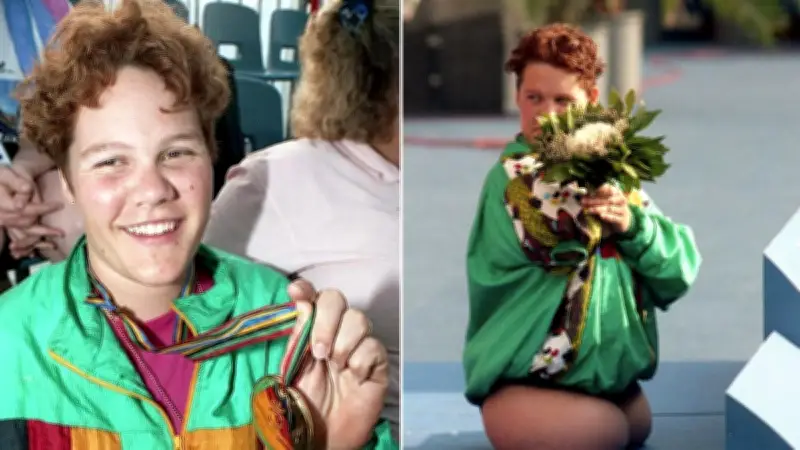
Tracy Barrell OAM, a two-time Paralympic gold medalist and one of Australia's most prominent disability advocates, has been stripped of 96 per cent of her National Disability Insurance Scheme (NDIS) funding, leaving her with just two hours of care per day after four years of receiving around-the-clock support.
Barrell, who won butterfly and freestyle swimming gold at the 1992 Barcelona Paralympics and a bronze at the 1994 World Championships, requires assistance for basic tasks such as eating, showering, dressing, and leaving the house. Born without legs and with only one arm, the 52-year-old First Nations mother-of-two has spent decades challenging misconceptions about disability.
From gold medals to a fight for dignity
Barrell was the first female First Nations Paralympian to win gold for Australia and later became the face of the NDIS in New South Wales during its initial rollout. She also served on the working group for Paralympics Australia's Reconciliation Action Plan, sits on the board of the National Indigenous Sports Foundation, and was elected to Paralympics Australia's Athlete Commission in 2024.

"After all the contributions I've made in all my years, representing Australia, winning gold medals, receiving the (Order of Australia) medal, raising two kids on my own ... I've just been stripped of everything for no reason," Barrell told 7NEWS.com.au.
The decision to cut her funding was triggered by a "change of circumstances" application for a new in-home hospital bed. According to Barrell, the NDIS concluded that funding the AU$6,000 bed meant she no longer required 24/7 care. Her medical specialists warn that without this level of support, she faces a high risk of falls, pressure sores, and depression, as detailed in a 21-page functional capacity report.
Decades of independence undermined
Barrell did not receive NDIS support for the first 42 years of her life, even as a single mother raising two children. Her use of a skateboard instead of a wheelchair—now displayed in the Tweed Regional Museum—was one reason she was initially denied eligibility. However, decades of relying on her one arm have taken a toll on her spine.
"The only thing I've got left is failing me," Barrell said. "Because of my physical body and using the one arm my whole life, I've put so much pressure on my spine and it's just crumbling now because it can't support itself as I'm aging. Some days I can't even use my arm—my carers have to feed me and wipe my face."
Under her new NDIS plan, Barrell will only have enough funding for carers to assist with medical appointments and grocery shopping. She said she must bank her funding for a single outing per week and can no longer participate in her Indigenous community. "I'm just nothing. I'm just devalued. I'm a nothing," she said.
Process concerns and human rights implications
Barrell said the NDIS decision was made without affording her the 21 days she requested to present a new functional report. An NDIA officer reportedly failed to send an outline of the new plan before closing her previous one. An NDIA spokesperson told 7NEWS.com.au that participants have the right to request a review and that the Agency remains in contact throughout planning processes, but they could not comment on individual circumstances.
National Disability Discrimination Commissioner Rosemary Kayess has raised human rights concerns about proposed NDIS reforms, echoing findings from the Parliamentary Joint Committee on Human Rights (PJCHR). "The PJCHR findings reflect our concerns that the cumulative impact of these changes could amount to an interference or regression on the rights of people with disability in Australia," Kayess said. She called on Disability Minister Mark Butler to explain how the reforms align with Australia's obligations under the UN Convention on the Rights of Persons with Disabilities.
Barrell is now fundraising to cover the cost of carers while she fights to have the decision overturned. "If I'm stuck with this plan, I will just end up in hospital," she said. "That's not anyone's dream."