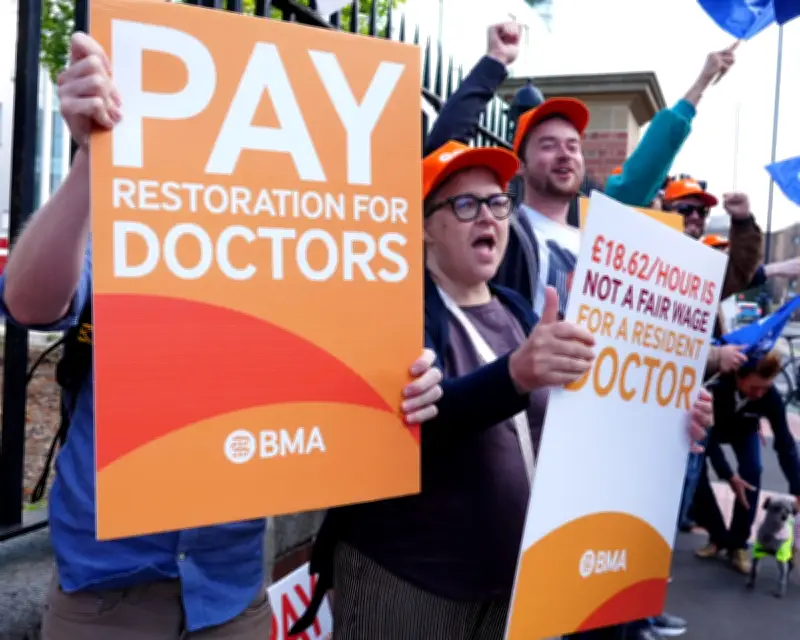
Resident doctors in England have voted overwhelmingly to accept a new pay deal, bringing an end to a bitter dispute that has seen repeated strikes over the past two years. The British Medical Association (BMA) announced on Tuesday that 66% of its resident doctor members voted in favor of the agreement, which includes a 22% pay rise over two years and commitments to address working conditions and career progression.
Details of the deal
The pay deal, which was negotiated with the government in April, will see resident doctors receive an average 8.8% pay increase this year, followed by a further 12.2% next year. In addition, the agreement includes a one-off payment of £1,000 to cover the cost of strike days, as well as reforms to the pay review body process and a commitment to reduce the number of mandatory training days.
Dr. Vishal Sharma, chair of the BMA's resident doctors committee, said: "This is a significant victory for resident doctors who have stood together for over two years to demand fair pay and better working conditions. The deal is not perfect, but it represents a substantial improvement on what was on the table before."

Impact on the NHS
The end of the dispute is expected to bring relief to the NHS, which has been severely disrupted by strikes. Since March 2023, resident doctors have staged 11 walkouts, causing the cancellation of hundreds of thousands of appointments and operations. The government estimates that the strikes have cost the NHS over £1.5 billion in lost productivity and additional staffing costs.
Health Secretary Wes Streeting welcomed the vote, saying: "This is a positive step forward for the NHS and for patient care. We have worked hard to reach a fair deal that recognizes the vital role of resident doctors while also being affordable for the taxpayer."
Remaining challenges
While the deal has been accepted by resident doctors, it still needs to be formally implemented by the government. Some junior doctors have expressed disappointment that the deal does not go further, particularly on issues such as overtime pay and workload. The BMA has said it will continue to campaign for further improvements.
The dispute has highlighted the broader challenges facing the NHS, including staff shortages and low morale. The Royal College of Physicians said the deal was a "welcome step" but warned that more investment was needed to address the underlying issues in the health service.