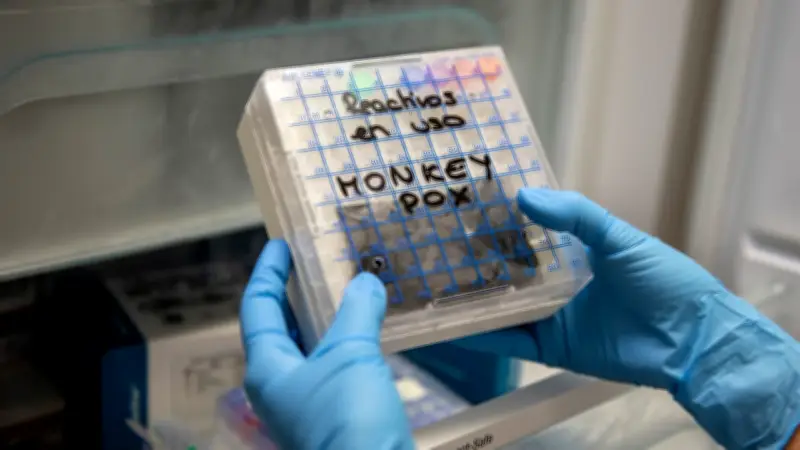
Two scientists have been charged after officials said they found more than 100 undeclared vials of viruses, including monkeypox, in their luggage upon returning from a trip to Africa. The pair, both employed at a National Institutes of Health (NIH) laboratory in Montana, were arrested on Tuesday for allegedly attempting to smuggle deactivated viral pathogens into the United States.
Details of the Charges
Vincent Munster, Chief of the Virus Ecology section at the NIH, and Claude Kwe, a research fellow, face charges of conspiracy to smuggle mpox (formerly known as monkeypox) into the United States and providing false statements to federal law enforcement. The United States Attorney’s Office revealed that FBI investigations uncovered 113 vials in their luggage. Of those, 20 were tested, revealing 17 containing deactivated mpox virus and one containing chickenpox virus.
The Incident at Detroit Airport
The alleged smuggling attempt was thwarted on January 25 at the McNamara Terminal of Detroit Metropolitan Airport. Customs and Border Protection Officers stopped the scientists after noticing they were carrying a large plastic suitcase. The duo claimed the suitcase contained diagnostics and testing equipment, but they lacked the necessary permits required by the Code of Federal Regulations for transporting viral materials across borders.

United States Attorney Jerome F. Gorgon stated, “These NIH experts apparently broke our laws by smuggling viral pathogens on a packed commercial airplane from an outbreak in the Republic of Congo. Let that sink in.” The scientists’ trip had originated in Brazzaville, Republic of Congo, which was experiencing an mpox outbreak at the time.
Investigation and FBI Involvement
Jennifer Runyan, Special Agent in Charge of the FBI Detroit Field Office, emphasized the seriousness of the allegations: “No researchers should believe their positions, credentials, or professional status place them above the law. The allegations in this case are serious. They involve the dangerous and unlawful smuggling of deactivated mpox virus into the United States and alleged efforts to mislead our federal agents.”
The purpose of bringing the deactivated viruses into the country remains unconfirmed, but the FBI noted that both scientists conducted extensive research on monkeypox at a Biosafety Level 4 laboratory, which employs the highest biosafety precautions for handling known and potential human pathogens.
NIH Response
In a statement, NIH confirmed its full cooperation with law enforcement. “Upon notification, NIH leadership immediately activated established agency protocols to safeguard related laboratory facilities, research materials, and biological samples. These actions included securing relevant laboratory spaces, restricting access to affected areas, and conducting a comprehensive audit and inventory assessment to verify that all materials were appropriately accounted for, documented, and maintained in accordance with all relevant biosafety policies, requirements, and procedures.”
NIH also took appropriate personnel actions and ensured there was no risk to staff or the public at any time. The agency reaffirmed its commitment to maintaining high standards of biosafety, biosecurity, and stewardship of research materials.
Potential Penalties
If found guilty, the scientists could face up to five years in prison. The case highlights the strict regulations governing the transport of biological materials and the consequences of violating them.