Australia’s youngest convicted murderer has been sentenced to four-and-a-half years in prison after “boasting” about breaching supervision orders and possessing child abuse material.
WARNING: Distressing content
Australia’s youngest convicted murderer will spend at least the next two years behind bars after he “boasted” about breaching supervision orders in front of corrective officers.

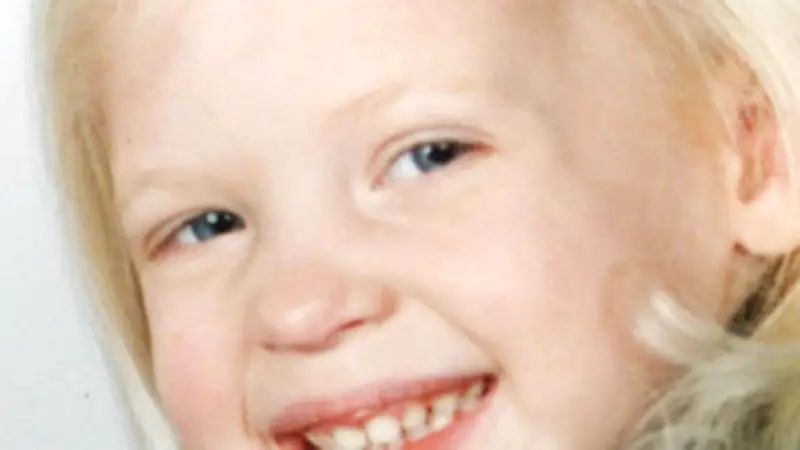
The man, who can only be known as SLD, murdered his three-year-old neighbour Courtney Morley-Clarke when he was just 13 in January 2001. He stabbed the young girl through the heart after he pulled her from her bed on the NSW Central Coast, leaving her body in long grass nearby and leading police on a wild-goose chase as they frantically searched for Courtney.
Following a jail stint spanning more than two decades, in which he committed further violent offences while behind bars, he was released on an extended supervision order in 2023; however, he was again jailed after breaching the order by speaking to a woman who was with her child at Bulli Beach near Wollongong on the NSW south coast. He was sentenced to a further year and a half in prison but was again arrested less than a month after he was released in 2025 for breaching a supervision order and possessing child abuse material.
The man was brought into Campbelltown Local Court by correctional officers on Wednesday, sporting prison greens and sat quietly as his sentencing got under way. In March, he pleaded guilty to five counts of failing to comply with an extended/interim supervision order, one count of possessing child abuse material, and one count of using a carriage to access child abuse material.
Phone Seized
While in the company of community corrections officers, the killer made comments about using his mobile phone to access websites that were in breach of his supervision orders, the court was told. A search was then conducted of his phone, which uncovered a series of distressing images and search terms, subsequently leading to his arrest.
About 43 images were found depicting adult females in situations of sexual violence, and while it is unclear if the images were real or staged, the woman often appeared “in fear”, the court was told. Among the other breaches, SLD accessed social networks including a dating website in March 2025, without receiving prior approval. On the same day, he also used a VPN to browse the internet on incognito mode, before accessing three pornographic websites, despite only being approved to access one. That same day he also set up a Facebook account with an alias name and began to communicate with people.
Among the horrific child abuse material uncovered, was an image of a young girl, aged approximately five years old who is seen naked from the waist down. He then entered an array of disturbing search terms on a pornographic website including “movie rape virgin child”, and “real child rape”.
‘112 Days’ Free
In court on Wednesday morning, SLD’s lawyers outlined the impacts of the “extraordinary” amount of time he had spent in custody. The killer had “grown up in a custodial setting”, spending about 112 days of the past 25 years out of prison. Given he was jailed at 13, lawyers said he was “more like a teenager than an adult in his thinking”.
The defence referred to expert evidence that referenced a criminal theory known as “deep freeze”. The theory likens putting offenders in prison to putting food in the freezer and thus “freezing” their mental age. Therefore, his behaviours and comments “must” be viewed through the lens of his custodial background, the defence said.
The court was also told the convicted killer had “boasted” about breaching the orders and made “unusual” and “concerning” comments regarding his conduct. “In one sense they were boasts about breaching the orders, but they also show a high degree of immaturity … that he’s setting himself up to be inevitably arrested,” Judge Paul Johnson said.

The offending was “relatively unsophisticated”, the defence also argued, with his attempts to access child abuse material occurring in an 11-minute period. The court was also told experts had put SLD at a medium to high risk of reoffending. “The offender has demonstrated that he cannot last long in the community without breaching supervision,” Mr Johnson said.
In his judgment, Judge Johnson noted the accused had apologised and shown remorse, had plead guilty and has an array of mental health issues. He made a finding of special circumstances based on the fact his time in custody will be more onerous due to his cognitive and mental health issues. He was sentenced to four years and six months behind bars, with a non-parole period of two years and 11 months. With the sentence backdated, he will be eligible for release on parole in March 2028.