
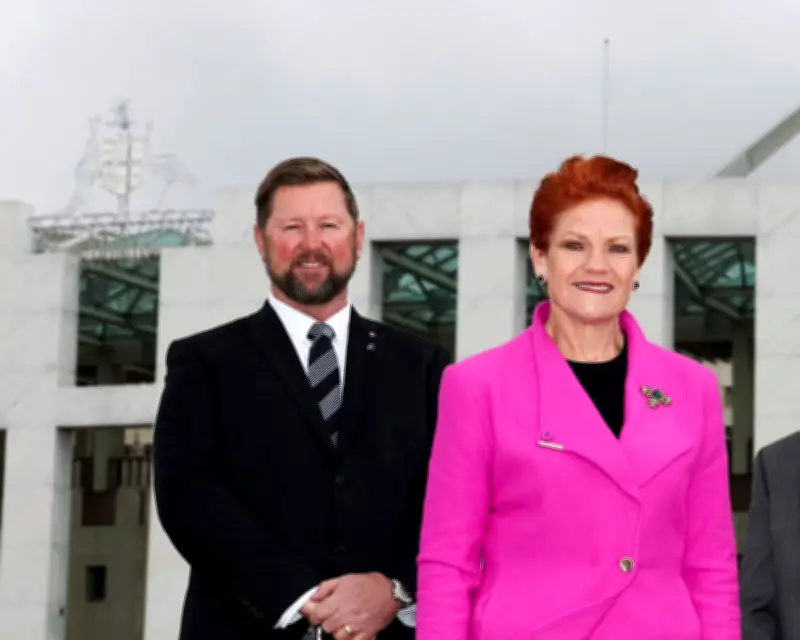
Australia's leading constitutional expert has raised concerns that One Nation senator Tyron Whitten may be in breach of section 44 of the Australian constitution, potentially rendering him ineligible to sit in parliament. The issue stems from a family company that holds contracts to assist in building the Snowy Hydro project.
Expert opinion on potential disqualification
Professor Anne Twomey, a prominent constitutional lawyer, stated that Whitten could face disqualification if the High Court follows a precedent set in the case of former senator Bob Day. That case involved an indirect pecuniary interest, and Twomey noted that depending on the timing and details of Whitten's shares in the company, there is a possibility of disqualification. However, she also acknowledged that Whitten would have a strong argument to defend his position, but the case is not clear-cut.
Details of shareholdings and contracts
Whitten, elected as a senator for Western Australia in the 2025 federal election, disclosed shareholdings in Whittens Group Pty Ltd and his directorship of trustee company T & A Whitten Holdings Pty Limited on his parliamentary register of interests upon entering parliament. The Australian newspaper first reported that Whittens Group, a civil construction company founded by Whitten and his brother, had been awarded a $75 million contract to work on Snowy Hydro. According to the company's website, Whittens Group was engaged by the Snowy 2.0 Project principal contractor Future Generation Joint Venture for concreting and tunnel work, with the project described as ongoing from October 2024.

Corporate records from the Australian Securities and Investments Commission indicate that Senator Whitten's trustee company held shares in Whittens Group until 29 July 2025, after his election in May 2025. On that date, the shares were transferred to his brother's company, C & L Whitten Holdings. In his first speech to parliament on the same day, Whitten stated: 'I'm no longer a part of Whittens Group, and I wish my brother and his wife every success in the future.'
Political reactions
Pauline Hanson, leader of One Nation, has strongly rejected claims that Whitten is ineligible. In a social media post on Tuesday, she criticised Coalition members for raising concerns, calling them 'gutless' and 'hypocrites'. She argued that Snowy Hydro is a public company, not a government department, and therefore there is no question over Whitten's eligibility. Meanwhile, Liberal senators James McGrath and Jonno Duniam have called for Hanson to refer the matter for legal scrutiny, but it is unclear if the opposition will make such a referral. Labor has indicated it will not seek a referral.
Legal interpretation of section 44
Section 44 of the Australian constitution states that anyone with 'any direct or indirect pecuniary interest in any agreement with the Public Service of the Commonwealth' is ineligible to sit in parliament. Twomey explained that the key issue is whether Whitten's situation constitutes an indirect pecuniary interest. Factors include the fact that Whittens Group sub-contracted from the main contractor, and the timing of when Whitten held or disposed of his shares. Twomey noted that while Snowy Hydro is not part of the public service and is a separate company from the Commonwealth, the Commonwealth does own shares and fund the company. Therefore, any probe would hinge on whether the court takes a literal or broad interpretation of section 44. 'If the court took a literal view, he's in the clear. If it took a broader view about whether he could be influenced by his own private interests with any shareholding, there is a possibility it could be a disqualification,' Twomey said.

Twomey, who became a prominent commentator on section 44 during the 2017 eligibility crisis, referred to the Bob Day case where the High Court took a broad view on pecuniary interests. Day was ruled ineligible over an indirect interest in the lease of his electorate office by the Commonwealth. Twomey added: 'The Snowy Hydro scheme is a political issue. Parliament can hold government to account on cost blowouts for instance. Parliament could legislate to end or change the way Snowy Hydro works, affecting the financial interests of its contractors and sub contractors. In the Bob Day case the Court took a broad view. It identified the purpose behind the disqualification as being to ensure that members of parliament act in the public interest without their personal financial interests influencing them.'
Whitten's office has been contacted for comment.