

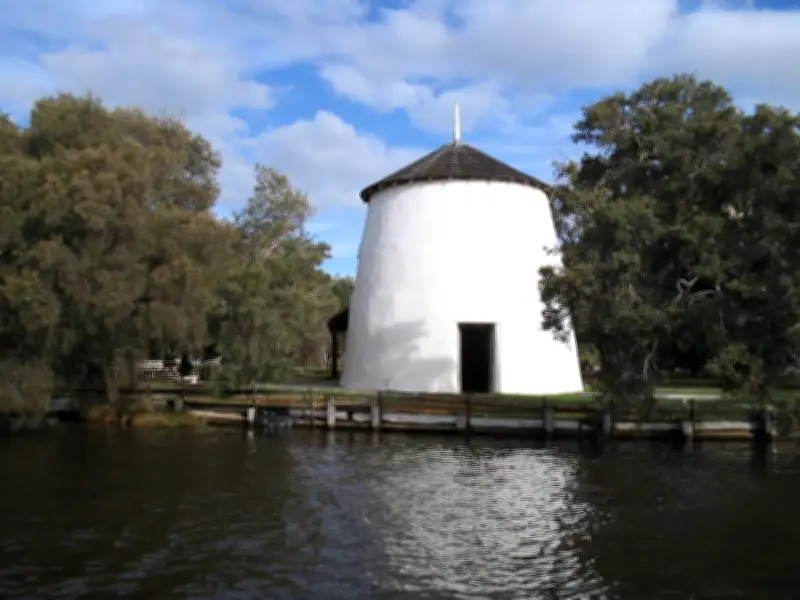
Cooper's Mill, a State Heritage site on Cooleenup Island in the Murray River Delta, faces a critical threat from coastal erosion that could wash it away within a decade. The Shire of Murray has approved a near-$1 million plan to combat this, combining a foreshore management plan and a conservation management strategy.
What is Cooper's Mill?
Located at the northwestern end of Cooleenup Island, where the Murray River enters the Peel Inlet, Cooper's Mill is believed to be the first wind-powered flour mill built in the district and the only one still standing. The site includes a historic two-storey circular tower, a caretaker's residence, and recreation areas. It is listed on the State Register of Heritage Places and has undergone restorations over the years.
The Threat of Coastal Erosion
A coastal hazard risk management and adaptation plan prepared for the Shire of Murray warns that the site is at risk of being swallowed by the ocean within 10 years due to ongoing coastal erosion. According to the site's caretaker, water from the estuary enters the mill building five to ten times most winters, sometimes reaching depths of up to a metre and lingering for a week.

Council Approval and Funding
At its June 18 meeting, the council unanimously supported a foreshore management plan and conservation management strategy for the area. Cr Stewart Carter noted that Cooper's Mill is a unique part of the shire and that having these plans will enable the shire to seek external funding. Shire President Douglas McLarty stated after the meeting, "Waterways define the Murray region. Sadly, they also face increasing pressures from environmental changes and are increasingly vulnerable to both coastal inundation and erosion. We know this is a key concern for our community, particularly those living in close proximity to our shorelines. We therefore seek opportunities to engage with State Government to discuss investment, collaboration and long-term solutions that protect our communities."
Foreshore and Conservation Plans
The foreshore plan focuses on managing erosion and inundation risks, while the conservation plan targets protecting the heritage significance of Cooper's Mill. Works to protect the foreshore include constructing a northern seawall to shield the land surrounding the mill, backfilling eroded areas, and stabilising the shoreline through revegetation. Due to the site's low-lying position next to the river, complete flood prevention is unrealistic; instead, the plan aims to reduce damage, slow deterioration, and improve resilience.
Cost Breakdown
High-priority actions for the foreshore are expected to cost approximately $400,000. The shire has applied for a grant from the Department of Transport to cover 75 per cent of this cost and expects to absorb the remainder. Conservation works for the mill, including repairs to the mill, engine room, and verandah, and restoring the timber shingle roof, are estimated at about $500,000.
Social and Environmental Value
A council report highlighted that Cooper's Mill Reserve provides important social, recreational, cultural, and tourism value. "The reserve supports activities such as boating, fishing, kayaking, walking and picnicking, while also contributing to community identity and visitor amenity through its State and Aboriginal heritage values," the report stated. "However, erosion, inundation, bushfire risk and other environmental pressures present ongoing risks to the foreshore, infrastructure, heritage assets and public safety, requiring co-ordinated long-term management." The site is also environmentally sensitive due to its low-lying estuarine setting.
Historical Background
Cooper's Mill began operating as a wind-powered mill in 1843. A bushfire damaged the building in the 1850s, after which it was upgraded to steam power and continued operating until 1865. The current plans aim to ensure this historic site survives for future generations.