
As the UK braces for record-breaking temperatures, Australians share their tried and tested methods for staying cool without relying on energy-guzzling air conditioning. From drawing curtains early to using evaporative coolers, these tips can help you beat the heat while saving energy.
Draw the curtains early
Keeping a home comfortable in hot weather means keeping heat out when temperatures peak, then bringing cool air in when they fall. Stuart Walker, a research fellow in sustainability assessment at the University of Sheffield, suggests closing the curtains on hot days. “If the sun enters a room over a period of time, it will heat up and then it will stay hot,” Walker says. “So don’t respond when the room is already hot. You need to have responded nine hours ago when the sun was first shining in that room.” In Australia, closing blinds as soon as the sun comes in is a daily habit.
Consider honeycomb blinds
Honeycomb blinds, like Duette, are particularly good for stopping heat gain, and as a bonus they also stop heat loss in winter. Their insulative properties are due to a cellular shape, which traps air pockets, creating a thermal barrier between indoors and out. Because blinds sit in the recess of your windows, they take up less floor space than curtains, making them a good option for smaller spaces. They are also easier to clean. For floor-to-ceiling windows, vertical blinds aren’t as efficient as honeycomb styles because they don’t trap air, but they are cheaper and allow you to adjust for the angle of the sun throughout the day. For smaller windows, venetian blinds are similarly flexible, though less durable. For renters, Shade and Story also make clip-on blinds.

Let the night air in
Once the sun goes down, it’s time to open up the windows and let the heat out. If it’s possible to open doors and windows on different sides of your home, this will create a cross-breeze, which is particularly effective for cooling. To that end, consider installing fly screens, an Australian essential. These allow windows to stay open all night without letting pests inside. Pleated fly-screen doors, like those made by Phantom Screens, slide out of sight when not in use. Renters can use magnetic fly screens that don’t require any installation, or Velcro fly screens, which are sturdier but may leave lasting scars on window frames.
Create a breeze with fans
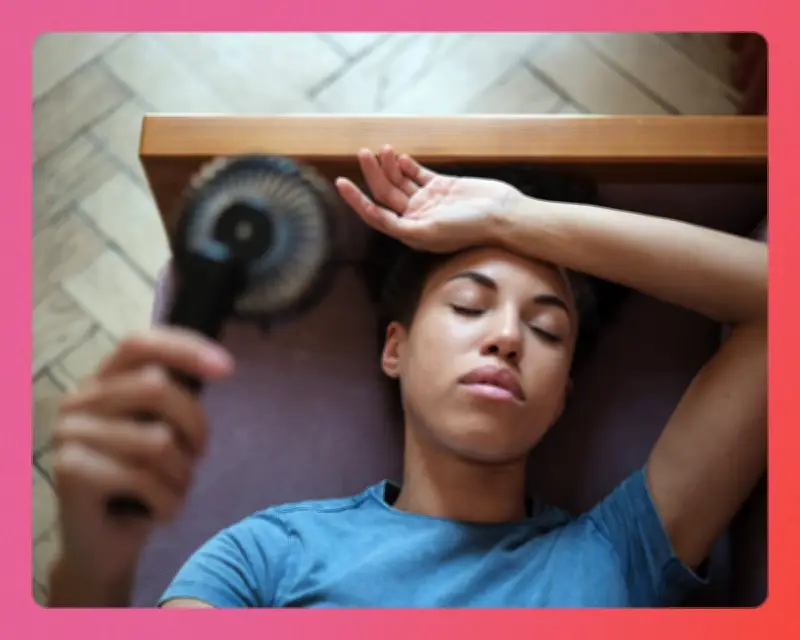
The final thing to buy well before it gets hot is a good fan, since stock gets low when temperatures rise. Prof Ollie Jay, director of the Heat and Health Research Centre at the University of Sydney, says that as long as the temperature is below 40C, “fans are effective at reducing how hot people get”. Above 35C, fan use can become detrimental. At his Thermal Ergonomics Laboratory in Sydney, they tested fans in 45C, 15% humidity conditions and found they “accelerated how quickly [people] heated up”. Even though fans don’t change the temperature, air movement across the body “can massively increase the capacity for evaporation”, and evaporation is how human bodies stay cool. Jay and his team use large pedestal fans for their studies because this model creates the greatest airflow. “The bigger the fan, the better, basically,” Jay says. Smaller desk fans and portable fans can help with your perception of heat, but their “effect on whole body heat loss is not going to be sufficient to make a big difference,” he says.
Get up early
Australians are among the world’s earliest risers: we try to get up before the temperature does. On hot days, exercising, walking the dog and aggressively watering the garden are all best done just after dawn. Once those tasks are finished, shut your blinds and close the doors to south- and west-facing rooms to stop heat entering the rest of the house.

Dress for the weather
In theory, the best outfit for a hot day is your birthday suit, says Jay, since more exposed skin allows for better evaporation. As you can’t leave the house naked, loose-fitting garments made from natural fibres are next on the list. While clothing with sweat-wicking properties might seem like a good idea in the heat, and can be more comfortable than clothes that are damp from sweat, wicking garments are “not so good for keeping cool,” says Jay. Wicking fabric draws sweat away from your skin, so “it basically reduces the amount of heat [extracted] from the body … for a given amount of sweat that you evaporate”. It’s fine to wear wicking underwear, Jay says, which is “good for comfort”, but for outer layers, pick clothes made from 100% cotton, linen or a blend of the two. Lighter-coloured tops are preferable if you will be out in the sun, since darker shades absorb more heat.
Keep your fluids up
Pack a full water bottle before you leave the house, and drink more than you think you have to. The amount of liquid you need varies a lot by your size, gender and activity level, but Australian guidelines suggest at least 2.5 litres for men and 2.1 litres for women. In the UK, the NHS Eatwell guide reads “aim to drink 6 to 8 cups or glasses of fluid a day”, which is about 1.2 to 2 litres. “Staying as hydrated as possible is critical,” Jay says. Tea and coffee can be part of that fluid intake. There’s no evidence caffeine needs to be avoided in the heat, Jay says, as caffeine’s diuretic effect is “weak”. Unlike caffeine, alcohol can be a problem. If you’ve been drinking the night before a hot day and you’re a bit dehydrated, “you could suffer a bit”, Jay says, especially if you’re doing something strenuous.
Stick to the shade
When you’re out and about, keep in mind that the temperature forecast is taken in the shade. When walking outdoors, cross to the shady side of the street, and pick the park bench under a tree to eat your lunch. City trees have natural cooling properties, and parks with layered shrubs and ground cover (like grass) are even better because they reduce radiant heat as well as creating shade.
Lower your temperature
A big drink of cold water won’t just keep you hydrated, it will also lower your temperature – so that’s the first thing to try when you’re feeling too hot. If you arrive in the office sweltering from your commute, splashing cool water on your face gives some instant relief while you wait for the air conditioning to work its magic. If you’re wearing makeup, apply a soaked hand towel to the back of your neck instead. During the day at home, dousing yourself with cold water or putting on wet clothes are both evidence-based, low-energy cooling methods – especially when combined with sitting in front of a fan. Jay says there’s a difference between “thermal sensation” – our perception of heat – and our actual body temperature. Cooling your face or feet makes a big difference to thermal sensation because you have lots of blood flow to those areas, but cold foot baths are only moderately effective for lowering core body temperature. “It definitely reduces how hot you feel, but it doesn’t necessarily reduce how hot you are by a decent margin.”
Consider your dinner
If it’s already warm in your home, turning on the stove or oven will only make things worse. Try a no-cook summer meal, make dinner in a benchtop electric cooker or just use the microwave.
Cool your sleep down
Make sure your bed is dressed in natural fibres, and don’t use poly-stuffed duvets. They may do a brilliant job of keeping you warm in winter, but in summer it will feel like you’re sleeping in a rubbish bag. After much sweaty trial and error, mulberry silk is the coolest duvet filling I’ve found, but when it’s particularly hot, a flat sheet is enough. For bedding, I prefer linen sheets, but cotton is equally cool and less costly. To bring your temperature down just before bed, take a cool shower. The cold water will lower your skin and core temperature and if you stay slightly damp, you’ll also benefit from the extra evaporation as you air dry. There’s no harm in leaving fans on either, says Jay. “We’re testing fan use overnight during sleep in simulated hot tropical nights, so 35C with high humidity,” Jay says. “And the initial indication is they do seem to potentially improve sleep.”
Restructure your day
When hot weather is on the horizon, try to restructure your schedule to avoid strenuous activities during the hottest parts of the day. This should be enough to keep you safe from heat strain when temperatures are below 35C (the point at which heat becomes more dangerous for at-risk groups). However, heat hits some people harder than others. Children under five and people over 65 have higher health risks. If you’re pregnant, have a disability or a chronic illness, be cautious. Seek support ahead of time if you know you’re vulnerable; and if you know someone vulnerable, offer to check in. Temperatures over 40C are dangerous for everyone. In Australia, many local councils now have designated heat shelters for these conditions. In the absence of official facilities in your area, make a plan for where to go if your home becomes too hot. Air-conditioned public spaces like shopping centres and cinemas work well as ad-hoc climate refuges, as do local lidos.
A word on air conditioning
If it’s regularly hotter than 28C inside your home, even with the blinds drawn during the day and the windows open at night, consider air conditioning. Walker says that in the UK, “there is a kind of perception that [air conditioning] is a huge, energy-hungry system”, but “looking at the numbers, it isn’t as terrible as maybe we think”. Air-to-air heat pumps use much less power than traditional forms of air conditioning, but can be costly and complicated to install. Evaporative coolers are one of the most affordable and energy-efficient ways to cool a room. Rather than extracting moisture from the air to cool your room down by multiple degrees, evaporative coolers use water to cool the air they blow towards you – like a sea breeze taking the edge off summer heat – and they use a fraction of the electricity of air conditioning. They require dry air to function, and must be used with open windows in order to avoid mould. If your house is already damp or muggy, an evaporative cooler won’t help. Portable air conditioners are not energy efficient, tend to be noisy and do not work as well as heat pumps. But for renters in homes too damp for evaporative coolers, and homeowners who can’t afford the initial install cost of an air-to-air heat pump, they are an effective last resort.