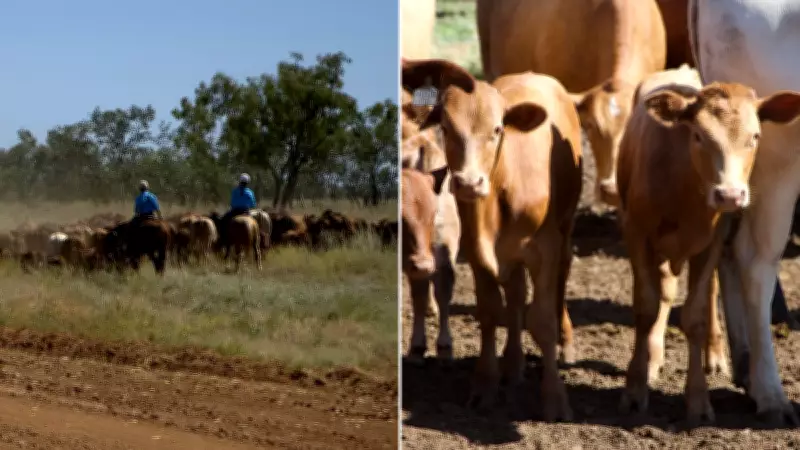
Redefining Sustainable Cattle Farming in Australia
Red meat often faces criticism for its significant carbon footprint and environmental impact, but the North Australian Pastoral Company (NAPCo) is proudly tackling these challenges head-on. With approximately 200,000 cattle across six million hectares spanning the Northern Territory and western and southern Queensland, NAPCo is implementing innovative strategies to mitigate methane emissions and protect local ecosystems.
Breeding for Sustainability and Reduced Methane
One of NAPCo's key initiatives involves breeding cattle specifically adapted to Australian conditions, eliminating the need for land clearing. Collaborations with the Universities of New England and Queensland have led to the development of cattle that produce less methane, thanks to specialized feed that inhibits gas production during digestion.
Partnerships for Wildlife Conservation
In 2024, NAPCo launched a groundbreaking partnership with the Australian Wildlife Conservancy (AWC), opening its vast lands for the identification and protection of endangered native species. This collaboration has already yielded significant discoveries, including threatened marsupials like the bilby and kowari, as well as the plains-wanderer bird.

Focus on Animal Welfare and Environmental Stewardship
At Coolullah Station in western Queensland, manager Marty Doyle emphasizes a holistic approach to cattle farming. "You're just managing a natural system, working with the environment, not against it," he explains. Doyle, with nearly four decades of experience, highlights that technological advancements support cattle health without replacing the essential human touch in the industry.
Significant Carbon Emission Reductions
NAPCo's natural capital manager, Emma Baker, reports a 43% reduction in carbon emissions between 1981 and 2013. "Caring for those animals and caring for our land is at the heart of what they do," she states, countering misconceptions that cattle farmers lack concern for the environment.
Unusual Yet Effective Alliances
The partnership with AWC, described as an "unusual bedfellow," demonstrates how agricultural and conservation goals can align. AWC senior ecologist Rebecca Diete notes, "We're both trying to manage the land in a healthy and sustainable way," underscoring the synergy between farming and biodiversity preservation.
Through these efforts, NAPCo is not only improving the quality of life for its cattle but also setting a new standard for sustainable agriculture in Australia, proving that responsible farming and environmental conservation can go hand-in-hand.