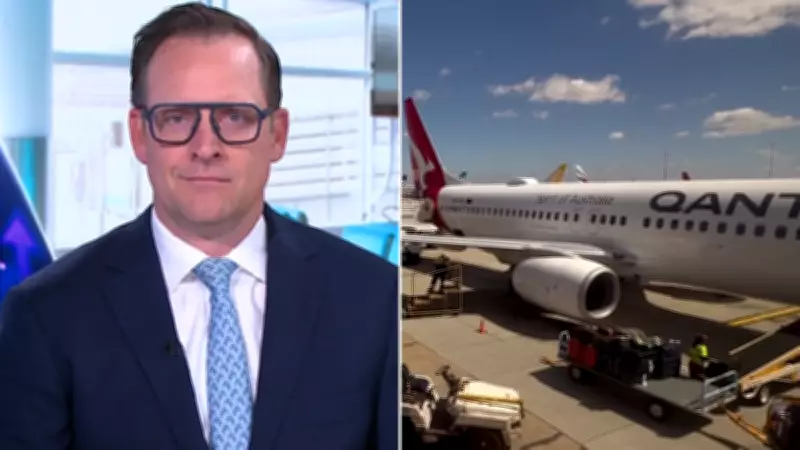
Travellers are navigating a turbulent period in the aviation industry, marked by widespread flight cancellations and significant route reshuffling. This disruption is largely driven by escalating global tensions, which have pushed fuel prices to higher levels, increasing operational costs for airlines.
Discounts Amid Rising Costs
Despite these mounting financial pressures, airlines are paradoxically flooding the market with heavily discounted seats. For instance, Virgin Australia has announced an offer of 1.5 million fares starting from just $50, while Qantas has released 2 million seats from $99. These flash sales may appear incongruous given the current economic climate, but aviation experts provide insight into the underlying strategy.
Expert Analysis on Sales Strategy
Aviation expert Nick Humphrey explained to Sunrise that these sales are a calculated move by airlines to secure future revenue as travel patterns undergo significant shifts. "This is a reflection of the airlines reviewing their forward bookings and seeing there has been a shift in consumer behaviour, and they're trying to lock in some forward-looking cash," Humphrey stated. This approach allows carriers to generate immediate income while adapting to changing market dynamics.

Route Reductions and Operational Scaling
Concurrently, airlines are scaling back their operations in response to these challenges. Major carriers such as Qantas, Jetstar, and Virgin Australia are cutting routes on the traditionally busy Brisbane-Sydney-Melbourne triangle. Short-term reductions in business travel are already emerging, with longer-term cuts planned for the fourth quarter. Specifically, Qantas and Jetstar are implementing a 5 per cent reduction in capacity, while Virgin Australia is reducing by 1 per cent.
Shifting Consumer Sentiment and Route Avoidance
Global tensions are also reshaping where passengers are willing to fly, with a noticeable trend of travellers increasingly avoiding Middle Eastern routes. This reflects growing uncertainty and safety concerns, despite industry assurances. Humphrey noted, "There's a clear shift in consumer sentiment. And it will take a while for people to shift their minds." This change in behaviour is prompting airlines to adjust their strategies to align with evolving passenger preferences.
Strategic Redirection of Capacity
In response to these shifting patterns, Qantas is proactively redirecting its capacity to capture changing demand. The airline is boosting European routes via Asia and expanding services to the United States. This strategic move aims to optimise resources and cater to areas where travel interest remains strong, ensuring operational efficiency and revenue generation in a volatile market.
Overall, the aviation sector is experiencing a complex interplay of cost pressures, consumer behaviour shifts, and strategic adaptations. While travellers face disruptions, the availability of discounted seats offers some relief, highlighting the industry's efforts to balance immediate challenges with long-term sustainability.