Fuel Crisis Fury Erupts on Sunrise as Shadow AG Demands Minister Drive Tanker
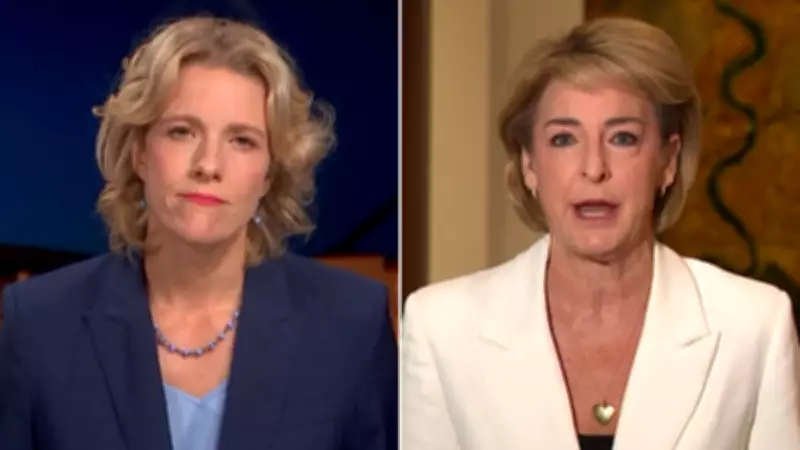
A fiery clash erupted on Sunrise over Australia's escalating fuel crisis, with Shadow Attorney-General Michaelia Cash declaring Energy Minister Chris Bowen should be placed "in a blasted tanker" and sent out to personally refill empty petrol stations across the nation. The shocking remark came during a heated exchange with Housing Minister Claire O'Neil on Wednesday, as mounting pressure over soaring prices and dry bowsers intensifies public frustration.
Government Accused of Failing to Act as Stations Run Dry
Michaelia Cash launched a scathing attack, accusing the federal government of failing to address the crisis effectively. She revealed that Energy Minister Chris Bowen confirmed on Tuesday that at least 166 service stations had completely run out of fuel, prompting her to demand immediate action. "The government needs to come clean with the Australian people, and I have no confidence," Cash told Sunrise. "Apparently, they understand that people are doing it tough, but they are doing nothing to alleviate that pain."
Cash further criticized the government's shifting narrative, stating: "For three weeks, this government denied there was an issue with fuel in Australia, then they said it was the Australian people's fault. Australians are fronting at bowsers, and they have no fuel." Her comments highlight growing political tensions as households and businesses grapple with the practical impacts of the distribution breakdown.

Distribution Issues Versus Supply: A Heated Debate
The federal government has maintained that Australia still possesses more than adequate fuel supplies, with Housing Minister Claire O'Neil arguing the core problem lies in distribution rather than overall supply. "Nationally, we have the fuel circulating in the economy that we need; there are distributional issues which we are working through," O'Neil explained during the segment.
However, Cash seized on this point, demanding urgent intervention to redirect existing fuel to affected areas. "You have the granular detail, you know, because of the framework that we put in place, where all the fuel is in Australia," she asserted. "You say there's not a supply problem, and yet over 166 bowsers have run dry. Clare, why are you not directing the fuel companies to get tankers to those bowsers that have run dry? Get the fuel to where it needs to be so when the Australian people are turning up at the bowser, they're not dry."
Spiking Demand and Political Finger-Pointing
The exchange grew increasingly heated as O'Neil attempted to clarify that demand in specific regions had surged dramatically, complicating distribution efforts. "The issue that we're having is that in certain parts of the country, demand has spiked up to threefold," she said. "Basically, there are parts of the country which are consuming three times as much petrol as would normally occur."
Cash interrupted sharply, questioning the logic behind the explanation. "Where is it, Clare?" she demanded. "Even I'm confused by that response." She dismissed O'Neil's remarks as "the biggest load of crap" she had ever heard, escalating the confrontation. "You have the granular detail... But bowsers are dry... You can get tankers today to those 166 stations. Stop making excuses, stop treating the Australian people like mugs," Cash retorted.
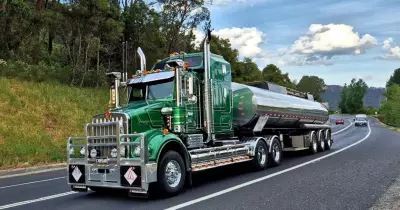
In a dramatic crescendo, Cash declared: "Clare has just admitted on national TV that there is so much fuel sloshing around in this country that they don't know what to do with it. Well, Clare, I can tell you what to do with it. Get Chris Bowen in a blasted tanker and get him to drive it to those stations." She added that "people are panicking" and receiving "mixed messages" from the government, underscoring the communication breakdown.

Government Pledges Calm Response Amid Crisis
In contrast to Cash's fiery rhetoric, O'Neil emphasized the government's commitment to addressing the issue "calmly" and "methodically", as unprecedented demand spikes continue to strain segments of the supply chain. The resurgence of a 2019 crisis playbook, which suggested implementing a $40 cap on fuel purchases, adds historical context to the current turmoil, though no such cap has been officially proposed in this instance.
This explosive Sunrise segment encapsulates the deepening political divide over Australia's fuel distribution crisis, with opposition figures demanding immediate, tangible solutions while the government urges patience and systematic problem-solving. As motorists face empty pumps and rising costs, the pressure on policymakers to resolve the situation swiftly shows no signs of abating.