Australians have been warned a recession looms after the nation's GDP slumped and the population stares down an 'unsustainable economy'.
The nation's economic growth fell from 0.8 per cent to 0.3 per cent in the March quarter while productivity, which measures GDP against the number of hours worked, declined 0.6 per cent.
Poor productivity heaps pressure on inflation and could force the Reserve Bank of Australia to hike interest rates.

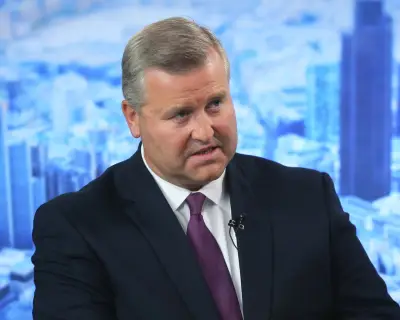
EQ Economics' managing director Warren Hogan warned Australia's failure to maintain solid economic growth spelled calamity for the nation.
'We may sort of bumble along at two per cent (annual) growth for another year or two,' he told Business Now.
'I have a feeling that if we get through this current energy crisis without a recession - then if the economy picks up at all at the end of the year or into next year - we're (going to) just see rates go up further and that may create a recession.
'The point is, it's an unsustainable economy.'
Australia's slight growth in the March quarter was driven by the expansion of data centres in New South Wales and Victoria.
However, major exports like iron ore and coal performed poorly after disruptions from Tropical Cyclone Koji in North Queensland and Cyclone Mitchell in parts of the Northern Territory and Western Australia. Mr Hogan warned the recent economic slump was likely the beginning of a painful period for Australia.
'It's going to hit our economy. This data is the baseline,' he said.
'(The March quarter GDP data) captures a little bit of the start of the (Iran) war and the uncertainty, but it's going be a long winter for the businesses and consumers of Australia and, of course, our politicians will all feel that.'
Iran's closure of the Strait of Hormuz disrupted the global supply of oil and rattled both consumer confidence and Australia's standing as an exporting nation.
Australia suffered its first trade deficit since 2017 in the March quarter, with the uptick in fuel prices contributing to the slump.
KPMG chief economist Brendan Rynne said the global disruption shattered Australia's standing as a nation which could skate by on its natural resources.
'Australia has for some time had the rest of the world add to our economic prosperity through purchasing our goods and services, particularly our natural commodities, at increasing rates and often at increasing prices,' he said.
'Unfortunately, however, we aren't in the same position today, with Australia, like most non-major oil producing countries, experiencing a negative terms of trade shock due to the ongoing Middle East conflict.'
Australia's $1.84 billion goods trade deficit in the March quarter was a significant decline from the $5 billion surplus recorded in the previous quarter.
The trade deficit revelation came alongside the ABS reporting Australia's current account deficit had widened to $27.1 billion, up from $23 billion in the previous period.