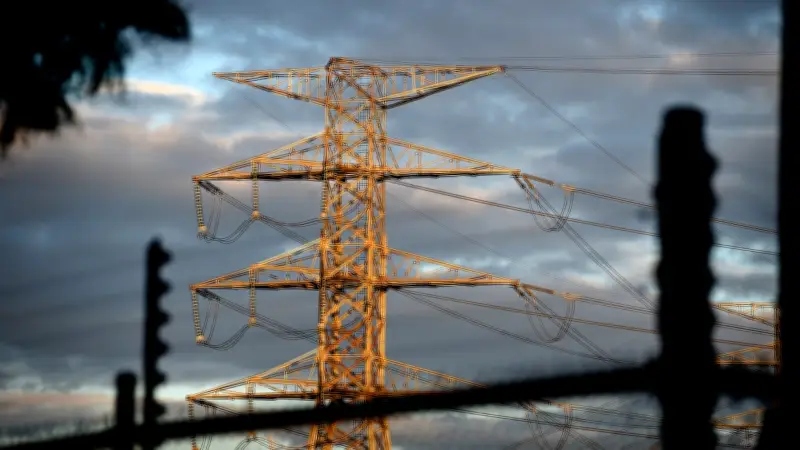
Australia’s fast-growing data centre sector is under scrutiny, with warnings that its rising energy use could lift power prices for everyday Australians, energy experts have warned.
Data Centre Growth and Energy Demand
A new Climate Council report has flagged the scale of growth in the sector, driven by artificial intelligence and major global tech investment. Australia currently hosts at least 162 operational data centres, with another 90 in development, placing it second only to the United States in global attractiveness for the industry.
According to the Australian Energy Market Operator, data centres accounted for around 2 per cent of electricity demand on the east coast grid in 2025. That figure is projected to triple by 2030, roughly equivalent to the total electricity consumption of every household in Victoria. Electricity use from the sector has nearly doubled in Victoria over the past year and risen 18 per cent in New South Wales.

If all proposed projects in Australia were to go ahead, their total maximum demand would be more than 21 GW – more than seven times the capacity of Eraring, Australia’s biggest coal-fired power station.
Potential Price Hikes
The Climate Council argues that without faster investment in renewable generation and storage, the demand could feed through into higher wholesale electricity prices. It estimates that costs in parts of eastern Australia could rise by as much as 26 per cent by 2030 under certain scenarios. The modelling underpinning the higher price forecast assumes rapid data centre expansion without a corresponding increase in renewable capacity, forcing greater reliance on gas and delaying coal closures.
Industry analysts say this represents an extreme case, but it highlights the sensitivity of the system to demand shocks.
Expert Opinions
“How we manage this industry will shape our energy system – and climate – for decades to come,” Climate Council energy expert and Griffith University associate professor Joel Gilmore said. “Done poorly, data centres threaten to derail our switch to clean energy – which will push up pollution and power prices. With government intervention and enforceable requirements, data centres can play a role in our clean energy shift, support grid reliability, and avoid unnecessary power price rises.”
Climate Council chief executive Amanda McKenzie said governments should urgently introduce strict rules for data centres to avoid these price hikes. “Out-of-control construction of data centres would hit Australians in the hip pocket,” she said. “Governments must proactively manage the surging demand, making sure that they are powered with clean, renewable power.”
Industry Response
Industry groups representing data centre operators reject claims they are driving fossil fuel expansion. “Most data centre operators connect to the grid,” Data Centres Australia chief executive Belinda Dennett told the Sydney Morning Herald. “The make-up of the grid is based on government and energy industry decisions.”
Ms Dennett said the sector was already investing heavily in emissions reduction through long-term power purchase agreements, which she said now offset around 70 per cent of data centre electricity use and have helped bring new renewable projects online.
Renewable Investment Slump
Investment into major renewables projects has slumped to one of its lowest levels in a decade, despite Energy Minister Chris Bowen last week boasting renewable energy as the “fastest to deploy”. The Clean Energy Council in its latest report revealed the level of new renewable energy generation that reached financial closure in 2025 was down 46 per cent compared to the previous year.
“(There’s a) long way to go. There’s more work to do to keep this transition well underway. There are plenty of challenges internationally and domestically. But the plan that we’ve put in place is showing dividends for the Australian people,” Mr Bowen said. “We’ve always said (that) renewable energy is the cheapest form of energy. It’s the fastest to deploy. It’s more reliable – coal breaks down every day and when coal breaks down, bills go up.”

Public Concern
The new Sky News Pulse / YouGov poll shows price pressures that devalue Australians’ buying power are suffocating the nation. About 45 per cent of respondents said cost of living was the most important issue on the 12-option list of problems facing Australia. This was four per cent higher than when Australians were asked the same question on February 26 and greatly exceeded the second-place priority of immigration - at just 10 per cent. The poll, which surveyed 1,471 voters between May 26 and June 2, also revealed that 70 per cent of Australians expect energy prices to surge over the coming year.