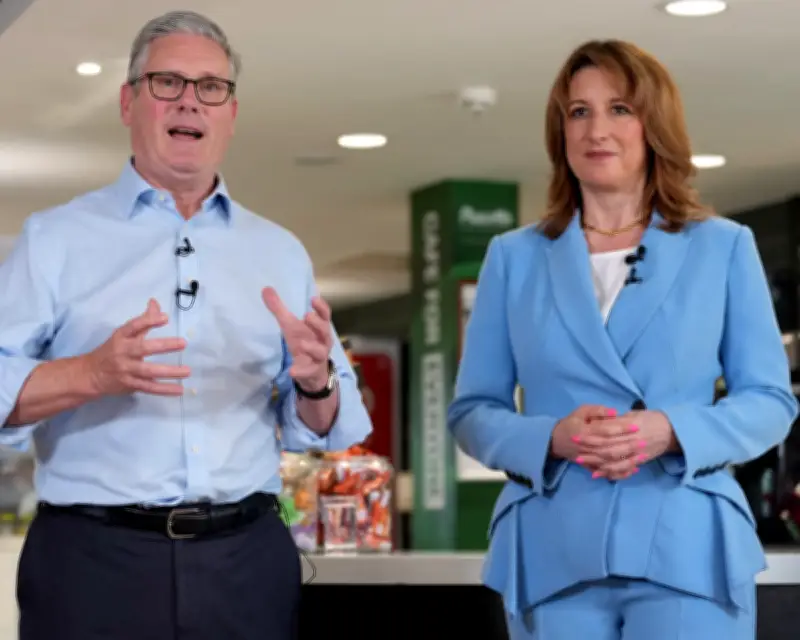
Keir Starmer is expected to face a leadership challenge, which would also put Rachel Reeves under pressure. Photograph: Kin Cheung/Reuters
UK Borrows More Than Expected as Impact of Iran War Takes Toll
May figure of £23.3bn underlines challenge facing Andy Burnham if he ends up as Labour leader.
The UK borrowed a higher-than-expected £23.3bn in May amid the economic fallout from the Iran war, underlining the fiscal pressures facing Andy Burnham if he takes over as the Labour leader.

In figures released shortly after Burnham’s victory in the Makerfield byelection, the Office for National Statistics (ONS) said public sector net borrowing – the difference between government spending and income – for the month was the second highest for any May on record.
With debt interest costs higher than expected as financial markets responded to the Middle East conflict, borrowing was £5.6bn ahead of the forecast published alongside the chancellor Rachel Reeves’s spring statement in March.
City economists had expected much lower borrowing of £18.5bn, down from a revised £23bn in April.
Tom Davies, a senior statistician at the ONS, said: “Borrowing in the first two months of the financial year was nearly £9bn higher than in the same period of 2025. Spending on debt interest, public services, investment and benefits all increased in May 2026 compared with last May, more than outweighing higher tax receipts.”
Taking the first two months of the new fiscal year together, the ONS said borrowing was £46.3bn – £8.9bn higher than a year ago, and £7.7bn ahead of Office for Budget Responsibility forecasts.
Burnham is expected to challenge Keir Starmer for the Labour party leadership after his byelection win. If he wins, he is expected to appoint a new chancellor, who will immediately face questions about how they intend to meet Reeves’s fiscal rules and whether they will commit to fully funding the defence investment plan, which prompted the resignation of John Healey as defence secretary last week.
The energy secretary, Ed Miliband, and the home secretary, Shabana Mahmood, have been mooted as potential candidates to replace Reeves. Whoever takes over could also face pressure from bond markets, nervous about what a change of leadership would mean for growth and taxation.
Martin Beck, the chief economist at the consultancy WPI Strategy, said: “The danger for Labour is that political uncertainty starts to carry a fiscal price. If investors begin to price in larger deficits or stickier inflation, gilt yields could move higher again, feeding directly into mortgage rates and debt interest costs.”
Explaining the borrowing overshoot, the ONS pointed to higher-than-expected inflation, which had pushed up the cost of providing public services and increased interest payments on inflation-linked government bonds.
The Bank of England – which kept interest rates on hold at 3.75% on Thursday – had expected inflation to fall close to its 2% target in the spring but progress was forestalled by rising fuel prices, as the Middle East war pushed up energy costs, and it remained at 2.8% last month. Reeves made clear her anger at the conflict, calling it a “folly”.
Debt interest payments were £11.7bn in May – £4.1bn more than a year ago. Borrowing rose despite the fact that tax revenues were up £3.4bn, or 4.1%, on a year ago, at £85.5bn, with the VAT and income tax take up.
Government debt levels are also running ahead of the OBR’s forecasts, at 95.1% of gross domestic product – 0.7 percentage points higher than projected in the spring forecast.
Responding to the figures, Lucy Rigby, the chief secretary to the Treasury, said: “Inflation has held steady and unemployment has fallen this week, but the war in the Middle East has clearly had an impact on economies around the world. We have the right economic plan to deal with these challenges.”