American West Metals Initiates Extensive Drill Campaign in Utah
American West Metals has secured drill contractors and is set to mobilise to its West Desert critical minerals project in Utah this month, marking the most significant work program at the asset since the initial mineral resource was established in 2023. The company plans to conduct up to 5,000 metres of diamond drilling in the opening phase, aimed at expanding the existing mineral resource and testing several strategic, underexplored areas across the tenure.
Three-Pronged Exploration Strategy
The new campaign focuses on three key objectives: follow-up drilling on high-grade indium-rich skarns in the near-mine "Goldilocks Zone", the first gallium-focused drilling along the project's Juab Fault, and testing large magnetic and gravity anomalies with signatures similar to the existing West Desert deposit. American West managing director Dave O'Neil stated, "High-grade indium, copper, silver, gold, and gallium mineralisation has been discovered outside of the current West Desert resource by drilling, and we will look to significantly expand these zones of sought-after metals."
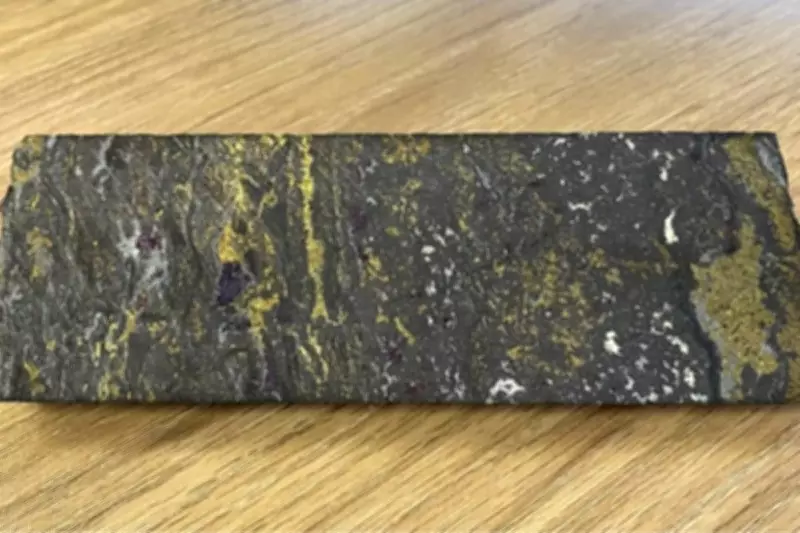
At the Goldilocks Zone, earlier sampling confirmed impressive grades, including up to 324 grams per tonne (g/t) indium, 4.9 per cent copper, 155g/t silver, and 5.4g/t gold in skarns located outside the current resource model. Recent drilling highlights include 17.22 metres grading 1.04 per cent copper, 0.58g/t gold, and 12.46g/t indium from 325.21 metres, with a higher-grade slice of 3.5 metres at 3.8 per cent copper, 0.8g/t gold, 98.9g/t silver, 18.8g/t indium, and 67.7g/t gallium from 421.2 metres.

Historical Findings and Additional Initiatives
Historical drilling outside the resource area yielded results such as 5.5 metres at 1.4 per cent copper, 3.8g/t gold, 22.2g/t silver, and 64.4g/t indium from 600.91 metres. Management has also noted a 1.1-metre gold vein grading 12.43g/t gold from 510.97 metres, indicating a late-stage gold overprint. Beyond drilling, the company plans to sample large volumes of mine waste from three historical zinc-silver-lead mines—Utah, Emma, and Galena—on its wholly owned patented claims adjacent to the deposit. These mines operated between 1890 and 1953, and the waste may contain critical metals like gallium, indium, and antimony not recovered during historical processing.
Additionally, 2026 will see the first-ever gallium-focused drilling along the Juab Fault, in a geological setting similar to Utah's Apex gallium–germanium mine. The Apex mine, operational from 1985 through the early 1990s, produced germanium and gallium from material left behind by earlier copper-lead-silver mining, and is widely considered the world's first mine primarily for gallium and germanium. Gallium is essential for compound semiconductors used in LEDs, laser diodes, and power devices.
Resource and Geophysical Insights
West Desert currently holds a JORC resource of 33.7 million tonnes at 3.83 per cent zinc, 0.15 per cent copper, and 9.08 grams per tonne silver. The project also includes 33.7 million tonnes grading 20.01g/t for 23.76 million ounces of indium, described as the largest resource of its type in the United States. Geophysics plays a crucial role, with the deposit located within a strong magnetic response and coincident gravity anomaly, first identified by drilling on the western edge of a magnetic feature stretching over 5.6 kilometres across the project. Most of this geophysical corridor remains untested, offering significant exploration potential, and a project-wide gravity survey has identified multiple anomalies comparable in scale to the deposit.
American West finished the December quarter with $6.776 million in cash and cash equivalents. The West Desert project now features a defined resource, a near-mine indium upgrade target in Goldilocks, a fault-controlled gallium ambition with potential analogues to Apex, and a long magnetic trend awaiting drilling. If the upcoming 5,000-metre program successfully converts skarn hits into resource tonnes, future updates are expected to focus on quantitative results rather than descriptive terms.