Dateline Resources Fast-Tracks Exploration at US Heavy Rare Earths Project
Dateline Resources has wasted no time in initiating an aggressive early-stage exploration program at its newly acquired Music Valley heavy rare earths project in California. The move comes just days after the company sealed the acquisition deal, demonstrating a rapid and focused approach to building a comprehensive dataset through geophysics, mapping, and geochemistry before advancing to drill testing.
Airborne Survey to Sharpen Geological Understanding
The company has mobilised a high-resolution airborne magnetic and radiometric survey across the project area and surrounding ground. This helicopter-borne survey, to be conducted by Precision GeoSurveys, will cover 2,172 line kilometres at low altitude and tight line spacing. The work is scheduled to begin next week and is expected to take up to 10 days to complete, with results anticipated within three to four weeks.
The geophysical program aims to identify prospective Pinto Gneiss areas, a metamorphic host rock commonly found in California. Historical United States Geological Survey (USGS) sampling has linked this rock to standout heavy rare earths grades in the region, providing a strong foundation for Dateline's efforts.

Specialist Field Crew and Historical Context
Running in parallel with the airborne work, Dateline has assembled a specialist rare earths field crew to kick off detailed mapping and rock chip sampling. Renowned rare earths expert Tony Mariano Jr and structural geologist Dr Russell Mason are tasked with building a comprehensive geological model and identifying zones most worthy of follow-up work.
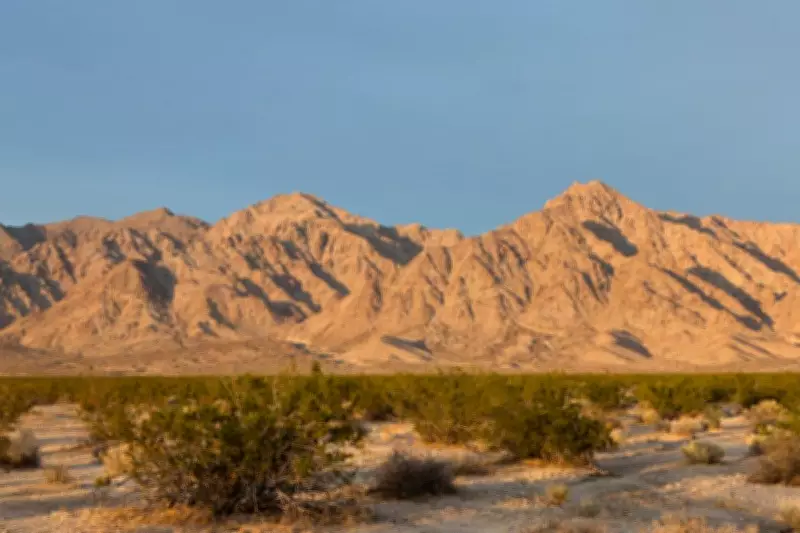
The Music Valley project benefits from extensive surface exposure, with large areas of intact outcrop and minimal transported cover. Historical geological mapping has hinted at well-preserved structures across the project area, offering Dateline an excellent opportunity to rapidly test surface mineralisation and refine drill targets.
The project comprises 57 claims covering 1,140 acres in Riverside County, California. This region was first identified by USGS as hosting heavy rare earths mineralisation as far back as the 1950s. Historic rock chip sampling by the US geoscience agency reported total rare earth oxide (TREO) values ranging from 6.69 per cent to 15.04 per cent, with strong enrichment in heavy rare earth elements such as dysprosium, terbium, yttrium, and ytterbium. The mineralisation is believed to be primarily hosted in xenotime, a rare earths phosphate mineral within the Pinto Gneiss.
Strategic Importance and Market Context
Dateline sees Music Valley as strategically important amid the growing push by the United States to secure domestic supplies of critical minerals. These minerals are essential for electric vehicles, renewable energy technologies, advanced electronics, and defence applications. Heavy rare earth elements like dysprosium and terbium play a key role in improving the heat resistance and strength of permanent magnets, which are vital for electric vehicle motors, wind turbines, and other modern electronic devices.
However, global rare earths supply remains heavily concentrated outside the United States, with MP Materials' Mountain Pass rare earths operation in California currently the sole significant domestic producer. This underscores the urgency for new domestic sources.
Dateline Resources managing director Stephen Baghdadi emphasised the company's rapid execution, stating, "Within days of completing the acquisition, we have mobilised airborne geophysics and assembled a specialist REE team on the ground. This is deliberate, disciplined, and urgent execution. The United States urgently needs domestic sources of heavy rare earths. Dysprosium, terbium, and yttrium are strategic materials, and secure supply is no longer optional, it is essential."

Future Prospects and Portfolio Growth
With airborne surveys soon underway, specialist teams on site, and a strong historical foundation to build upon, Music Valley is shaping up as an exciting new pillar in Dateline's growing US-focused critical minerals portfolio. If the project delivers anything close to its historical rare earths grade indications, particularly with significant volume, the company's fast-tracked approach could prove decisive in securing a competitive edge in the market.
The fast-tracked exploration push follows Dateline's acquisition of Music Valley from Fermi Critical Minerals in late February. The upcoming survey will cover the claims acquired from Fermi as well as other prospective ground to the north and northeast, further expanding the company's exploration footprint.