Dateline Resources Completes Major Airborne Survey at California Rare Earths Project
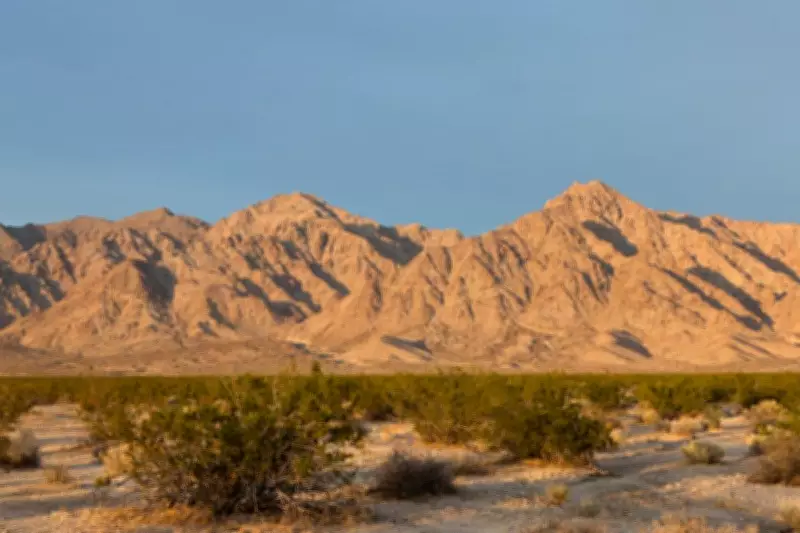
Dateline Resources has successfully concluded a high-resolution, helicopter-borne geophysical survey at its Music Valley heavy rare earths (HREE) project in California, marking a pivotal step in the exploration of what could become a globally significant rare earths district. The Sydney-based company's survey covered the entire 20,520-acre footprint of the project, located in Riverside and San Bernardino Counties, an area renowned for its geological similarity to the colossal Mountain Pass mine.
Advanced Survey Techniques and Strategic Importance
The survey, executed by Nevada-based specialist Precision GeoSurveys, involved flying at a low altitude of just 30 metres above ground with tight 50-metre line spacings. This approach generated an exceptionally detailed magnetic and radiometric dataset across 2,172-line kilometres, enabling the detection of subtle geological variations that higher-altitude surveys might miss. The data is now being processed by Australian consultancy firm Mitre Geophysics for further analysis and target refinement.
Heavy rare earth elements, such as dysprosium, terbium, and yttrium, are critical components for electric vehicles, wind turbines, and advanced defence systems. With China currently dominating global HREE supply, discoveries in stable jurisdictions like California are of immense strategic value. Dateline's project benefits from extensive surface exposure and minimal cover, facilitating on-ground mapping and sampling by specialists Tony Mariano Jr and Dr Russell Mason.

Historical Context and Broader Portfolio
Rare earth mineralisation in the Music Valley area was first identified by the United States Geological Survey in 1954, with mineralisation hosted in accessory minerals like xenotime and monazite. Historically, the region was prospected for gold over a century ago, and Dateline is leveraging this by assaying all samples for gold alongside rare earths, adding potential value to the project.
Music Valley is part of Dateline's broader portfolio, which includes the flagship Colosseum gold-REE project with a 1.1-million-ounce gold resource and an independently assessed NPV of US$550 million. The company also holds the Argos strontium project, reportedly the largest strontium deposit in the US, positioning Dateline as a diverse player in critical minerals within a stable mining jurisdiction.
Future Steps and Global Implications
Assay results from the current field sampling are expected within five to seven weeks, followed by interpretation of the geophysical data. If successful, Music Valley could emerge as a key project in the global rare earths market, reducing reliance on Chinese supply and supporting the energy transition. Dateline's systematic exploration approach underscores the growing importance of securing strategic mineral resources in geopolitically stable regions.