Noronex Employs Gravity Technology to Probe Major Copper-Silver Discovery in Botswana
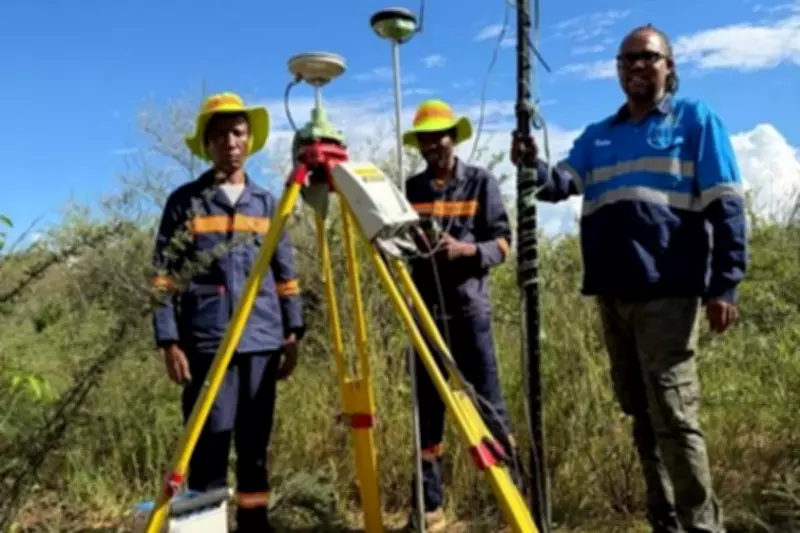
Noronex Limited has commenced a comprehensive ground gravity survey at its expansive Cgae Cgae copper-silver project in Botswana, marking a strategic advancement in its exploration efforts. This initiative follows the completion of initial drilling campaigns in the southern region of the project, setting the stage for a detailed subsurface investigation.
The gravity survey is specifically designed to target the stratigraphy and structural features of the concealed Kalahari Copper Belt. By mapping density contrasts and identifying hidden geological formations, this survey aims to reveal vast, low-grade copper potential embedded within the basin's architecture. This approach is expected to illuminate mineralised horizons buried beneath the sand, thereby enhancing geological models and guiding future drill targets across this mammoth project area.
Recent Exploration Activities and Strategic Partnerships
Noronex recently concluded a scout reverse circulation (RC) drilling program in the southern section of the Cgae Cgae project, involving 35 holes drilled over 2655 metres. This program served as a preliminary assessment to document lithology, structure, alteration, and background geochemistry in basement rocks, rather than a definitive test for economic mineralisation. Assay results from this drilling are currently pending, with further updates anticipated once all data has been received and thoroughly analysed.

Large portions of the Cgae Cgae licences are obscured by transported Kalahari sediments, which limit traditional surface mapping techniques. Consequently, geophysical tools like gravity surveys are deemed essential for imaging subsurface features and overcoming these exploration challenges. The upcoming gravity survey will form part of a staged approach across both northern and southern licence blocks, an area that has seen limited modern exploration compared to other segments of the prolific Kalahari Copper Belt.
Victor Rajasooriar, Managing Director and Chief Executive Officer of Noronex Limited, emphasised the significance of this milestone, stating, "The commencement of the gravity survey at Cgae Cgae represents an important milestone in our systematic exploration strategy within the Kalahari Copper Belt. This work is designed to improve our understanding of the sub-surface geology beneath the Kalahari cover and to refine high-priority targets across the project area."
Funding and Collaborative Ventures
The exploration activities are financially supported under the Cgae Cgae earn-in agreement with South32, a major base metals company. According to the terms, South32 can earn a 60 per cent interest in the vast Botswana and Namibia projects by investing $4 million annually in exploration for a minimum of five years, with Noronex continuing to serve as the operator. This partnership underscores the project's potential and aligns with broader regional exploration efforts.
These programs complement South32-funded drilling at the Humpback-Damara project in Namibia, targeting the same structural corridors that host significant projects elsewhere in Northern Botswana's Kalahari Copper Belt. Notable examples include China Minmetals' Khoemacau copper-silver mine, which contains three million tonnes of copper and 130 million ounces of silver, and Sandfire Resources' Motheo project, with approximately 600,000 tonnes of contained copper.
Expansion into Uranium Exploration
In addition to its copper-silver focus, Noronex has recently embarked on its first drilling initiative for uranium, launching a maiden reverse circulation drilling program at its Etango North uranium project in Namibia. Located about 32 kilometres east-northeast of Swakopmund, this project is situated in a prime geological area, sharing the same interpreted corridor as Bannerman Resources' substantial 207-million-pound Etango project. The region is also home to the Rössing and Husab uranium mines, situated a further 36 kilometres to the northeast.
The Rössing uranium project is one of the world's largest open-pit uranium mines, having produced over 140,000 tonnes of yellowcake from its inception in 1976 until 2022, highlighting the area's rich uranium resources.

Methodical Exploration and Future Prospects
With gravity stations being deployed across its northern blocks in Botswana and assay results from southern scout holes still awaited, Noronex is methodically uncovering the geological secrets hidden beneath the Kalahari blanket. In a province already dominated by some of the world's largest copper miners, the search continues for the next major copper-silver system—deep, structurally complex, and potentially highly rewarding for this determined junior explorer.
As Noronex advances its exploration strategy, the integration of gravity surveys with ongoing drilling efforts positions the company to potentially unlock significant mineral wealth in one of Africa's most promising mining regions.