The Western Australian Government is facing mounting political pressure to provide significant stamp duty relief in its upcoming May budget, with the state's Liberal opposition arguing that current taxes are crippling the property market and exacerbating Perth's severe housing shortage.
Opposition Proposes Immediate 20 Percent Reduction
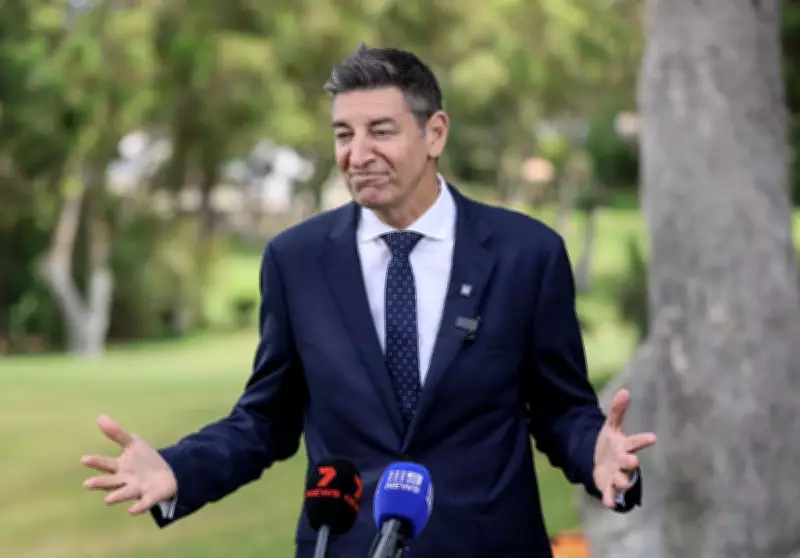
WA Liberal leader Basil Zempilas and housing spokesperson Sandra Brewer have launched a concerted campaign calling for the Cook Government to slash stamp duty taxes by twenty percent in the forthcoming budget. They contend that such a measure is essential to stimulate much-needed movement in the stagnant housing market.
"Any stamp duty relief will help get the market moving," Mr Zempilas stated emphatically. "We have as much of an issue with accessibility right now as we do with affordability. There just aren't anywhere near enough homes on the market. If the Government lowers the stamp duty burden they will help encourage people into the market and that movement is essential. It's a lever the Government are not pulling."

Current Market Figures Paint a Dire Picture
According to the latest forecasts from the Real Estate Institute of Western Australia (REIWA), the Greater Perth region has a mere 2,444 properties listed for sale and only 2,087 available for rent. Industry experts assert that for the market to achieve a healthy balance, there needs to be at least 13,000 properties available for sale—a figure dramatically higher than the current listings recorded at the end of January.
Mr Zempilas highlighted that exorbitant stamp duty fees are preventing homeowners from selling their existing properties, particularly those considering downsizing. While sellers could potentially realise substantial profits, the prohibitive costs associated with purchasing another home—including massive stamp duty charges—are causing them to hesitate.
Previous Reforms Have Failed to Stimulate Activity
In the June 2025 budget, the WA Government introduced adjustments to stamp duty thresholds aimed at assisting young first-home buyers. Under these changes, no stamp duty is payable on homes valued up to $500,000, with a reduced rate applying to properties valued between $500,000 and $700,000 within the Perth metropolitan and Peel regions, and between $500,000 and $750,000 outside these areas.
However, these incentives have proven ineffective in revitalising the market. Ms Brewer argues that a more immediate and impactful measure would be to cut stamp duty rates by twenty percent across the board. "We're calling on the Treasurer to implement meaningful stamp duty reform in 2026," she declared. "This could include reducing stamp duty rates by around 20 percent, funded by the Treasurer's extraordinary windfall gains forecast up to 2029."
Stamp Duty Revenue Has Soared in Recent Years
Government revenue from stamp duty has experienced a dramatic increase, rising from $1.2 billion in the 2019-20 financial year to a substantial $3.1 billion in 2024-25. This significant growth has provided the state with considerable fiscal flexibility, which the opposition believes should be used to provide tax relief to struggling homebuyers and sellers.
Industry Bodies Advocate for Comprehensive Reform
In its formal budget submission to the Cook Government, REIWA has recommended that the first homeowner stamp duty thresholds be adjusted to reflect Perth's rising median house price, which Domain and Cotality currently list at approximately $1 million. The institute has also proposed a $10,000 downsizing concession for seniors to incentivise them to sell their larger family homes.
The Chamber of Commerce and Industry of WA (CCIWA) has long advocated for the complete abolition of stamp duty, reiterating its position this week. CCIWA Chief Economist Dr Daniel Kiely described stamp duty as a "major upfront barrier to purchasing a property" that particularly disadvantages young people attempting to enter the market.

"Stamp duty restricts job mobility for homeowners, making it harder for them to buy a new home if their employment or personal circumstances change," Dr Kiely explained. "CCIWA has long called for stamp duty to be scrapped altogether. We believe it should be replaced by a fairer broad-based replacement tax on the property's gross rental value. This would deliver more efficient housing and better social outcomes."
Dr Kiely further argued that such reform would facilitate easier relocation for employment, family, or educational purposes, assist those wishing to downsize, lower barriers to entering regional housing markets, and enable current fly-in-fly-out workers to purchase properties closer to their work sites. Additionally, he noted that reforming stamp duty would reduce volatility in the state budget and enhance long-term fiscal planning.
As the May budget approaches, the Cook Government must carefully weigh these mounting calls for stamp duty relief against its broader fiscal objectives, with the health of Western Australia's property market hanging in the balance.