Bali's Kite Culture: More Than Child's Play, A Spiritual Tradition
In Australia, flying kites is often seen as a simple childhood pastime, but in Bali, it holds a profound cultural significance. Deeply rooted in tradition, kite flying in Bali is believed to appease the gods and is embraced by people of all ages and socio-economic backgrounds, making it a cherished communal activity.
A Team Sport with Giant Creations
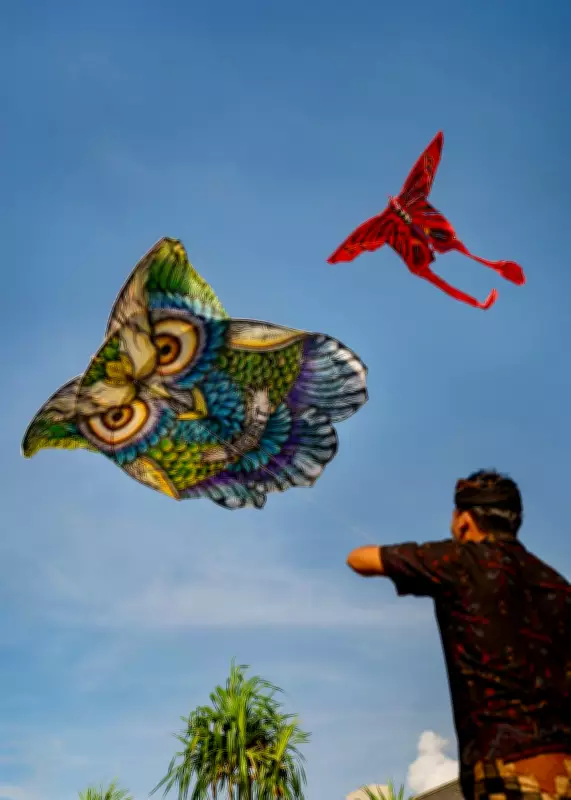
Kite flying in Bali transcends casual fun, evolving into a competitive team sport. During the dry season from June to September, when cool winds from Australia sweep across the island's south coast, villages come alive with the creation and flight of giant kites. These impressive structures, shaped like dragons or fish, can measure up to 10 meters across and feature tails stretching as long as 100 meters, showcasing the skill and creativity of local communities.
Historical Roots and Spiritual Significance
To delve into this tradition, we spoke with Sheryl Eupena, an experience manager at the Regent Canggu Bali, a luxury hotel. Sheryl, who also teaches yoga and fitness classes, offers guests insights into Balinese culture through activities like making canang (religious offerings) and leading kite-painting classes. She explains that kites originated in China around 3000 years ago, initially used for military signaling. With Chinese trade in the seventh century, kites spread to Bali and other parts of South-East Asia.

In Bali, kites were originally crafted from natural materials such as bamboo, cotton, and leaves, serving a practical purpose: scaring birds away from rice paddies to protect harvests. This success led to kites being viewed as gifts from the gods, transforming them into spiritual objects. Over time, as Balinese artisans became more creative, they began designing kites in various shapes, including fish, dragons, and birds, enriching the cultural tapestry.
Kite-Painting Classes: A Creative Experience
During Sheryl's classes, participants learn this origin story before decorating small bird-shaped kites. Using water-based paints and brushes on a blank canvas set on an easel, guests engage in a mindful activity. This isn't just for kids, Sheryl notes, as children may lose interest quickly. Instead, it often appeals to couples, particularly Chinese guests who appreciate the craft. For instance, a couple from Weifang, China's kite capital, took great pride in their work, planning to showcase it back home.
The painting process requires a light touch to avoid weighing down the kite, with paint drying almost instantly. Afterwards, Sheryl guides participants to a beachfront lawn to fly their creations. Many find this experience incredibly relaxing and therapeutic, offering a calming escape from daily life.
Where to Witness Bali's Kite Magic
To see large kites in action, head to popular beaches on Bali's lower west coast, such as Canggu, Kuta, Legian, Seminyak, or Seseh, during the dry season. Here, groups of young men wield spools the size of car tyres, launching massive dragon and fish-shaped kites into the sky, creating a vibrant spectacle.
For kite enthusiasts visiting in late July, Sanur on Bali's lower east coast is the ultimate destination. This tourism and kite-flying hub hosts the annual Bali Kite Festival at Padang Galak Beach, typically on the last or second-last weekend of the month. The exact date depends on weather conditions and is announced in early July.
The Bali Kite Festival: A Competitive Showcase
Founded in 1979, the festival attracts the best kite-flying teams from villages across Bali, as well as kite masters from Indonesia, China, and Australia, all competing for glory. Sheryl outlines the four judging criteria:

- Teamwork and communication: How effectively the team flies the kite.
- Flight smoothness: The kite's graceful movement in the sky.
- Sound quality: The volume and beauty of the sound produced by the kite's bamboo frame.
- Landing technique: A smooth catch is essential; hitting the sand results in point deductions.
Tickets for the Bali Kite Festival are available on the Bali Provincial Government's website and often sell out weeks in advance. Sheryl shares that she missed out last year due to high demand, but notes that spectators can still enjoy the sight of kites soaring high from the beach.
In summary, Bali's kite culture is a rich blend of spirituality, artistry, and sport, offering a unique glimpse into the island's traditions and community spirit.