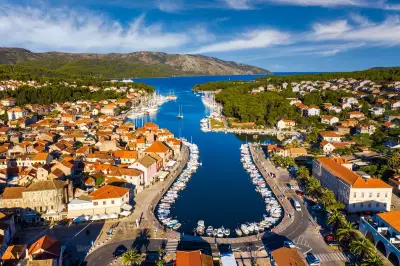
Fremantle businesses could be entering a dry spell this winter, as new spending data reveals how reliant the port city is on spending from international tourists.
Australian business banking platform Zeller conducted a study to determine the impacts of decreased international travel on local businesses amid the current global instability.
Fremantle was found to be particularly reliant on overseas tourists, as they contribute to 7.5 per cent of all spending in the city and spend on average 34 per cent more than local customers.

Some longstanding local businesses are already feeling their absence.
Phillip Dawson and his wife Frederica have retailed at the Fremantle markets for more than 40 years with their stall Cotton Pickin.
Mr Dawson said the markets rely on overseas visitors to thrive, but recent political tensions across the world have resulted in declining numbers.
“The Fremantle markets has always been a hub for overseas visitors, then a couple of phenomena happened and we started hearing tourists were trying to leave,” he said.
“I could see some colleagues’ businesses start to be affected, because there were slightly less visitors coming.
“A month and a half ago, it shifted where I think it’s starting to have an effect on the economy and tourists. Some businesses are probably not making their normal budgets.”
Mr Dawson sells sporting merchandise for AFL, rugby league, soccer and various US teams.
“I don’t rely fully on tourists - sometimes I get 60 per cent tourists and 40 per cent local, sometimes I get 60 per cent local and 40 percent tourists,” he said.
“There’s definitely less internationals in the winter. And the jury is still out if the Iran conflict continues ... I think there will probably be less overseas people, less people travelling around Australia because of the fuel costs.
“Even locals, because of fuel costs and inflation, might have to watch their spending even more.
“If it continues like this, it has to have a negative effect. There’s no way around it.”
Fellow Fremantle markets stallholder Rod Bates voiced similar concerns over the decline in international tourists.
“If it wasn’t for the tourists, we might survive, but we wouldn’t be very happy - I probably wouldn’t be there still,” he said.
“If the wars and whatever’s going on overseas continues and people stop travelling, I know that definitely will then affect the market no matter how strong your business is.”
Mr Bates and wife Ros have been running Artisan Game out of the markets for 16 years, selling packaged local game meat, jerky and biltong.
He said international tourists were his main target audience.
“It’s mainly targeted at the tourists so they’ve got something that’s sealed, with all the information on it, so it can go through the airport easily,” he said.
With this demographic declining over recent weeks, Mr Bates said his business was starting to be affected.
“Tourism is definitely affecting the markets as a whole. I have declined a little bit in this, but it could be seasonal as well because it’s just after the school holidays,” he said.
“The tourists are definitely not there like they used to be.”
Local businesses were also feeling the strain of increased costs due to the ongoing fuel supply issues in WA.
“I get a bit of my stock from the Eastern States, and the fuel levy has gone up about 50 per cent, so my delivery charges are a lot more,” Mr Bates said.
“I haven’t put my prices up because of the petrol yet ... but if it continues like that, we may have to put the prices up.”
The Fremantle markets has operated as a tourism hotspot since 1897, relying on overseas visitors as a key part of everyday trade rather than a seasonal boost like many other businesses.
Zeller director of growth Josh McNicol said the findings highlight the vulnerability of tourism-reliant economies.
“Fremantle’s local economy relies heavily on international tourism, making it particularly sensitive to global travel disruptions,” he said.
“Fewer international visitors means fewer customers through the door, lower sales, and added pressure on small businesses already managing tight margins and cash flow pressures.”

Mr McNicol said global conflicts can trickle down to local businesses in various ways.
“Reduced international mobility, whether due to safety concerns, airline cancellations, or increased travel costs driving down demand, cause significant impact on tourism-reliant regions such as Fremantle,” he said.
“At the same time, global instability can drive up operational and supply chain costs. Increases in fuel prices impact manufacturing prices, and shipping route disruptions can reduce availability of raw materials or inventory.
“Pressures to business cash flow can also result in merchants needing to pass costs on to customers, in some instances.”
If travel disruptions persist, Mr McNicol said the longer-term outlook could be detrimental unless business owners adjust their operating models.
“Whether that’s targeting offers and marketing to local tourists, diversifying their product or service offering to reach new customers, or looking at opportunities to reduce operating costs to improve the bottom line,” he said.
“Businesses that are able to adapt, by leveraging new payments technology, increasing their local market engagement, or offering differentiated experiences, will be better positioned to navigate uncertainty.”