
When you are well established in a career, opportunities to pivot your skill sets to something entirely new are rare. For renowned soprano Danielle de Niese, that rare chance came unexpectedly earlier this year when a six-week gap opened in her schedule. A planned project was delayed for technical reasons, and at that moment, Wild Arts producer Max Parfitt asked how well she knew Mozart's The Marriage of Figaro.
A Lifelong Connection to Figaro
De Niese has lived with this opera for as long as she can remember. Susanna's aria 'Deh, Vieni Non Tardar' was one of the first major arias she sang at age 12 or 13 while studying in Los Angeles. Later, she wrote her final high school paper on Figaro, examining the adaptation from Beaumarchais's play to Da Ponte's libretto. She even translated the entire score word for word, a deep dive that she believes is why she still knows it so intimately. Her Metropolitan Opera debut at 19 was in Figaro, singing Barbarina, and she performed her first Susanna on that same New York stage a few years later, going on to sing the role many times worldwide.
'I could sing it in my sleep,' she joked to Parfitt, who then asked if she might consider directing a new production. Conductor Orlando Jopling had written a reduced 10-person chamber orchestra version, with a minimal set, an even more minimal budget, and 20 wildly different venues across a three-month summer UK tour.

The Leap into Directing
Initially, de Niese was hesitant. 'Wow … I hadn't really thought about directing,' she said. She treasures working with directors like Jonathan Miller, Richard Eyre, and Robert Carsen, and considers the director-performer relationship one of the most intimate in the rehearsal room. 'Why would I want to change sides?' she wondered. But then she reflected on her masterclasses, where she guides singers on how to let thoughts guide them and be the emotional driver of the music. Perhaps she could direct. 'When you're well established in a career, opportunities to turn your skill sets to something totally new are rare,' she noted.
She decided to try, thinking, 'What's the worst that can happen? It'll go wrong? I won't be good?' She doesn't want to be a full-time director; she loves her day job performing around the world. But her mother always told her to 'Dare to dream,' and she has lived that mantra every day. Better to try and fail than never try at all, she decided, and so she agreed.
Reimagining Figaro
Because the opera is in her DNA, her preparation wasn't about studying the notes but about reimagining them from the perspective of shaping the piece character by character. This differs from performing, where you can only contribute your part in the greater whole. Given the constraints of multiple venues requiring a minimal and adaptable set, de Niese chose to set her Figaro in the 18th century, the time it was written. For her, the most important thing is that every character must be realistic, and everything they do must make complete sense. 'As a stage performer, I can't do anything unless I understand who my character is and why she makes the decisions she does,' she explained.
She hates falling into tropes and well-worn paths just because that's how it's always been done. She believes Figaro has many such tropes. The Count is often played as a bit of a buffoon, with his household running rings around him. Cherubino, the young page, is often portrayed as a gangly, overexcited female version of a boy not in control of his limbs. Even singers new to the role often start with these habits. De Niese wants to make it all feel less pantomimic. Yes, Figaro is a comedy, even a farce, but the plausibility of the plot depends on every singer portraying their character and each plot action believably. If one person doesn't, the dominoes will fall. From the very first note of the overture, every moment needs coherence and tension.
The Count's Redemption
The opera's final scene, where the Count asks for the Countess's forgiveness, is incredibly poignant, but in many productions, audiences may titter. How can a selfish comic lout sincerely ask for forgiveness with Mozart's heartbreaking music? For the audience to believe and be moved, a director must draw that possibility into the Count from his first appearance, threading it backwards.

Performing Susanna herself, de Niese always felt that you have only 10 minutes to make the audience fall in love with her and Figaro. Two duets and two recitatives—if you just perform them as introductions, how will the audience care about their marriage? In whatever production she was in, she wanted her Susanna and Figaro to look like a couple truly in love, so the audience invests in their happiness as they navigate difficulties.
Coaching and Communication
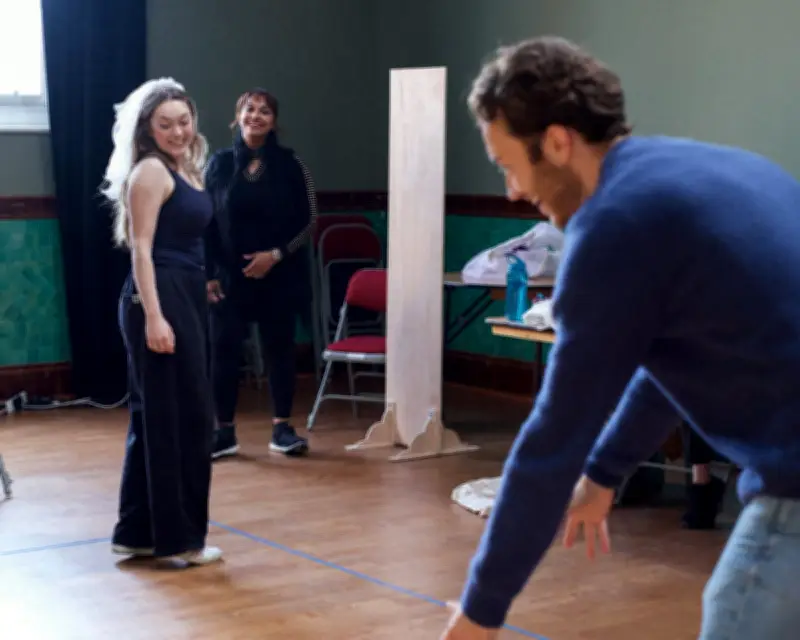
As an interpreter, de Niese has been able to coach the singers on delivery, ensuring everything is communicated with phrasing and meaning, with no lines delivered on autopilot. Singing in English means British audiences will notice any poor delivery. Every gesture, raised eyebrow, pause, and word counts.
A great live performance can transform spectators into participants. That's her biggest hope for this production. Taking such a leap into the unknown at this stage in an established career is daunting but fascinating. She has had fun coming up with inventive ways to use four boxes, six screens, four chairs, and a tree. She even took her son's old building blocks, cut scrap paper into pieces, stuck them on as sides, and experimented with turning each side to make different parts of the set.
A Perfect Opera, Hard to Get Right
In a recent interview with Orlando Jopling, de Niese said, 'Figaro is a perfect opera. It's hard to mess it up.' Jopling countered, 'Figaro is a perfect opera; it's hard to get it right!' They laughed and debated on camera. De Niese meant that the music is so perfect and beloved that it's hard for it to go badly. But the challenge lies in going beyond the well-trodden path of cliche to tell a story that is not only comedic and touching but perilous and, most importantly, plausibly real.
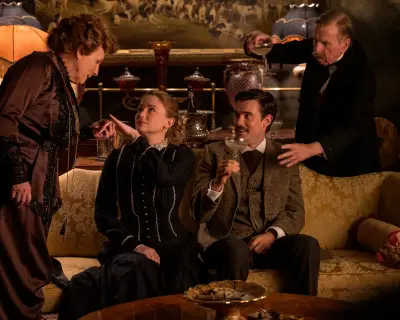
Wild Arts' production of The Marriage of Figaro, directed by Danielle de Niese, opens at Layer Marney Tower, Essex, on 5 June, before touring across England and Wales until 27 September.