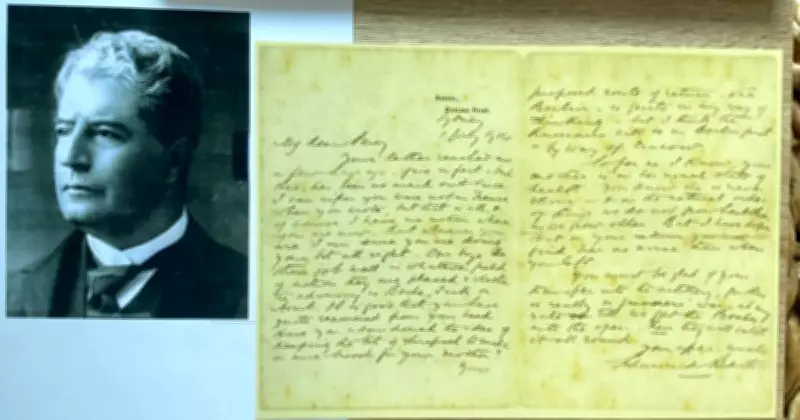
A poignant letter written by Australia's first prime minister, Sir Edmund Barton, to his nephew during World War I has been discovered, shedding light on the personal side of a national figure. The letter, penned in 1916, offers solace and guidance to Barton's nephew, who was serving on the front lines. In the correspondence, Barton expresses deep concern for his nephew's wellbeing, while also conveying a sense of pride in his service to the nation.
Historical Significance
This letter is a rare artifact from one of Australia's founding fathers. Barton, who served as prime minister from 1901 to 1903, was known for his eloquence and leadership during the federation era. The letter provides an intimate glimpse into his character, showcasing his compassion and familial devotion. Historians have long sought personal documents from Barton, as much of his private correspondence has been lost over time. This discovery adds a valuable piece to the puzzle of understanding his life beyond politics.
Content of the Letter
The letter, dated August 1916, addresses Barton's nephew, who was fighting in the trenches of France. Barton writes: "I think of you often, and hope that you are keeping safe. Your courage and sacrifice are not forgotten by those of us at home. We pray for your swift return." The tone is both paternal and patriotic, reflecting the sentiments of many Australians during the war. Barton also shares news of family and friends, offering a sense of normalcy amidst the chaos of war.

Preservation and Display
The letter was recently uncovered among a collection of family papers donated to the National Library of Australia. It will be digitized and made available to the public, allowing Australians to connect with this piece of history. The library plans to feature the letter in an upcoming exhibition on World War I correspondence. Experts are thrilled about the find, noting that such personal artifacts provide a deeper understanding of the human experience of war.
Impact on Historical Understanding
This letter not only highlights Barton's personal side but also serves as a reminder of the sacrifices made by Australian families during WWI. It humanizes a historical figure often remembered only for his political achievements. The letter's discovery has sparked renewed interest in Barton's life and legacy, prompting calls for further research into his private writings. As one historian remarked, "This letter is a window into the soul of a man who helped shape a nation."
The letter is expected to be a highlight of the library's collection, drawing visitors from across the country. It stands as a testament to the enduring power of written words to bridge the gap between past and present.