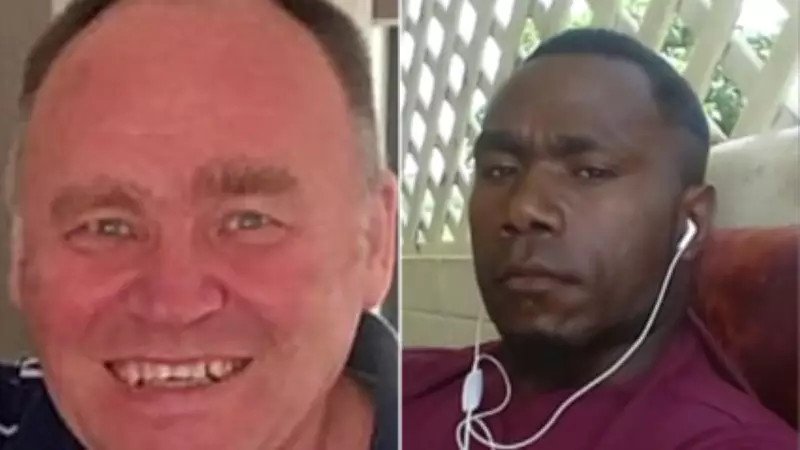
A jury has heard disturbing new details about the final hours before a 66-year-old man died after his leg was allegedly amputated with a circular saw in a riverside park.
Charges and Plea
John Yalu, 41, has pleaded not guilty to murdering Kalman Tal in February 2022 in Innisfail, Far North Queensland, but admitted the lesser charge of manslaughter.
Background of Chronic Pain
The Supreme Court trial in Cairns has heard confronting allegations that Tal spent years begging people to amputate his leg after suffering chronic pain he said doctors refused to treat by removal. The court also heard Tal had researched amputation and euthanasia online for years before the fatal procedure.

Jurors were told he had become increasingly determined to have the limb removed after suffering chronic pain linked to a workplace injury.
Defence Closing Address
During his closing address, the defence barrister Angus Edwards, who previously represented convicted murderer Rajwinder Singh during his Toyah Cordingley murder trial, said Tal repeatedly approached strangers asking for help because he was “in pain” and believed “nobody was helping him”.
“It was a debilitating pain, that lasted some four to five years and he couldn’t get help for it,” he told jurors.
The defence said Tal had openly told people: “My leg is killing me, I’m having trouble walking, standing and the doctors won’t do anything about it.”
“I want it off.”
The defence argued Tal had been “shopping around” for someone willing to amputate the limb.
“I suggest this was Kalman Tal, who else would it be,” Edwards told jurors.
Prosecution Allegations
Earlier in the trial, prosecutors alleged Yalu amputated Tal’s left leg above the ankle using a battery-powered circular saw after agreeing to perform the procedure for $5000.
Jurors were shown confronting CCTV footage prosecutors say captured the amputation and the moments afterwards.
The Crown argued there had been “plenty of time to stop, to pull out, to get up and walk away”.
“But the defendant didn’t, because he made a decision to stay,” Justice Henry summarised.
Prosecutors also argued the blood loss would have been immediately obvious.
“The blood would have flowed with the opening and cutting, but still the defendant chose to press on,” the judge said.
Jurors were also told attempts to stop the bleeding using sticky tape and plastic shopping bags as makeshift tourniquets were unsuccessful.
Events After Amputation
The trial previously heard Tal later collapsed while “bleeding profusely” before crawling back towards his car. Jurors also heard Tal attempted to apply a tourniquet to himself before driving away from the park and contacting emergency services.
About 4.30am, he was found unconscious beside his vehicle near an Innisfail fish and chip shop after handing a mobile phone already connected to triple-0 to a passer-by.
Emergency services attempted CPR and applied a tourniquet, but Tal died from blood loss caused by the amputation.
Defence Argument
The defence said Yalu voluntarily detailed his version of events to police.
“He told the police everything,” Edwards said. “He didn’t have to, but he wanted to tell police his series of events.”
According to the defence case, Tal organised almost every aspect of the encounter himself and directed parts of the process once the amputation began. Yalu believed he was helping relieve Tal’s suffering rather than intending to seriously injure or kill him, they argued.
“Not to do grievous bodily harm but to alleviate the suffering of Mr Tal,” Edwards said. “The accused honestly believed he was helping an old man who was experiencing pain.”
The court also heard Yalu suggested going to police beforehand, but Tal refused.
Jury Deliberation
A reserve juror was dismissed during proceedings after developing a heart condition. Yalu has already admitted manslaughter, meaning jurors must now decide whether prosecutors have proven the more serious charge beyond reasonable doubt.
The jury continues deliberating on Friday.