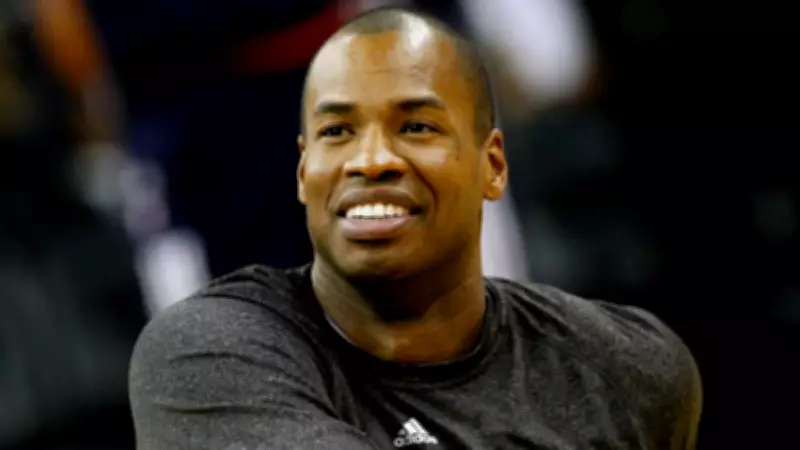
NBA trailblazer Jason Collins has passed away at the age of 47, following an eight-month struggle with a brain tumour. Collins was diagnosed with a Stage 4 glioblastoma last year and was given little chance of survival.
Family Announces Sad News
His family announced the tragic news on Tuesday (local time), describing him as "an inspiration to all who knew him" and stating he will be "dearly" missed. Collins is remembered as the NBA's first openly gay player, who later became a pioneer for inclusion and an ambassador for the league.
NBA Career and Coming Out
Collins spent 13 seasons in the NBA, playing for six different franchises. He publicly came out as gay in 2013, an announcement that came near the end of his playing career. "Jason changed lives in unexpected ways and was an inspiration to all who knew him and to those who admired him from afar," the Collins family said in a statement. "We are grateful for the outpouring of love and prayers over the past eight months and for the exceptional medical care Jason received from his doctors and nurses. Our family will miss him dearly."

Recent Recognition
Just last week, Collins was awarded the inaugural Bill Walton Global Champion Award at the Green Sports Alliance Summit. Too ill to attend, his twin brother and former NBA player Jarron Collins accepted on his behalf. "I told my brother this before I came here: He’s the bravest, strongest man I’ve ever known," Jarron Collins said during the acceptance speech.
Career Statistics and Impact
Collins averaged 3.6 points and 3.7 rebounds per game over his career. He helped the New Jersey Nets reach two NBA Finals and recorded his best season in 2004-05, averaging 6.4 points and 6.1 rebounds. NBA Commissioner Adam Silver praised Collins: "Jason Collins’ impact and influence extended far beyond basketball as he helped make the NBA, WNBA and larger sports community more inclusive and welcoming for future generations. He exemplified outstanding leadership and professionalism throughout his 13-year NBA career and in his dedicated work as an NBA Cares Ambassador. Jason will be remembered not only for breaking barriers, but also for the kindness and humanity that defined his life and touched so many others. On behalf of the NBA, I send my heartfelt condolences to Jason’s husband, Brunson, and his family, friends and colleagues across our leagues."
Coming Out Story
Collins revealed his sexuality in a first-person account for Sports Illustrated in April 2013. At the time, he was a free agent but expressed a desire to continue playing, eventually appearing in 22 games with Brooklyn the following season. "If I had my way, someone else would have already done this," he wrote. "Nobody has, which is why I’m raising my hand." His decision garnered widespread support, including from star players like Kobe Bryant and even the White House, with former President Bill Clinton—whose daughter Chelsea attended Stanford with Collins—offering his backing.
College and Personal Life
At Stanford, Collins roomed with Joe Kennedy III, who later served eight years in Congress representing Massachusetts. Collins wrote that he realised he needed to come out when Kennedy marched in Boston’s gay pride parade in 2012, but he could not do the same. He wore jersey No. 98 for most of his final three seasons with Boston, Washington, and Brooklyn, honouring Matthew Shepard, a gay college student killed in 1998. He also wore No. 46 in one game for the Nets, as it was the only jersey available when he signed. Collins made nearly 61 per cent of his shots at Stanford, a school record, and was an honorable mention All-America selection by The Associated Press in 2001. He was drafted 18th overall by the Houston Rockets that year.
Tributes
Former Stanford coach Mike Montgomery said: "It’s a sad day for all of us associated with Stanford basketball when we lose one of the program’s greats. We all have great memories of Jason and the kind of person he was. It’s hard to separate Jarron and Jason because they thought so alike, but even though he was an identical twin, Jason was unique in his own way. The impact he had on Stanford was immense, as he could match up against anyone in the country because he was big, smart, strong and skilled, all while being a very bright and nice person."

Collins is survived by his husband, Brunson, and his family.