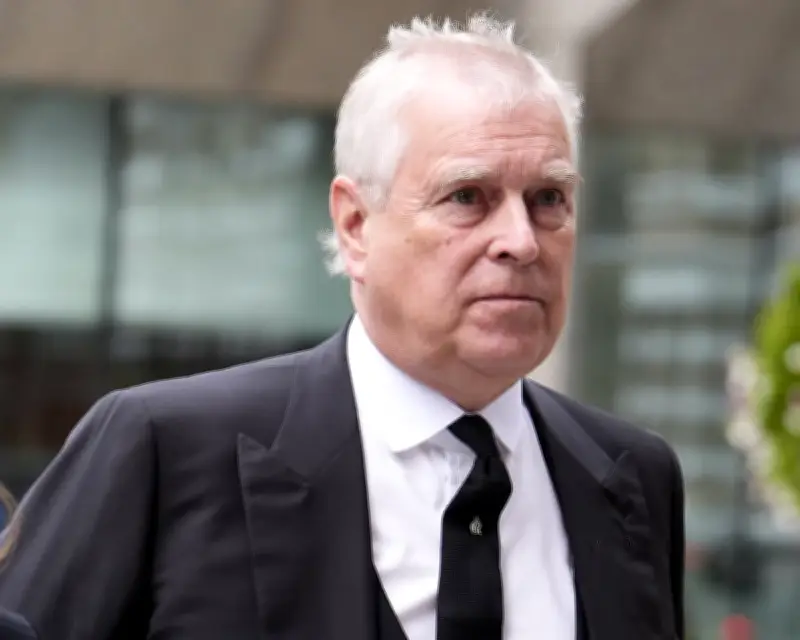
Campaigners have called for radical reform and a public inquiry into all royal finances after revelations that Andrew Mountbatten-Windsor received an undisclosed private income from subletting three cottages on his Royal Lodge estate while paying a peppercorn rent.
NAO report findings
A report from the National Audit Office (NAO) found that the rental income went to the former Duke of York, but stated: We do not know what rent was charged. The report was published as part of a public accounts committee inquiry set up after a public outcry over revelations that the former prince was paying a peppercorn rent on the Royal Lodge estate in Windsor before being evicted to Marsh Farm in Norfolk by the king.
Reactions from campaigners
The anti-monarchy campaign group Republic and former Liberal Democrat minister Norman Baker said they would press the public accounts committee for a full investigation. Republic called the subletting a flagrant abuse of public property and said that while serious concerns remained about the former duke's use of publicly owned property, the whole family was benefitting from a multimillion pound public housing scheme.

Graham Smith, chief executive of Republic, said: The crown estate and royal palace property portfolio is state property. It should all be used for the benefit of the public, not the private enrichment of the royals. He added: MPs need to seize this moment to push for radical reform, including removing all royals but the monarch from publicly owned accommodation.
Baker called for an investigation into all royal finances, not just Andrew's, adding: I am happy to open this can of worms.
Parliamentary concerns
Margaret Hodge, who previously led the public accounts committee, told BBC Radio 4's Today programme she was very concerned that the NAO was not able to find out how much money the former prince had made from letting properties.
Property arrangements for royals
Two organisations, the Crown Estate and the royal household, provide properties to members of the royal family. The Crown Estate, a £15 billion portfolio of land and property, is held by the monarch in right of the crown but is not private property. It runs as an independent business with profits paid directly to the Treasury. A proportion of its profits, known as the sovereign grant, is handed to the royal family to support official duties in exchange for the monarch's surrender of revenue from the Crown Estate, and is to be reviewed this year. The Crown Estate is required to achieve the best price when letting or selling properties, including those let to members of the royal family.
Mountbatten-Windsor was entitled to rent out the cottages under his long-lease, for which he paid a £1 million premium and £7.5 million in renovations in 2003, and a peppercorn rent thereafter. Subletting provisions are a feature of certain long-lease structures granted by the Crown Estate but are not automatic, and are explicitly documented in each lease agreement. The majority of the Crown Estate's residential properties are on long-leases, the NAO said.
Sources suggested Mountbatten-Windsor's subletting did not generate profit, and rent was set at a rate to only cover maintenance and running costs for staff living there. But no further details have been made public.
Baker's estimates
Baker said the former prince could have been getting £30,000 a year for each of the three cottages before surrendering the lease. And, if that figure is wrong, they have to come forward and say what he got. So I challenge him to come forward and tell us what he got, added Baker, author of Royal Mint, National Debt: The Shocking Truth about the Royal's Finances.
But it's not just Andrew. It's the whole gamut. We have Edward leasing out his stable block. Then there is William and the Duchy of Cornwall, he said, referring to recent reports that the duchy, which provides the future king's private income, is poised to make millions charging the Ministry of Justice for leasing the abandoned HMP Dartmoor.

Legal perspective
Dr Craig Prescott, a specialist in UK constitutional law at Royal Holloway, University of London, said from a property law perspective it was perfectly normal to get a lease on an estate and then sublet different parts of it. However, when it came to royalty, perception was key. The perception is of people living in massive palaces or properties, and the concern is that they're getting a very good deal or worse, making money from it, Prescott said.
The fact it was a Crown Estate property led to more scrutiny because its profits go to the Treasury, he said, adding that Mountbatten-Windsor had paid £7.5 million upfront at the start of his lease.
Royal household and occupied palaces
The royal household manages and maintains the land and buildings in the occupied royal palaces estate through the sovereign grant. The occupied palaces are not owned by the monarch, but held in the right of the crown in trust for the nation, and include official residences such as Buckingham Palace, Windsor Castle, St James's Palace, Clarence House and Kensington Palace. The royal household generates rental income to help support the monarch in official duties by charging for residential properties within the occupied royal palaces estate, which amounted to £3.6 million in 2024-25. As of May 2026, the royal household had 255 properties available for use within the occupied palaces.
Before 2011, the Department for Culture, Media and Sport was accountable to parliament for their upkeep, and delegated responsibility to the royal household in return for an annual grant. Under David Cameron, the sovereign grant act removed the responsibility of the secretary of state so that in future the properties would be maintained by the monarch out of the grant.
Prescott said: The problem is essentially of perception here. That all this is so complicated and difficult to explain and understand; what is public and what is private is really quite a complex question at times. The reality is hidden behind all this complexity and that doesn't help for public understanding.