Musical Bodies: A Journey Through 4,000 Years of Musical History
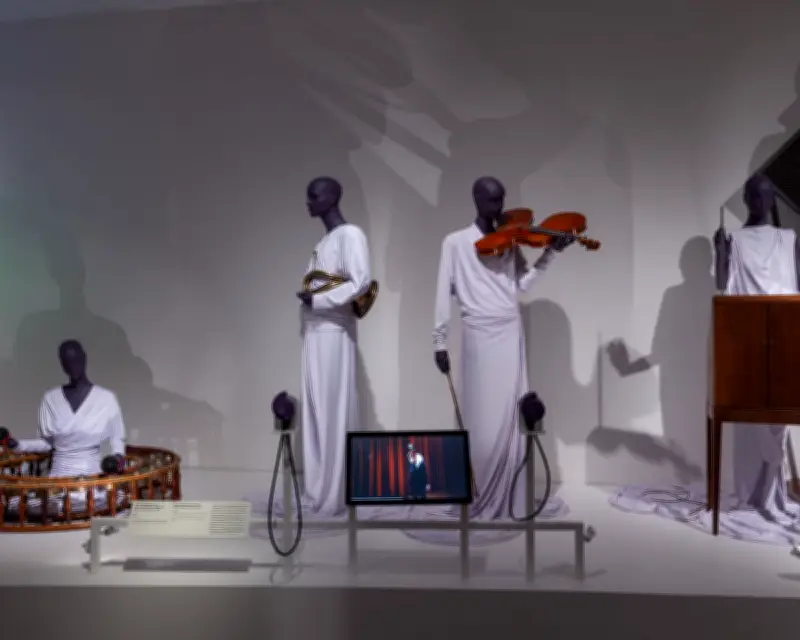
The Metropolitan Museum of Art in New York has opened a compelling new exhibition titled Musical Bodies, which delves into the intricate relationship between humans and musical instruments over 4,000 years. The exhibition explores how music-making is central to human identity, forging intimate bonds between people and the instruments they create and play.
Curator's Insight: From Hands-On Experience to Exhibition Vision
The exhibition was inspired by curator Bradley Strauchen-Scherer's hands-on experience transporting some 600 musical instruments during gallery renovations. As he handled each piece, he began to notice common threads connecting instruments across cultures and centuries. This led to the development of Musical Bodies, which features artifacts from six continents, including African drums, ancient Egyptian clappers, Prince's iconic symbol guitar, Renaissance violins, a Tibetan kangling, and cutting-edge MiMu Midi gloves that translate movement into sound.
Instruments as Receptacles for Identity and Imagination
The exhibition posits that musical instruments are more than tools; they are receptacles for human yearning, identity, and imagination. Their construction and design absorb our creative spirit, allowing humanity to spill out into their form, decoration, and distinctive sounds. A prime example is Prince's symbol guitar, commissioned in 1993. While often linked to his record label disputes, the symbol actually emerged from a deeply personal process of gender exploration and creative expression. Strauchen-Scherer notes that Prince was working to express the totality of male and female in his shows even before the label narrative, referencing the lyric: "I'm not a woman / I'm not a man / I am something that you'll never understand."

The Human Voice: The Original Instrument
The exhibition highlights the human voice as the most basic and essential instrument. Strauchen-Scherer calls it "the first sound that we make in the world, and it's held up in many cultures as the thing that all instruments aspire to." Featured artists include the Beatbox House, a hip-hop collective that uses only their mouths to mimic intricate drum sets, pushing the boundaries of vocal possibility. Another standout is Molly Lewis, an international whistling champion whose talents graced the soundtrack of the 2023 film Barbie. Her graceful, looping whistling added emotional depth to a poignant scene, contrasting with the staccato rhythms of beatboxing.
Courtship and Symbolism in Musical Instruments
A significant section of Musical Bodies examines how instruments have been used in courtship and as stand-ins for sexual acts. For instance, a 19th-century Japanese woodblock print by Utagawa Kunisada depicts a woman suggestively holding a shakuhachi flute to her mouth. Strauchen-Scherer explains that in Japanese culture, as in Western culture until recently, it was taboo for women to play mouth-blown instruments due to their sexual suggestiveness. Similarly, the 17th-century Dutch painting The Musician by Bartholomeus van der Helst shows a woman tuning a lute while nearly falling out of her dress, a well-known allegory for foreplay.
A New Appreciation for Music
Strauchen-Scherer hopes that audiences will leave the exhibition with a renewed appreciation for music, which is often taken for granted in modern life. "I hope this will re-center music for people," he said. "I want audiences to see music as central to human identity, what we do. Music is for all of us because we are instruments." Musical Bodies is now on display at the Metropolitan Museum of Art in New York until 27 September.