Major construction work on the landmark Hunter-Central Coast Renewable Energy Zone (REZ) is set to kick off in early 2026, marking a significant step in New South Wales' clean energy transition and promising a substantial economic boost for the region.
Project Deed Signed, Jobs and Investment Locked In
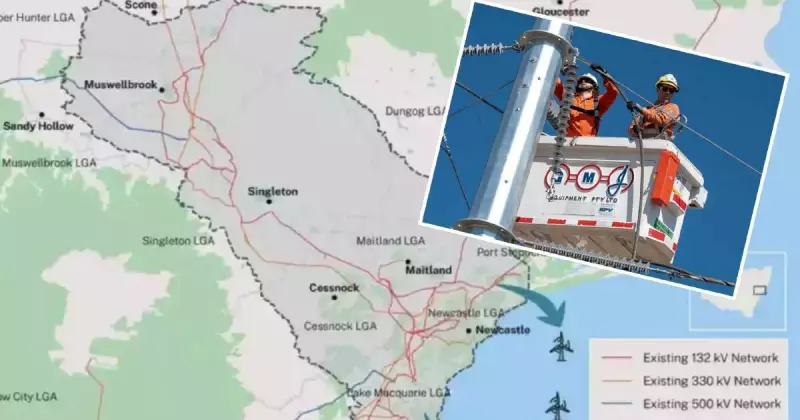
The green light for the massive infrastructure project follows the recent signing of a crucial project deed between EnergyCo and the network operator Ausgrid. This paves the way for work to begin on one of five designated Renewable Energy Zones in NSW, a sprawling network stretching from the Upper Hunter down to the Central Coast, encompassing Newcastle, Lake Macquarie, and Port Stephens.
The $600 million project is forecast to support an average of approximately 590 direct jobs per year during its construction phase, with a further 220 ongoing operational roles expected from 2030. Beyond these direct positions, the REZ is anticipated to stimulate additional demand for workers across local manufacturing, retail, transport, and service supply chains.

Augmenting Existing Infrastructure for a Faster, Cheaper Build
A defining and innovative feature of the Hunter-Central Coast REZ is its strategic focus on upgrading and augmenting the existing electricity network, rather than building entirely new corridors from scratch. This approach is designed to minimise environmental and community impact while delivering a faster and more cost-effective solution.
"We are proud to be leading the first REZ in Australia to augment our existing infrastructure - facilitating a cheaper and faster solution that creates stronger communities," said Ausgrid's chief executive, Marc England. "We look forward to our solution providing ongoing benefits for the Hunter Region, for generations to come."
The scope of work includes upgrading around 85 kilometres of sub-transmission lines, constructing 18km of new underground fibre optic cable in the Upper Hunter, building two new energy hubs (substations), and augmenting several existing ones.
Powering the Future: Billions in Investment and Clean Energy
Once operational, the REZ is expected to connect approximately 1.8 gigawatts of new renewable generation and storage capacity to the grid. This critical piece of infrastructure is projected to attract up to $3.9 billion in private investment for new solar, wind, and battery storage projects in the region.
"We're excited to see this significant project move ahead, ensuring the region remains a major player in future electricity generation," said EnergyCo chief executive, Hannah McCaughey. "It will provide communities with tangible benefits and reliable energy for homes and businesses."
The project aligns with the state's ambitious energy targets. Currently, about 36 per cent of NSW's electricity comes from renewable sources. The government notes that supported projects have the state two-thirds of the way towards its 2030 generation target.
Logistics for the build will centre on Newcastle, with much of the large infrastructure, such as wind turbines and transformers, expected to arrive through the Port of Newcastle. The equipment will be stored at the new $115.5 million Mayfield logistics precinct before being transported to project sites.
With the planning and community engagement phase largely complete, the focus now shifts to delivery. "We now turn our minds to getting on with the job, with construction set to commence early 2026," Mr England confirmed, signalling the start of a transformative chapter for the Hunter-Central Coast region.