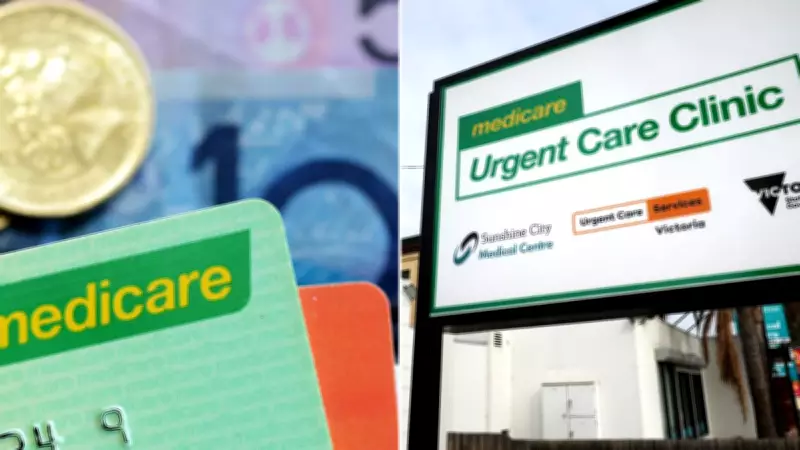
In a budget dominated by cost-of-living pressures and global instability, the Federal Government has unveiled a major multi-billion-dollar investment into Australia’s healthcare system.
Key Healthcare Investments
Medicare Urgent Care Clinics, cheaper medicines and aged care reforms are at the centre of the package unveiled on Tuesday night. Huge investments have also been made into aged care and the NDIS, while the government ramps up efforts to tackle fraud and improve long-term sustainability across the care sector.
Urgent Care Expansion
The centrepiece of the health package is a $1.8 billion expansion of Medicare Urgent Care Clinics, aimed at reducing pressure on overcrowded emergency departments and improving access to bulk-billed care. The Budget also includes $2.1 billion over five years to improve access to primary and specialist healthcare services, including expanded bulk billing support.

“Medicare Urgent Care Clinics reduce out of pocket costs, because more bulk billing means less pressure on household budgets and emergency departments,” Treasurer Jim Chalmers said in his budget speech. “By July, four in five Australians will live within a 20-minute drive of one of the 137 clinics around the country. We’re permanently funding every one of them with $1.8 billion over the next four years and about half a billion dollars every year after that.”
The government says the investment is designed to ease pressure on emergency departments while improving access to free urgent treatment for non-life-threatening conditions. Support will also be delivered for six fully bulk-billed practices across the Central Coast, Newcastle, Lake Macquarie and Hunter regions, alongside continued support for endometriosis and pelvic pain clinics helping women experiencing endometriosis, pelvic pain, perimenopause and menopause. The Budget also delivers an additional $25 billion in Commonwealth funding for public hospitals over five years.
Pharmaceutical Benefits Scheme
Several new medications will be added to the Pharmaceutical Benefits Scheme (PBS) and Repatriation Pharmaceutical Benefits Scheme, supporting Australians living with serious and chronic conditions. The additions cover treatments for juvenile arthritis, multiple sclerosis, prostate cancer, lymphoma, lung cancer, bladder cancer, cerebral palsy and severe COVID-19.
Chalmers said changes to cystic fibrosis medication listings “will save some Australians around $250,000 a year”. Among the medications being added are Humira® for juvenile idiopathic arthritis, Briumvi® for relapsing-remitting multiple sclerosis, Paxlovid® for Australians at risk of severe COVID-19, and Opdivo® and Yervoy® for advanced or metastatic cancers.
Supporting Older Australians
The government has committed major new funding towards aged care, as Australia’s ageing population continues placing pressure on the sector. A $565.1 million investment over four years will strengthen regulation, governance, workforce support and quality standards across aged care services. Funding will also support aged care ICT systems, My Aged Care and the Aged Care Quality and Safety Commission, while boosting food quality and lifestyle support for older Australians living in residential care. Another $606.5 million over four years will go towards increasing residential aged care bed supply and improving access for supported residents.
NDIS
The National Disability Insurance Scheme will receive an additional $1.7 billion over five years to support participants and improve the quality and integrity of services delivered through the scheme. The government will also introduce a new enrolment and digital payment system designed to improve payment integrity and reduce fraud and non-compliant payments. The Fraud Fusion Taskforce will receive a further $280.1 million to continue investigating fraud and improper claims. Chalmers said the integrity measures were expected to save $37.8 billion over the forward estimates. “A big part of our savings package will restore the NDIS to its original intent and secure its future, so it grows in a sustainable way in line with programs like Medicare,” he said.

Stillbirths and Developmental Support
The Budget also includes $13.1 million over three years to improve understanding of stillbirths, support grieving families and help prevent future stillbirths. Meanwhile, $2 billion will be invested into the new Thriving Kids program, supporting children aged eight and under living with developmental delay and autism, alongside their families and carers. The package includes support for earlier identification of developmental delays and expanded health assessment programs for young children.