A federal government initiative to fund six bulk-billing GP clinics in the Hunter-Central Coast region has drawn mixed reactions, with a local doctor warning against providing what he calls 'handouts for big corporate providers.'
Concerns Over Corporate Funding
Dr Max Mollenkopf, the Hunter representative for the Royal Australian College of General Practitioners (RACGP), expressed support for the plan if it genuinely helps disadvantaged people. However, he voiced strong opposition to 'corporate operators receiving free money to do usual care.'
'The last thing we need is big corporate providers getting more government handouts,' Dr Mollenkopf said. He argued that such a scenario would disadvantage independent GP clinics in the region.

Government's $25.3 Million Plan
The government's $25.3 million plan, announced in the federal budget on Tuesday night, will cover three years starting from 2026-27. The move follows Health Minister Mark Butler's concerns about Newcastle and the Hunter area being a 'bulk-billing desert.'
The government previously stated that the plan is 'about fairness and making sure every family has access to affordable healthcare.' Medicare data for the December quarter revealed that the Hunter-Central Coast area had the seventh lowest bulk-billing rate among the country's 31 primary health networks.
Funding Allocation and Tender Process
Dr Mollenkopf noted that $25.3 million over three years is 'a big chunk of funding.' He would support the funding if it is targeted at people 'in low socio-economic circumstances' who struggle to afford GP visits, particularly those with chronic illnesses.
'I genuinely hope the funding is targeted to benefit consumers who need complex healthcare,' Dr Mollenkopf said. 'But I fear a bunch of big corporate guys will walk away with more funding.'
A spokesperson for Mr Butler said the funding 'will help disadvantaged people access free healthcare in the area, but the clinics will be decided through a tender process.'
Impact on Independent Clinics
Dr Mollenkopf, who owns Whitebridge Medical Centre, expressed concern about competing with clinics that receive substantial government funding. He warned that if a few clinics receive 'millions of dollars of government funding and other clinics are excluded from that,' it would create 'inequity in the general practice system.'
'I don't think that would be a net positive for the health service,' he added.
RACGP president Michael Wright also voiced concerns about potential 'market disruption, particularly for existing general practices.' GPs would generally prefer that federal funding be distributed across all clinics through increased Medicare rebates.
Current Rebate and Out-of-Pocket Costs
Rebates for a standard GP consultation are currently $43.90, while the average out-of-pocket fee to see a GP in the Hunter network is $51. Based on the $25.3 million funding over three years, the six planned bulk-billing clinics in the Hunter-Central Coast region would receive approximately $1.4 million annually.
Comparison with Urgent Care Clinics
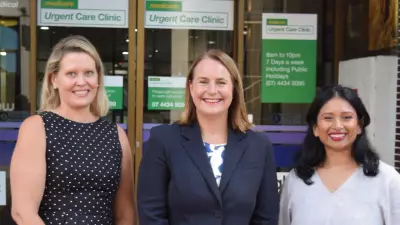
The funding model appears similar to that of the government's urgent care clinics, which are located in Charlestown, Cessnock, Maitland, Lake Haven, and Umina. Federal funding for urgent care clinics initially amounted to about $1.2 million per year for one doctor, one nurse, one receptionist, and running costs. This funding was awarded to existing GP clinics through a tender process.
Some clinics, such as those in Charlestown and Lake Haven, received additional funding for a second doctor due to high demand. The RACGP noted last year that urgent care clinics were 'five times more expensive than a standard GP consult.' Nevertheless, the clinics are popular and free, aimed at relieving pressure on emergency departments by treating minor illnesses such as respiratory, gastrointestinal, and urinary tract infections, as well as fractures, cuts, eye injuries, and burns.
New Bulk-Billing Clinics
The new bulk-billing clinics will treat any condition like a normal GP practice, providing comprehensive primary care services to the community.