Gold Coast Woman's Harrowing Battle with Topical Steroid Withdrawal
When Heidi Rein made the difficult choice to cease using steroid medication for her lifelong eczema, she anticipated her body would gradually heal. Instead, this decision plunged her into what she describes as the most agonising period of her existence.
"The physical pain, extreme skin sensitivity, and nervous system disruption meant I often couldn't tolerate touch, which made simple acts like hugging loved ones incredibly difficult," Rein revealed. The 41-year-old Gold Coast resident has lived with eczema since childhood, a chronic condition characterised by itchy, red, and dry skin often linked to a compromised skin barrier.
A Childhood Condition Returns
Rein explained that her eczema persisted throughout her youth before eventually subsiding. However, in 2013, after relocating from Finland to Australia, the condition unexpectedly resurfaced. "It started creeping back up," she said. "I don't know why." Dry, irritated patches began appearing under her nose, along her jawline, and most prominently on her hands.

Seeking answers, Rein consulted a dermatologist. Given her childhood history, she was promptly prescribed potent steroid cream. According to the Australasian College of Dermatologists, eczema is a chronic, incurable condition that requires ongoing management. Topical steroid creams are commonly prescribed to rapidly reduce inflammation, redness, and itching, facilitating skin barrier healing.
Initially, Rein used the cream until her skin cleared, then discontinued application until the next flare-up. Over time, however, she noticed the intervals between flare-ups grew progressively shorter.
The Downward Spiral of Treatment
By 2016, the cream had lost its effectiveness entirely. "It was getting worse," Rein recounted. "The cream wasn't really effective anymore, and it started spreading into more areas." As her condition deteriorated, she was eventually hospitalised and prescribed oral steroids.
"It was like magic at first," she said, describing how the medication cleared her skin almost instantly. Yet this relief proved temporary. "I stayed clear for a while, and then it started coming back. That cycle repeated over the years."
By 2023, her skin condition had significantly worsened. Another round of oral steroids was prescribed, but this time, even five weeks of treatment yielded no improvement, prompting a higher dosage that also failed.
The Devastating Decision to Go Cold Turkey
Frustrated and unwilling to continue relying on steroids, Rein made the drastic decision to stop the medication immediately. "I went cold turkey," she admitted. "I just panicked and stopped." Unaware of the potential dangers of abrupt cessation, her condition rapidly spiralled into debilitating pain as her skin dramatically worsened.
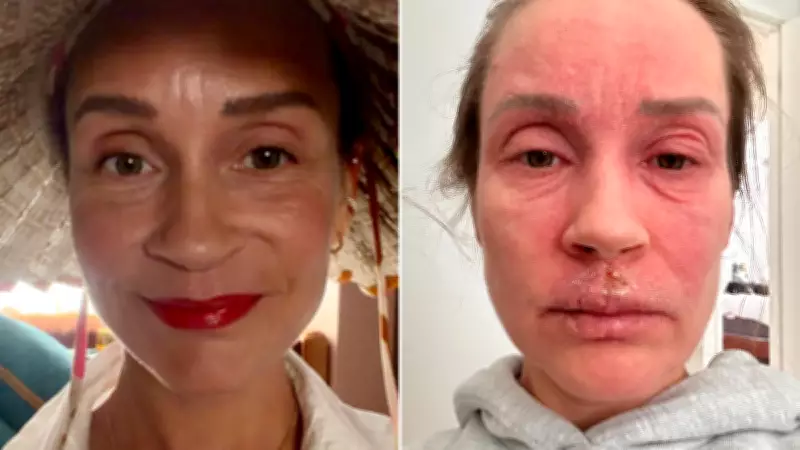
"All hell broke loose," Rein described. "It went to my face, and my skin swelled up. It spread everywhere. It was the most horrendous time." Only after researching her symptoms online did she realise she was experiencing topical steroid withdrawal (TSW).
Topical steroid withdrawal occurs when the body becomes physically dependent on topical corticosteroids, triggering a severe rebound reaction upon withdrawal. Symptoms can surpass the original condition's severity and may spread to previously unaffected areas.
"It was painful, it burned, it itched," Rein recalled. "It was the scariest experience of my life. Your body becomes so dependent on those drugs, it doesn't know what to do anymore once it's gone." Patients may also experience swollen glands, intense itching, oozing skin, burning sensations, and excessive flaking.
Choosing a Path of Natural Recovery
Fearing a return to steroid treatment, Rein turned to online advice from fellow sufferers. Many, particularly on social media, advocate completely stopping topical steroids and enduring TSW until the skin heals naturally—a process that can take months or even years.

Rein has followed this path for the past two years. While recovery has been slow and she still experiences eczema flare-ups, she reports her skin is now in a much better condition. She has allowed her "skin to get back to basics" and ensures she gets ample rest.
"What made topical steroid withdrawal particularly devastating was how much of my life it stripped away," Rein reflected. "I couldn't go out, couldn't work. I slowly lost parts of my independence, social life, relationships, and sense of self. The isolation was extremely lonely at times. It wasn't just a skin condition; it impacted every layer of my life."
Raising Awareness and Offering Hope
Rein now shares her journey on Instagram to raise awareness about TSW. "When people understand how deeply this condition can affect someone, it creates more compassion and awareness for those going through it," she said. "And to show people this is real, and maybe offer some hope to others in knowing they are not alone. There are thousands of people suffering in silence."
"I'm in a much more stable place now, but that period reshaped me, and speaking about it is my way of helping others feel less alone and maybe process my own experience too." She noted that when she raised concerns with her doctors, many were unfamiliar with TSW.
Medical Perspective on TSW
Eczema Support Australia states that while TSW can be distressing, it is rare, and topical steroids remain safe and effective when used as prescribed. "While there have been reports of individuals who believe they have experienced TSW, the Australasian College of Dermatologists (ACD) and the Royal Australian College of General Practitioners (RACGP) emphasise that TSW is a very rare reaction," the organisation explains on its website. "A far more common scenario is that the skin worsens after stopping steroid treatment due to the resurgence of eczema."
According to the website, Dr Adriene Lee, President of the ACD, said: "Topical steroid withdrawal is a very rare reaction. What we often see when eczema worsens after stopping topical steroids is that the condition was under-treated, or the underlying eczema is resurfacing. Anyone concerned about using topical steroids should discuss this with their GP or dermatologist."