Explosive Allegations Surface at Hospital Mould Inquiry
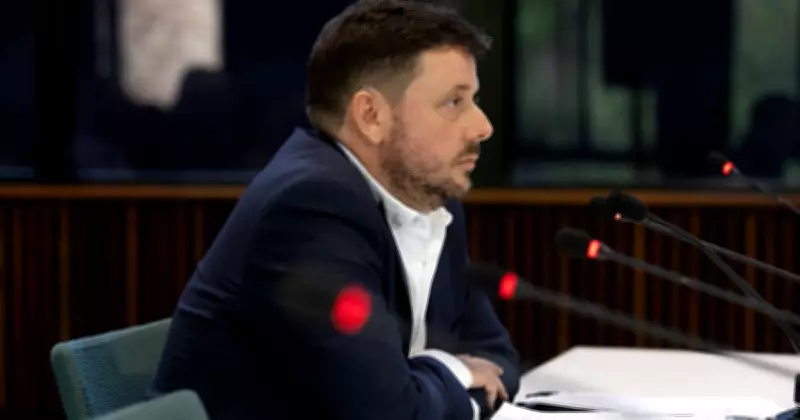
Whistleblower Luke Carroll has made shocking accusations against technology company Honeywell, alleging falsification of records, destruction of documents, and intimidation tactics amid maintenance failures at Calvary Mater Newcastle hospital. Mr Carroll, a former senior project manager for assets and infrastructure with Honeywell at the Mater, delivered his explosive testimony during the first hearing of a parliamentary inquiry into the hospital's mould and maintenance crisis.
"It was common knowledge," Mr Carroll stated during the hearing. "Honeywell is a technology company, but everything is done by paper." He claimed evidence was "either hid or put through the shredder" and that documents left on desks would mysteriously disappear.
A Culture of Deceptive Conduct
Mr Carroll described a "culture of deceptive conduct" by Honeywell, with maintenance records being systematically falsified. With experience in constructing four hospitals and operating eighteen others, he asserted he had "never seen anything like I've seen at the Calvary Mater." He characterized the situation as "dire" and claimed the facility had suffered "neglect for such a substantial amount of time."

The whistleblower detailed how "Band-Aids after Band-Aids" had been applied to problems while risks were concealed. He specifically alleged that mould testing results were being manipulated to produce artificially low readings, and he identified a "core problem of willful neglect" in the hospital's maintenance program.
Whistleblower Retaliation and Personal Consequences
Mr Carroll revealed he had raised his concerns through Honeywell's integrity helpline in October 2024 and shared his report with Hunter New England Health in April 2025. "No one could say they didn't know," he emphasized. However, he described being stood down from his position under the guise of taking leave.
He received what he called a "very ominous email" from a Honeywell representative in South Carolina, USA, demanding his participation in an investigation. During an online meeting with Honeywell's global security insider threat unit, which included an "ex US special forces officer," Mr Carroll said he was "treated with nothing but contempt and hostility."
"I was screamed at to change my story and coerced into following the narrative," he testified. "My name and reputation were smeared." The pressure took a severe personal toll, with Mr Carroll revealing "my marriage and health fell apart due to the pressure I was under."
Additional Whistleblower Testimony
Another whistleblower, NSW Health senior plumber Tim Paton, testified about potential contamination risks, suggesting cleaning chemicals might have been "draining into hospital drinking water." With fourteen years of experience in hospital maintenance at Calvary Mater, Mr Paton outlined persistent moisture and mould problems creating infection control concerns.
He accused Honeywell of altering maintenance records, noting some documents would disappear or fail to match actual conditions. Mr Paton stated that Honeywell and Novacare senior managers were aware of these issues but failed to resolve them, and he faced "bullying and harassment" when he raised concerns.
Hospital Staff and Management Perspectives
Mater allied health assistant Mark McKenna reported that anxiety levels among hospital staff were "extremely high" and morale was "the lowest I've seen in 35-plus years." He described the mould situation as "a source of great angst" that had persisted "for what seems like an eternity."
Calvary Health Care's national chief executive officer Damien Bruce told the inquiry that concerns about maintenance issues had been raised since 2014 and "repeatedly escalated." He noted problems began appearing about five years after the hospital's 2009 redevelopment, with the public-private partnership set to end in 2033.

"The neglect cannot continue for another six years," Mr Bruce asserted. "We are just the tenant. We are deeply frustrated by the ongoing systemic failures and lack of action by those responsible."
HVAC System Identified as Mould Source
Hospital staff have identified the heating, ventilation and air-conditioning (HVAC) system as the primary source of the mould infestation. Roslyn Everingham, general manager of Calvary Mater, described the HVAC as a "system of varying ages and different technologies" that could involve "a myriad of issues."
Health Minister Ryan Park has initiated an audit of the HVAC system to understand the problems. However, Mr Bruce noted that "we have not seen dates" for when the audit will be completed or when corrective action will be taken.
Financial Penalties and Accountability Issues
Nationals MP Sarah Mitchell questioned why abatement fines for contract breaches, revealed in government documents to amount to "tens of millions" of dollars, had not been enforced. Novacare director Victoria Rigg claimed "less than $5 million of abatements have been withheld from the project."
Hunter New England Health's chief executive Tracey McCosker explained that the public-private partnership relationship had become "quite toxic" with Novacare disputing breach notices. She had withheld fines to "negotiate in good faith" and try to repair what she called a "quite broken" relationship.
Health Infrastructure chief executive Emma Skulander said fines were withheld to try to "keep them (Novacare) afloat and solve the problem." Ms McCosker offered an apology to patients, hospital staff, and the community, stating "we are deeply sorry. Hospitals must be safe places."
Private Providers Criticized for Lack of Accountability
Committee chair Amanda Cohn noted that while the health service had apologized during the hearing, "not any of the private providers" had done so. Ms Skulander expressed being "gobsmacked" by the private operators' lack of accountability within the public-private partnership, noting Novacare had not accepted responsibility.
Doctors at Calvary Mater have raised serious concerns through the Australian Salaried Medical Officers Federation, stating that "mould, infection risks and a culture of silence are endangering the health of patients." The doctors' union submission revealed that nine in ten doctors reported mould and air quality concerns, while eight in ten said the "risk to patient care is high or severe."
The union noted that "a fear of reprisals prevents doctors from speaking out individually," highlighting ongoing concerns about transparency and accountability in addressing the hospital's maintenance and mould crisis.