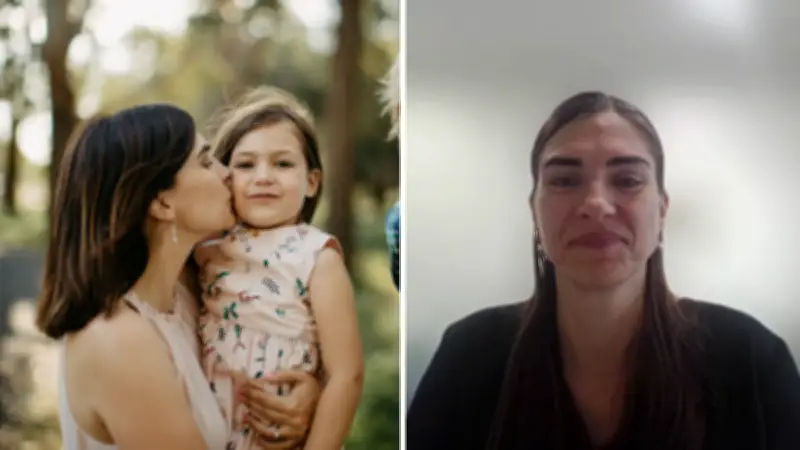
Just four days after giving birth to her first child, Letitia Bassingthwaighte was in crisis. The Dubbo mother experienced postnatal psychosis, a severe mental health condition that struck suddenly.
"It was a shock. I hadn't had any previous history of mental ill health and it happened about four days after the birth of my child," she told 7NEWS. "It was very frightening, very scary. I didn't really know anything about postnatal psychosis or that you could get it and neither did my family or husband."
The episode came on acutely overnight and lasted for hours, requiring inpatient care in Dubbo. After returning home, the specialist care she needed was far away. The postnatal psychologist she was referred to was based in Orange, a four-hour round trip.

Burden of Distance for Regional Families
"My husband had to take time off work, I was a new mother, it was very full on," Letitia said. The family could only manage appointments about once a month, and each visit was a challenge. "They were great but it was such a long arduous drive and a challenge for us to see them on a regular basis."
For a new mother recovering from a health episode, the distance was a burden during a time when her family needed support. Appointments rarely lasted longer than half an hour, but the family spent four hours on the road for each short check-in. "To go ... on a four-hour round trip for a half an hour appointment is quite difficult," she said. "It's quite costly."
Fear of Recurrence with Second Pregnancy
When Letitia learned she was pregnant with her second child, her joy was coupled with fear. She worried her postnatal psychosis could return and knew she needed immediate support before the baby arrived. She found Perinatal Anxiety & Depression Australia (PANDA), which referred her to Gidget Foundation Australia.
The service Letitia accessed was Start Talking, Gidget Foundation's telehealth program. Gidget is the national peak body for perinatal mental health, offering free, specialist care that reaches parents wherever they are. This meant Letitia could access specialist care from home in Dubbo regularly through a screen. "That was a gamechanger for me," she said.
Telehealth: A Lifeline for Regional Mothers
In the lead-up to giving birth, Letitia spoke to a professional every week via video conference. "I got to know them ... If they couldn't answer all those questions, they had a big team of people behind them to provide me with information and they always got back to me very promptly," she said. "I gained more information from that and got the specialist care I needed."
Even while in hospital, Letitia connected to her Gidget representative from her laptop. "I knew they knew me. They knew my story. I didn't have to keep repeating myself about what had happened because that was quite traumatic as well to relive the story," she said.
For Letitia, the telehealth connection was life-changing, ensuring she could be supported while still with her family. "Just being able to come home and look after my child at home in the comfort of my home, but also have access to experts that I could talk to when I needed them, speak to them regularly, was just so important for me and my family, for my confidence," she said. "To have that in Dubbo was so important."
Positive Outcome and Message of Hope
When Letitia found out support was available for her second pregnancy, the emotion was overwhelming. "It was a real sense of relief because I was so scared about maybe not getting what I needed," she said. She did not experience psychosis after the birth of her second child, which she credits to the support she received. "The fact that I didn't have psychosis with the second child… it just proves, I think, that those services are there and they work."
Today, both of Letitia's children are thriving in school, playing sport and growing up confident, active, and happy in regional NSW. "They love Dubbo," she said. "I'm really pleased that they haven't been impacted too strongly with what happened with me."

Letitia's message to other parents is simple: you are not alone. "It can be a really challenging time being a new mother, or coming up with a diagnosis that's quite rare, and thinking that you're all alone," she said. "That was certainly my feeling for quite a long time. But you're not — keep looking, keep researching, reach out to people. There are support services out there. Telehealth is a really good option for people in regional communities. And I can highly recommend it."