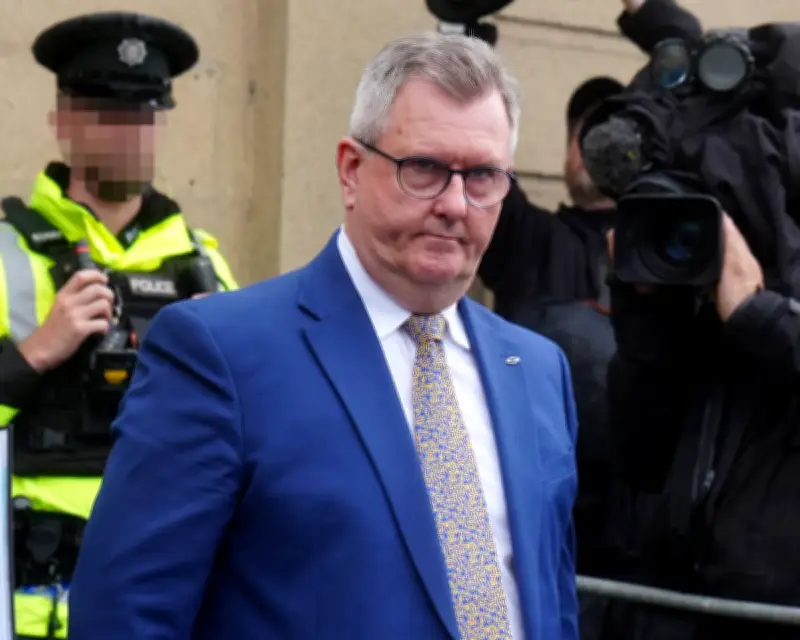
Jeffrey Donaldson, the leader of the Democratic Unionist Party (DUP), is confronting a major internal rebellion as senior party figures publicly denounce his leadership, raising questions about his political future. The crisis erupted after a series of contentious decisions that have divided the party and alienated its grassroots base.
Internal Revolt Intensifies
According to party insiders, at least four senior DUP members have called for Donaldson to step down, citing a loss of confidence in his ability to lead the party effectively. The denunciation comes amid growing frustration over the party's stance on post-Brexit trade arrangements and its relationship with the UK government.
One senior DUP figure, speaking on condition of anonymity, stated: "The party is at a crossroads. Jeffrey's leadership has become a liability, and we need a fresh direction to reconnect with our supporters." The internal turmoil has been brewing for months, but it escalated dramatically after Donaldson's recent negotiations with the British government over the Windsor Framework.

Key Figures Break Ranks
The rebellion is being led by a faction of DUP members who argue that Donaldson has failed to deliver on key promises, particularly regarding the Northern Ireland Protocol. Among the critics is former DUP minister Arlene Foster, who has publicly questioned Donaldson's strategy. "The DUP must stand firm on its principles, not capitulate to pressure from London," Foster said in a statement.
Another prominent critic, MP Sammy Wilson, accused Donaldson of "betraying the unionist cause" by agreeing to compromises that weaken Northern Ireland's place within the UK. Wilson's comments have resonated with hardline unionists who feel the party has drifted from its core values.
Leadership Challenge Looms
The internal denunciation has sparked speculation about a formal leadership challenge. Party rules allow for a vote of no confidence if 15 percent of the DUP's elected representatives sign a petition. Sources indicate that the threshold may soon be met, potentially triggering a contest within weeks.
Political analyst Dr. Emma Patterson noted: "This is the most serious internal crisis the DUP has faced in years. Donaldson's leadership is hanging by a thread, and the outcome will have significant implications for Northern Ireland's political landscape."
Impact on Northern Ireland Politics
The DUP's internal strife comes at a critical time for Northern Ireland, with power-sharing at Stormont still fragile. The party's ability to negotiate effectively with both the UK government and Irish nationalists is being undermined by the leadership crisis. If Donaldson is ousted, it could lead to a shift in the DUP's approach to the Windsor Framework and its relationship with the British government.
According to a recent poll, support for the DUP has fallen to 18 percent, its lowest level in a decade, with many unionist voters turning to the more hardline Traditional Unionist Voice (TUV) party. The internal denunciation is seen as a desperate attempt to reverse this decline.
Donaldson's Response
Jeffrey Donaldson has so far resisted calls to resign, insisting that he retains the support of the party's executive. In a brief statement, he said: "I am focused on delivering for the people of Northern Ireland and will not be distracted by internal politicking. The DUP remains united in its core mission."
However, his defiance has done little to quell the rebellion, and many observers believe his position is untenable. The coming weeks will be crucial in determining whether Donaldson can survive the denunciation or whether the DUP will be forced to elect a new leader.