Pauline Hanson Intensifies Campaign in South Australia, Blaming Government for Housing Woes
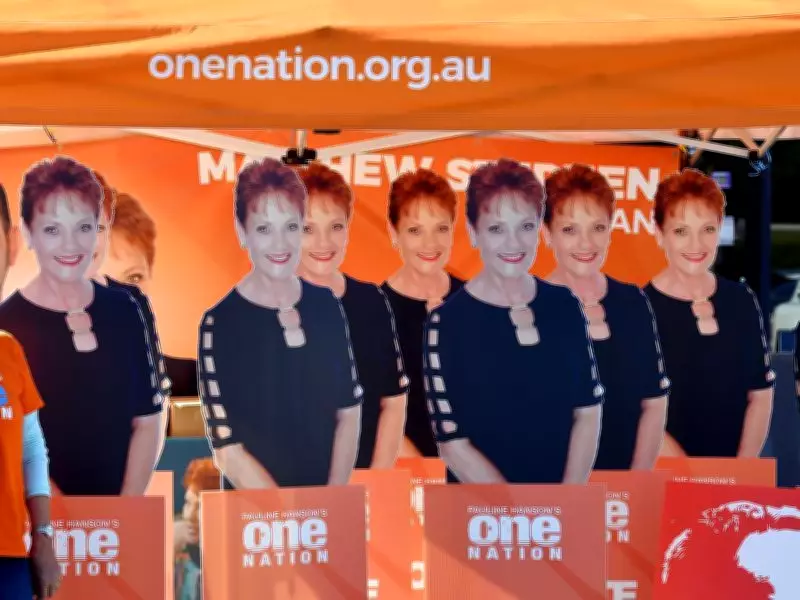
One Nation leader Pauline Hanson has reinforced her party's campaign message in South Australia, attributing the state's housing and cost-of-living pressures to what she calls "poor government decisions." This stance comes despite warnings from economists and political leaders that such claims are misleading. Hanson has been actively campaigning across regional and outer-metropolitan seats ahead of Saturday's state election, asserting that she has been warmly received by voters who have abandoned the Liberal Party.
"There's this undercurrent movement not only in South Australia but across the whole country," Hanson remarked during a recent visit to Two Wells in Adelaide's north. She emphasized that people are seeking change and a decent standard of living. However, experts challenge one of One Nation's central assertions, which links migration to the housing crisis, noting that South Australia lacks control over federally-set immigration levels.
Expert Analysis Disputes Migration Claims
Graham Cooke, head of consumer research at Finder, explained to 7NEWS.com.au that migrants are only a minor factor in rising house prices. He cited Monash University research indicating migrants contributed to approximately 1 percent of the 6 percent house price growth from 2006 to 2016. More recent data from The Australia Institute highlights investors as the primary driver, with housing supply increasing by 19 percent over the past decade, outpacing a population rise of 16 percent.

Cooke further noted that even during COVID-19 lockdowns, when immigration turned negative, house prices continued to climb. He pointed to government policies, such as negative gearing and capital gains tax concessions, as having a far greater impact on affordability by encouraging investment purchases.
One Nation's Proposals and Criticisms
On Wednesday, upper house One Nation candidate Cory Bernardi stated the party is dedicated to "forgotten South Australians." Hanson, aiming to boost the party's vote, also criticized South Australia's debt levels, high energy prices, and what she described as divisive approaches to the state's Voice to Parliament. "It shouldn't be that way — we are all Australians," she said, advocating for equal treatment based on individual needs rather than race.
Hanson claimed that 18 percent of South Australian children live below the poverty line and argued against high power bills, blaming reliance on solar and wind energy. According to the government's website, South Australia generates over 70 percent of its electricity from renewable sources, with natural gas as a backup, and closed its last coal station in 2016.
Housing Policy and Historical Context
Despite her criticism of housing policy, One Nation's proposal does not include increasing public housing stock. Instead, the party plans to collaborate with private and community organizations, an approach similar to the National Rental Affordability Scheme, which was discontinued in 2014 due to cost overruns. Final payments for this scheme next year are projected to exceed $3 billion, according to the Grattan Institute.
One Nation also suggests trade incentives to increase the number of tradespersons and boost housing supply. Data from They Vote For You reveals that Hanson has consistently voted against measures such as increasing welfare, public housing, housing affordability, closing the gender pay gap, penalty rate increases, access to subsidized childcare, and making sanitary items free.
Political Reactions and Warnings
Greens MLC Robert Simms acknowledged voter anger but cautioned that blaming migrants for housing pressures is both inaccurate and dangerous. "What One Nation is doing is offering very simplistic solutions — scapegoating migrants and minority groups," he said. Simms argued that the inability of South Australians to enter the housing market is not the fault of migrants but rather the result of failures by the two major political parties in the state.