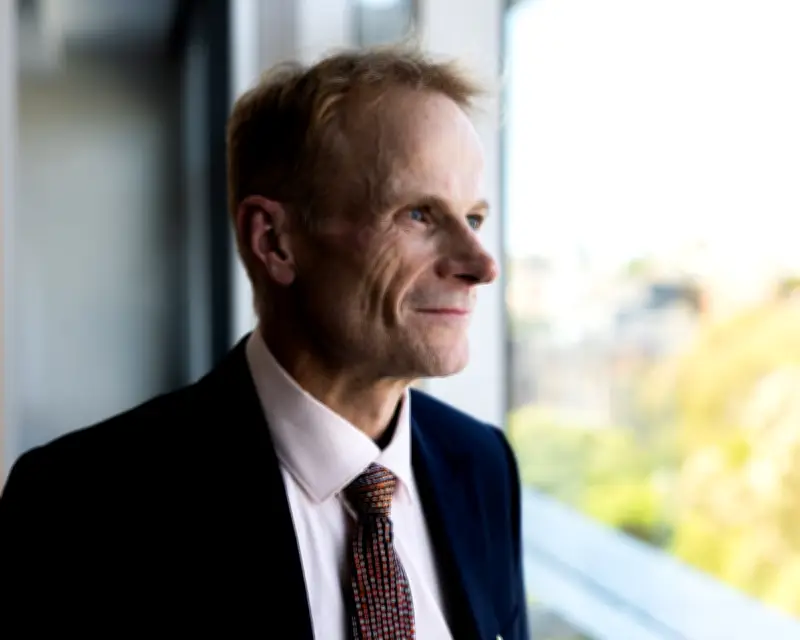
Professor Richard Scolyer, a world-renowned melanoma researcher and pathologist who turned his own devastating brain cancer diagnosis into a bold scientific experiment, has died at the age of 59. He was named Australian of the Year in 2024 alongside his colleague Professor Georgina Long.
Diagnosis and Experimental Treatment
In May 2023, at the peak of his career and fitness, Scolyer received a diagnosis of grade-four IDH-wildtype glioblastoma, an aggressive and incurable brain cancer. Rather than accepting the standard prognosis, he chose to become Patient Zero in a groundbreaking treatment regimen developed by Long and himself.
The treatment applied immunotherapy principles used successfully in melanoma to combat brain cancer. Before surgery, Scolyer received a combination of three immunotherapy drugs to stimulate his immune system to recognize and attack the tumor. After surgical resection, pathology revealed a tenfold increase in activated immune cells in the tumor tissue. A personalized vaccine targeting his specific tumor followed.

Writing in Nature Medicine in early 2025, the researchers documented their findings. Scolyer noted, "The great thing is that we're able to generate some science by comparing my brain before the immunotherapy and afterwards. It gives some scientific hope that this is worth exploring."
A Life of Achievement
Richard Anthony Scolyer was born on 16 December 1966 in Launceston, Tasmania, to Jenny, a primary school teacher, and Maurice, an auto electrician. He grew up with his older brother Mark in a loving home that encouraged sports. His competitive nature emerged early; at age ten, he walked and camped 65 kilometers along Tasmania's Overland Track in five days.
He attended Riverside High School and Launceston Community College, where he excelled despite preferring football over books. He improved his reading through comic books and football magazines, admitting in his 2024 biography Brainstorm that he never read for enjoyment.
His mother suffered a series of strokes when he was young and later spent six months in a psychiatric hospital. Seeing her health struggles influenced his decision to become a doctor. He completed medical training at the University of Tasmania, began his pathology career in Canberra, and completed specialist training at Royal Prince Alfred Hospital in Sydney. At 39, he became a clinical professor at the University of Sydney's Faculty of Medicine and Health.
In 2022, Scolyer was ranked the world's leading melanoma pathologist and remains the most extensively published expert in that field. He was appointed an Officer of the Order of Australia in 2021.
Public Advocacy and Social Media
Scolyer went public with his diagnosis and treatment early, primarily to keep a record for his children. He posted regular updates on social media, attracting thousands of followers and shining a light on the significance of his experiment. His openness endeared him to a legion of online supporters.
Athletic Endeavors
Scolyer was a tireless runner, cyclist, and swimmer who represented Australia at several World Triathlon Championships and other international multisport events. Despite his treatment, he continued to push himself physically. At one point, he ran five kilometers with an undiagnosed neck fracture after falling over his bicycle handlebars on the way to a parkrun.
Recurrence and Passing
For almost two years, Scolyer remained well, despite the median recurrence time for his type of tumor being just six months after surgery. In March 2025, he announced that the tumor had returned and his prognosis was poor. "I don't need people to think of me as courageous or inspirational – just someone who believed in science and, when faced with a terrible diagnosis, tried something bold and new," he wrote.
His death on 7 June 2026, three years after diagnosis, exceeded the median life expectancy of 12 to 14 months. Without a clinical trial, however, it is uncertain whether the immunotherapy or other factors contributed to his extended survival.
Legacy
Long and her colleagues hope Scolyer's case will lead to a clinical trial and further research into immunotherapy for brain cancer. "I hope that when I'm gone, other brain tumour patients will live longer because of what we've tried," Scolyer wrote.

He is survived by his wife, Dr. Kate Nicoll, and their three children: Emily, Matthew, and Lucy.