Netanyahu Faces Tough Choices After US-Iran Peace Deal
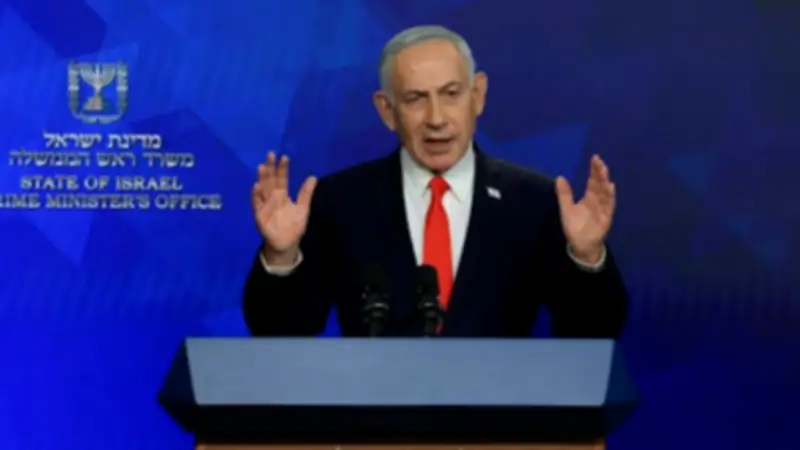
The recent peace deal between the United States and Iran not only ends hostilities between those two nations but also calls for a cessation of fighting between Israel and Hezbollah. It further demands respect for Lebanese territorial integrity and sovereignty. This puts Israeli Prime Minister Benjamin Netanyahu in a difficult political position, as ending operations against Hezbollah contradicts his government's goal of crushing the militant group.
Netanyahu now must decide whether to bow to the United States, Israel's long-time ally and security guarantor, in an election year, or defy Washington and continue the military campaign against Hezbollah. Some clarity emerged on June 19, when Israel and Hezbollah agreed to yet another ceasefire. However, the following day Israel bombed Lebanon, and Iran once again closed the Strait of Hormuz.
Domestic Politics Drive Netanyahu's Decisions
Since Israel launched its current war against Hezbollah in March 2026, the Israel Defense Forces (IDF) have advanced into southern and eastern Lebanon. The IDF has pushed Hezbollah out of its traditional strongholds and bombed targets in southern Beirut. The war has killed more than 4,000 Lebanese people and forced another 1 million to flee their homes.

On June 1, IDF units captured the strategically important Beaufort Castle, giving them control over most of southern Lebanon, including Hezbollah strongholds in the Bekaa Valley. In occupied areas, the IDF has issued “don’t come back” orders, forcibly displacing thousands of Lebanese residents. On June 15, Israeli Defence Minister Israel Katz stated, “Israeli forces will remain in the security zones in Lebanon, Syria, and Gaza without any time limit” and the zones “would be cleared of local residents and all terror infrastructure including the houses.”
The war is highly popular in Israel. An April 2026 poll found that 80% of respondents favored continuing the war against Hezbollah, even if it created friction with the United States. This popularity is crucial for Netanyahu, with national elections due by October. He is desperate to win another term to forestall his long-running corruption trial and stifle debates over his culpability for the intelligence failures that led to Hamas's devastating October 7 attacks.
After those attacks, Netanyahu vowed to dramatically change the Middle East's political landscape through wars on Hamas, Iran, and Hezbollah. While these wars have significantly degraded his nemeses' ability to threaten Israel, they have not achieved total victory as promised. This means Netanyahu has indeed changed the region's political landscape, but his wars have arguably made Israel less secure.
Criticism of Netanyahu's handling of the wars has grown. Opposition politician Yair Golan declared: “Netanyahu lied. He promised a historic victory and security for generations, and in practice, we got one of the most severe strategic failures Israel has ever known.” Netanyahu needs continued military successes in Lebanon to sustain his narrative that he is making Israel safer by defeating its enemies.
US Political Pressures Complicate Matters
US President Donald Trump also faces an unfavorable domestic political environment ahead of the US mid-term elections. Trump needs an end to an unpopular war to create a positive narrative and stave off losing control of the House and Senate. He does not want Israeli truculence to complicate already tense negotiations with Iran.
For their part, the Iranians have made the cessation of Israel's war on Hezbollah and its withdrawal from southern Lebanon central to deciding whether to continue negotiating with the US. This is why Iran again closed the vital Strait of Hormuz after Israel bombed Lebanon over the weekend.
While Israel and the US are allies, it is not an equal relationship. The geopolitical needs of the US as a great power will always eclipse those of Israel as a middle power. As prime ministerial aspirant Yair Lapid puts it, Netanyahu faces “either a direct and destructive confrontation with our greatest ally or a submissive surrender of Israeli interests.”

Evidence of strained relations between Trump and Netanyahu came just before the president signed the Memorandum of Understanding (MoU) with Iran. Trump castigated Netanyahu for ordering the bombing of Hezbollah targets in southern Beirut. He later suggested Syria would do a better job fighting Hezbollah, stating: “I’m not happy with the way Israel has handled themselves with Lebanon and with Hezbollah. It just goes on forever and it throws a negative light on the big deal, and that’s the deal with Iran.”
Despite the president's frustrations, senior Israeli ministers have pushed back. National Security Minister Ben Gvir said: “The prime minister should have told President Trump: We appreciate you, but Israel is a sovereign and independent state that cannot accept the strengthening, or even the existence, of a terrorist organisation on its borders.” In response, US Vice President JD Vance stated bluntly that Israeli critics of the US-Iran deal “need to wake up and smell the reality of the situation that country is in.”
In other words, Israel needs the US more than the US needs Israel. Israel relies on US financial and military support for its security. The two allies recently signed their own MoU guaranteeing the US gives Israel US$3.8 billion per year, including US$500 million for missile defense. Israel also needs ongoing US diplomatic support to shield it from any future United Nations Security Council sanctions. These could arise from concurrent investigations by the International Court of Justice and International Criminal Court into allegations of Israel committing genocide, war crimes, and crimes against humanity in its wars against Hamas and Hezbollah.
The situation in Lebanon remains highly volatile, the Israeli people are due to cast their votes before October, and the US is finalizing a deal with Iran that will likely run contrary to Israel's interests. The question now is what Israel will do about it.