
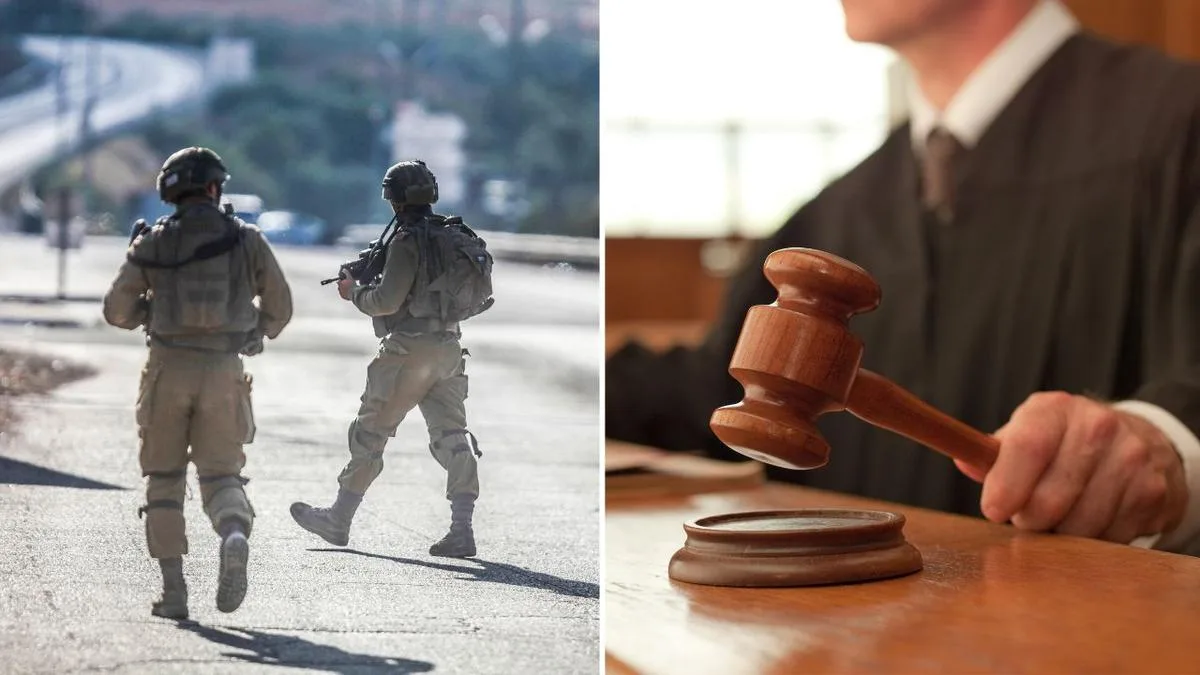
War Crimes Laws Under Scrutiny Amid Middle East Conflict: Experts Weigh In
War Crimes Laws Under Scrutiny Amid Middle East Conflict

Trigger warning: This article contains distressing content and descriptions of sexual assault.

War crimes and the efficacy of international law have come under renewed scrutiny amid ongoing conflict in the Middle East. As targeted strikes kill children and healthcare workers in large numbers, and allegations of illegal conduct by both leaders and military personnel mount, experts are weighing in on whether a widening impunity gap is rendering the laws of war irrelevant.

But what exactly are the “laws of war,” why do we need them, and are they sufficient to counter the psychological impacts of warfare on soldiers and temper the reactive decisions of global leaders?

Wide Pickt banner — collaborative shopping lists app for Telegram, phone mockup with grocery list

Despite geographical distance from current conflicts, Australia is grappling with these questions as it endorses US military action in Iran, which is largely considered illegal by international law experts. Australia supported US strikes in February to “prevent Iran from obtaining a nuclear weapon,” but humanitarian law expert Dr. Shannon Bosch told 7NEWS.com.au that legal experts largely agree the strikes were illegal. Bosch said the strikes could violate Article 2(4) of the UN Charter for failing to get UN Security Council authorisation and “do not constitute self-defence” under Article 51. However, these would be potential breaches of international law — or jus ad bellum — not International Humanitarian Law (IHL), otherwise known as the laws of war. War crimes are prosecuted under IHL, or jus in bello, which refers to “the way” in which warfare is conducted.

Government-Level War Crimes and the Impunity Gap

Government-level war crimes do exist but tend to involve acts such as starvation as a method of warfare, as Israeli Prime Minister Benjamin Netanyahu and former defence minister Yoav Gallant have been accused of. “Prosecuting high-profile, Western-allied leaders for alleged war crimes has proven practically and politically challenging,” Bosch said. “International criminal law is often better at prosecuting lower-level perpetrators than senior leaders, leading to an ‘impunity gap’ for those who ordered the crimes.” Even without the certainty of criminal conviction, experts say IHL still has purpose as a way to articulate and document wrongdoing, codify human ethics, and trigger political impacts that act as a risk-based deterrent.

What Exactly Are the ‘Laws of War’?

There are roughly 161 laws of war, and they are prosecuted through national courts or the International Criminal Court (ICC), which steps in when states are unwilling or unable to do so. Bosch says “prosecuting war crimes is complex” and can take decades to investigate, with physical evidence at times “contaminated” and details “protected by confidentiality.” The Geneva Conventions are the cornerstones of IHL, made up of four different treaties to protect the innocent, sick, and wounded — and agreed to by every country in the world.

“The primary rule of IHL is that parties to a conflict must distinguish between combatants and civilians,” Bosch said. “IHL draws red lines that prohibit atrocities such as rape, hostage-taking, and collective punishment. Its core purpose is to strike a balance between military necessity and humanitarian principles.” The use of chemical weapons, attacks against medical personnel and journalists, indiscriminate attacks, pillage, the act of displacement, and failure to verify targets are all examples of war crimes within IHL. They are also all examples of rules which have allegedly been breached during conflicts in the Middle East this year, according to various Human Rights Watch reports. But proving motive, weapon origin and composition, pre-strike planning, and the civilian status of residents from places historically bound to rebellion forces all depends on varying interpretations of language, law, and retrospective access to evidence. “In many conflict-affected areas, local legal systems are unwilling or unable to investigate, due to lack of resources, political interference, or systemic breakdown,” Bosch said.

Pickt after-article banner — collaborative shopping lists app with family illustration

The ‘Vicious Spiral’ of Dehumanisation

IHL is also built into military training to inform the way warfare unfolds, but military training varies globally, as do ethical norms which can be affected by both combat and culture. Ethics Centre executive director Dr. Simon Longstaff has spent three decades teaching military ethics in Australia and overseas, preparing soldiers for “the particular ethical challenges that come from asymmetrical warfare.” He said that “ethics comes before law,” and described IHL as the “codifying” of human rights. “The modern foundation for both ethics and law starts off with a universal regard for the intrinsic dignity of all people. Of course, if you don’t believe that all people have the same equal dignity — for example, if you think your enemy is not fully human and therefore falls outside the bounds of ethical obligation — if that is embedded in a cultural perspective, or even in a national policy, then normal ethical and legal protections can fall away. This is what often occurs when you hear about war crimes. You’ll find that it has been associated with a dehumanisation of the enemy, where they are seen as something alien and different. People will consciously strip away from the enemy, in these circumstances, all of the normal markers of humanity — particularly so, if you see the other side doing something similar. There will be a vicious spiral. It can lead to things like the mutilation of bodies, the desecration of graves, all sorts of terrible torture.”

‘Thicken Up the Ethical Skin’

Longstaff leads one-day intensive ethics training courses for the Australian Army’s regular forces — the ADF declined to provide specific information about the equivalent for special operations forces — on top of their career-long learning. Under pressure, the values and principles of people “can mutate,” Longstaff said. “You need to thicken up the ethical skin so that there’s lots of it there that can cope with the abrasive environment ... so that you don’t fall prone to that tendency. One of the most famous examples of this occurred in 1968, when a massacre took place in the village of My Lai.” The massacre in Vietnam was perpetrated by the US Army and, while not everyone participated in the brutality, Longstaff said: “Those who did, did not just kill people. They mutilated them, cut out their tongues, they cut off their hands, they scalped them. There was nobody attacking them ... these were old men and women, and children and babies.” The soldiers behind the massacre were mainly middle-class men from across the cultural spectrum and killed up to 500 people in four hours, Longstaff said. Soldiers there later testified about the level of brutality. A man was thrown alive into a well and killed with a hand grenade. Women and girls were gang-raped. “This group of men, sitting alone in this isolated place under a lot of pressure, just didn’t see — literally could not see — what they were doing was wrong,” Longstaff said.

One soldier who took part, Varnado Simpson, told reporters one year after the massacre that he was under orders from his captain to “kill or burn down anything in sight.” Simpson later suffered a fatal moral injury when he “realised what he had done” and died by suicide, Longstaff said. Longstaff said the massacre is also an example of combat “command failure,” and that Simpson’s captain, Ernest Medina, “either didn’t notice or did not care that that (ethical) mutation was taking place.” Medina was court-martialled and acquitted, but left the army to work in real estate. He died aged 81 in 2018. After a high-level inquiry, only one person was ever convicted — Lieutenant William Calley, who said he was also following orders when he led his soldiers into the village. Polling at the time showed most Americans did not agree with the conviction.

Accountability for Wartime Atrocities

Seeking accountability for war crimes can also pose risks for those who come forward. Footage from 2024 which partially captured five Israeli soldiers allegedly bashing and sexually abusing a Palestinian detainee in a military prison was leaked with approval from top IDF legal official, General Yifat Tomer-Yerushalmi. A now-dismissed indictment against the soldiers accused them of dragging the prisoner along the floor, stepping on him, tasering him, and sexually assaulting him by stabbing him in the rectum. He was hospitalised with fractured ribs and a perforated rectum that required surgery. Tomer-Yerushalmi abruptly resigned following an uproar from the Israeli government over the leak, and she disappeared for two days before she was found phoneless on a Tel Aviv beach. The phone, believed to hold possible evidence, was later recovered in the sea. Charges against the soldiers were dropped this year, with a decision ruling the video had been improperly leaked to the media and that it did not show abuse violent enough to merit a criminal conviction.

In the US, Democratic politicians and former military and intelligence members directly addressed current members of the US military and intelligence community late last year, urging them to “refuse illegal orders.” US President Donald Trump slammed this message as an illegal act of sedition “punishable by death.” White House press secretary Karoline Leavitt said that denying orders “under this commander in chief, Donald Trump” would be a betrayal of their “oath of office.”

When asked about whether the responsibility for war crime breaches is fairly shared between governments aware of the psychological impacts of war and the soldiers sent into combat, Longstaff said: “Two things can be true. Individuals are responsible for the choices they make, and must be held accountable. We can’t ever say that if you engage in a war crime then you can be excused from the consequences of that. But that predisposes another true thing — that, knowing what it’s like in conditions of war, we should very consciously and actively invest in ensuring that our personnel are given the best possible training and support in order to equip them to deal with this. To protect both the strategic interests of the nation, but also the personal interests of the personnel, from things like moral injury.” Longstaff says the ethical training he has offered to Australian soldiers works: “It stopped things from happening.” He said that governments who do not ensure their soldiers are prepared for the psychological impacts of war “share, in some degree, responsibility for what happens. You can’t wash your hands from your part of it.”

Open-Source Intelligence

Digital capabilities are boosting war crime accountability, Bosch said. Open-source intelligence (OSINT) is one development providing new avenues to document and investigate war crimes long after they were committed. “OSINT is digital information that can be taken by anyone and made publicly available through the internet, including photographs, videos and audio recordings,” Bosch said. The metadata of these digital files is then mined to corroborate details like device ownership, time and geolocation, by investigative agencies like Bellingcat, which was the first to link a Russian Buk missile launcher to the downing of Malaysia Airlines Flight MH17. More recently, Bellingcat geolocated footage of the Iranian school bombed on February 28, which appeared to show a US Tomahawk missile landing on the school where 165 young students were killed, contradicting Trump’s initial claim it was an Iranian missile.

“The inability of international courts and institutions to enforce the ICJ’s binding provisional measures has led to a perception that powerful actors are not bound by the law,” Bosch said. Despite this trend, Bosch said that IHL continues to be used to assert accountability, document violations and “insist on applicability of humanitarian law, albeit strained.” “As verification methods improve with technological advances, the evidence gets stronger with time,” she said.

— With AP/CNN

If you need help in a crisis, call Lifeline on 131114. For further information about depression contact beyondblue on 1300224636 or talk to your GP, local health professional or someone you trust.