Wesfarmers Chair Michael Chaney Defends WA's $43 Billion GST Agreement
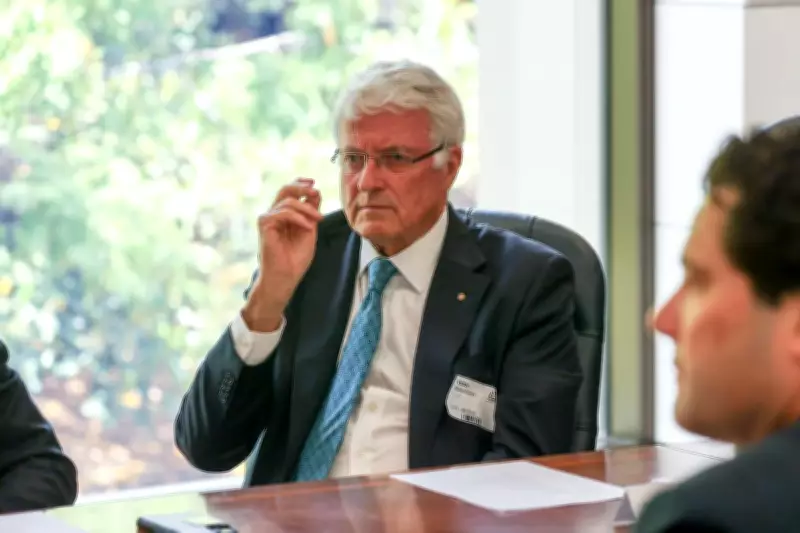
Wesfarmers chair Michael Chaney has strongly advocated for the preservation of Western Australia's GST deal, joining a coalition of prominent business leaders in urging the Commonwealth not to dismantle the arrangement that has delivered the state a substantial $43 billion windfall. This call comes as the Productivity Commission reviews the 2018 agreement, which guarantees WA no less than 75 cents in the dollar for annual GST payments.
Business Leaders Unite in Support
Michael Chaney collaborated with notable figures including Nigel Satterley, John Poynton, and Andrew "Twiggy" Forrest, working alongside the Chamber of Commerce and Industry WA (CCIWA) to submit a formal GST submission to the Productivity Commission this week. Their collective effort underscores the broad-based support within WA's business community for maintaining the current system.
"We cannot revert to a system that discouraged resource development, caused volatile boom-and-bust cycles, and undermined efficiency at a time when productivity growth is critically important," Mr Chaney emphasized. "Stability provides greater certainty and signals to international investors that Australia is an excellent place to invest and conduct business."

Economic Stability and National Contribution
In its submission, CCIWA highlighted how the GST deal has fostered economic stability, which is essential for supporting Australia's most economically significant state. The agreement has allowed Western Australia to continue its substantial contributions to the national economy through its industry, businesses, and workforce.
"Western Australia's industry, businesses, and workforce contribute significantly to the national economy, and the current GST system means this state can continue to do the heavy lifting," Mr Chaney stated. "The 2018 GST reforms provide stability and give certainty in every state that a reasonable level of services and infrastructure can be delivered to grow businesses and communities."
Political and Economic Context
Submissions to the Productivity Commission closed this week, with the Federal Government expected to make a decision on WA's GST deal next year. This review occurs amid ongoing criticism from eastern states' political leaders, economists, and commentators, who argue that WA's massive iron ore royalties diminish the need for its current GST allocation, projected to be nearly $8 billion this financial year.
Recent financial data released by the WA Government supports the state's robust economic position, showing an operating surplus of $2.3 billion for the first half of this financial year. The budget is on track for its eighth consecutive surplus, with the full state budget anticipated to be delivered in May.
The debate over the GST deal reflects broader tensions between state and federal fiscal policies, with WA business leaders like Chaney positioning the agreement as vital for long-term economic planning and international competitiveness.