Penny Wong Warns Middle East War's 'Enormous Effect' on Australians
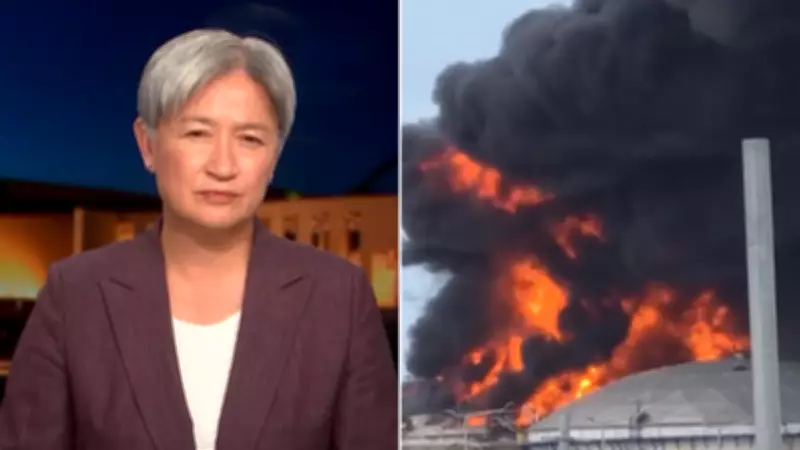
Foreign Minister Penny Wong has issued a stark warning that the escalating war in the Middle East is having an enormous effect on Australians, with no clear resolution in sight. Her comments highlight the growing economic and social toll of the prolonged conflict, which continues to disrupt global stability and energy supplies.
Government Seeks Clarity on War Objectives
Wong's remarks follow Prime Minister Anthony Albanese's recent call for US President Donald Trump to provide more clarity on the conflict's objectives. The war, which has dragged on for an extended period, is driving significant disruption in global energy markets, leading to rising costs for consumers worldwide.
"We still engage with the United States," Wong stated, "but the prime minister was simply making a very important point: there is a very substantial economic cost to this war." She emphasized that the consequences are being felt acutely by Australians, particularly at the petrol pump, where fuel prices have surged due to ongoing instability.

Impact on Global Energy Markets
The foreign minister explained that the war's ripple effects are being driven by persistent volatility in energy markets across the globe. "This war is having an enormous effect on global energy markets, and that means an effect on Australia," she said. Despite the high fuel prices and uncertainty over supply, Wong firmly ruled out any consideration of turning to Russian oil to alleviate the pressure.
"We maintain our sanctions on Russian oil," she affirmed. "That's because we don't want to fuel Mr Putin's war machine." This stance underscores Australia's commitment to international sanctions, even as domestic costs mount.
US Military Objectives and Uncertainty
Wong pointed to recent comments from US Secretary of State Marco Rubio, who outlined military objectives aimed at limiting Iran's capabilities. These objectives include targeting Iran's navy, air force, and missile production capacity to reduce threats to global stability.
"Secretary Rubio overnight spoke about the US military objectives," Wong noted. "They were the same as that which they announced at the beginning of this conflict: the Iranian navy, the Iranian air force, to reduce missile launches, to reduce their capacity to produce missiles."
However, she expressed deep uncertainty about the war's conclusion, stating, "This war has gone on a long time. Ultimately, the only people who know when it will end is the US, Iran and Israel." This lack of clarity adds to the anxiety for Australians facing economic pressures.
Australia's Defensive Role
Wong stressed that Australia's involvement in the conflict remains strictly defensive. "We're not taking action against Iran, and we are not playing an offensive role in this war," she clarified. "What we are doing, the contribution we are making, is defensive, and that's because Iran has chosen to attack so many other countries, including countries where we have a lot of Australians."
This defensive posture aims to protect Australian interests and citizens abroad, while avoiding direct engagement in offensive operations. The government continues to monitor the situation closely, balancing international alliances with domestic concerns as the war's impact widens.