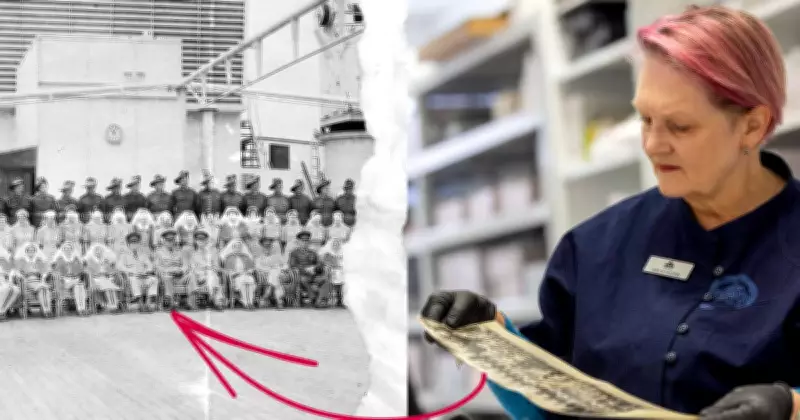
Newly discovered photographs of the Australian Hospital Ship Centaur have shed light on the vessel's final days before its tragic sinking during World War II, offering a poignant glimpse into the lives lost in one of Australia's worst maritime disasters.
Centaur's Last Voyage Captured on Film
The images, recently unearthed from a private collection, show the Centaur anchored in Sydney Harbour in early 1943, just weeks before it was torpedoed by a Japanese submarine off the coast of Queensland. The photos reveal the ship in its full hospital configuration, complete with Red Cross markings and a white hull, indicating its protected status under international law.
Historians have described the find as significant, providing a rare visual record of the vessel's appearance and daily operations. The Centaur was serving as a hospital ship, transporting wounded soldiers and medical personnel, when it was attacked on May 14, 1943. Of the 332 people on board, only 64 survived, making it one of the deadliest attacks on a hospital ship in history.

Personal Stories Emerge
The photographs also include images of crew members and medical staff, many of whom perished in the sinking. Among them is Sister Ellen Savage, one of the few survivors, who was later awarded the George Medal for her bravery. The photos capture the ship's bustling decks and the camaraderie among those on board, underscoring the human cost of the tragedy.
Dr. John Thompson, a military historian at the Australian War Memorial, said the images provide a new perspective on the event. "These photos bring us closer to the individuals who served on the Centaur. They remind us that behind the statistics are real people with families, hopes, and dreams," he said.
Controversy and Legacy
The sinking of the Centaur remains a subject of controversy, as the Japanese government has never formally acknowledged responsibility or issued an apology. The attack has been condemned as a war crime, given the ship's clearly marked status as a medical vessel. The discovery of these photos has reignited calls for a formal investigation and recognition of the incident.
The Australian War Memorial plans to display the photographs in a forthcoming exhibition dedicated to the Centaur. The exhibition will also feature personal artifacts from survivors, including Sister Savage's life jacket and diary entries describing the harrowing ordeal.
For the families of those lost, the photos offer a bittersweet connection to their loved ones. Margaret Collins, whose grandfather was a nurse on the Centaur, said seeing the images was emotional. "It's like stepping back in time. I can almost feel his presence," she said.
The Centaur's story continues to resonate as a symbol of the horrors of war and the resilience of those who serve. The newly discovered photographs ensure that the memory of the 268 lives lost will not fade.