For Newcastle sisters Aunty Lacey Simon and Aunty Maree Simon-Ahoy, May 26 is a day of painful memories and enduring sadness. It is also a day of healing and sharing their story so the next generation does not forget.
Emotional Recollections at School
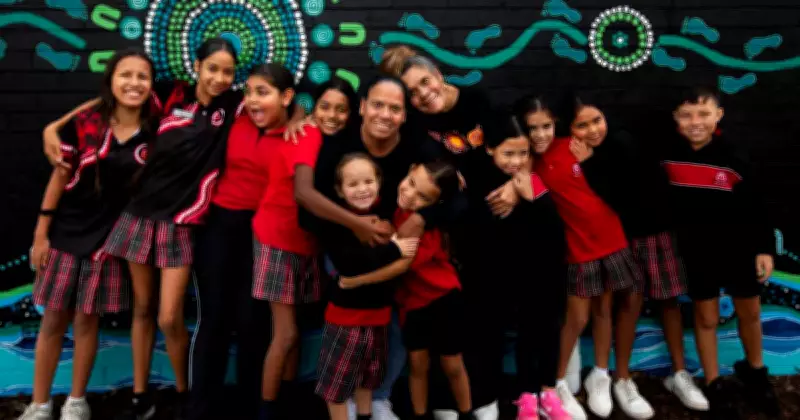
On National Sorry Day, the Aboriginal siblings spoke to students at Edgeworth Public School about how, at just three-and-a-half and six years old, they were ripped away from their family. Among the audience were 12 of the Simon great-grandchildren, including four of Ms Simon's grandchildren and the rest grandchildren of her siblings.
"Today, telling my story was the first time I broke down and was very emotional telling something that I barely remember," Ms Simon said.

National Sorry Day commemorates the mistreatment of Aboriginal and Torres Strait Islander people who were forcibly removed from their families, known as the Stolen Generations. Ms Simon-Ahoy emphasised the importance of speaking out, saying, "We need to get it out into the schools and the wider community. To teach that we are all just one people on earth, no matter the colour of your skin, we all bleed red."
The Day They Were Taken
On February 22, 1973, Gary and Brenda Simon were living with their seven children in Gilgandra, western NSW, after moving from Blackalls Park. While Mr Simon was at work, a government official knocked on the door and said he was there to take the children away. This occurred four years after all states had officially repealed the legislation allowing for the removal of Aboriginal children under the policy of protection in 1969.
The sisters recalled being taken with their five siblings to the police station before their father tried to fight the action in court. They were then brought to the local hospital, washed and cleaned with methylated spirits, and the seven siblings were separated into institutions or foster homes. Their parents were told the removal was due to neglect and overcrowding, a claim the sisters strongly dispute. "We were so disgusted with that report, and we asked mum and she cried and said that never happened," Ms Simon-Ahoy said.
Life in Institutions and Foster Care
Ms Simon-Ahoy said her youngest sibling was about six months old, and the oldest was eight. "Me, my older sister and my brother were getting taken out of institutions, putting into another and moving from foster home to foster home. We were very confused, we didn't know if we'd be there for a week, a month or a year." She struggled with education due to constant moves between schools.
Ms Simon, the younger of the two, was placed in Thornbury Lodge in Sydney with her brother. After more than a year of legal fighting, Ms Simon and her brother were the first to return home. Some siblings did not come home for at least five years. "I remember our two sisters coming for visits with their foster parents. We would watch out the window and think why are our sisters living with other people. We were strangers to them, their own siblings," Ms Simon said.
Heroes and Healing
Surrounded by their children and grandchildren, the sisters credited their parents for their resilience. "Mum and dad are our biggest heroes, we could have been living out in the world if they didn't fight for us," Ms Simon-Ahoy said. Their mother was unable to attend the school event, and their father passed away on February 22, 2025.
Ms Simon's granddaughter, Akeiylah Clarke, said hearing her grandmother's story was sad but also inspiring. "I was proud of them for getting up there." Her cousin Latrista Gordon added, "It was very emotional but in a good way to let us children know what they had to go through."
School Activities for Reconciliation Week
Edgeworth Public School held a week of activities for Reconciliation Week, including Aboriginal language classes in preschool and student engagement with Indigenous artwork and literature. Principal Alex Montgomery said the school has 133 students who identify as Aboriginal or Torres Strait Islander. "National Sorry Day and Reconciliation Week is a time to reflect on Australia's history... and stop and recognise where we can help create a place where everyone feels safe," she said.