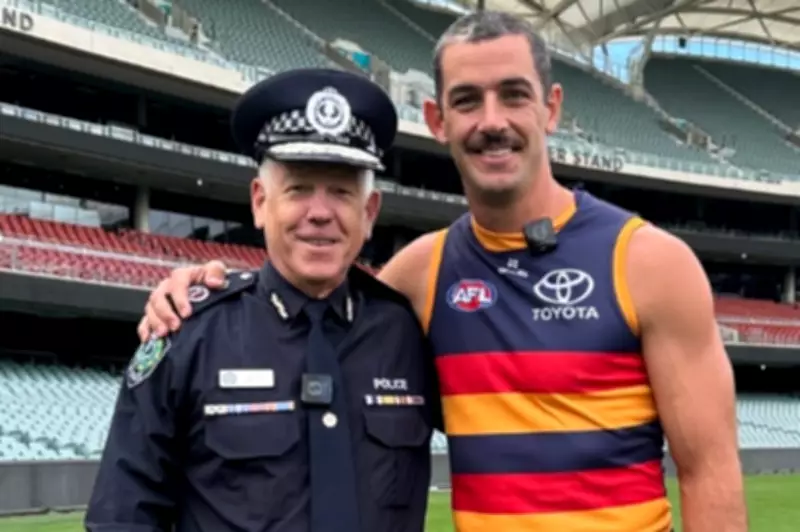
Former South Australian Attorney-General Michael Atkinson has strongly criticised the state's Police Commissioner for serving on the board of the Adelaide Crows AFL club, labelling the arrangement as 'unacceptable' and a clear conflict of interest.
Unprecedented Dual Role Under Fire
Mr Atkinson, who served as Attorney-General for over a decade, expressed his concerns in a recent opinion piece, arguing that the Commissioner's position with the Crows undermines public confidence in the independence and impartiality of the police force. He stated that the role creates a perception that the police may be influenced by the interests of a prominent sporting organisation.
Conflict of Interest Allegations
The former Attorney-General pointed out that the Police Commissioner is responsible for enforcing laws and maintaining order, while also being part of a board that makes decisions affecting a major club. This dual role, he argued, could lead to situations where police decisions might be seen as favouring the Crows. 'The community must have absolute trust that the police are above reproach,' Mr Atkinson wrote.

He further noted that similar arrangements would not be tolerated in other sectors, such as the judiciary or public service, where strict rules prevent conflicts of interest. 'Why should the police be any different?' he questioned.
Commissioner's Defence of His Role
The Police Commissioner has defended his board membership, stating that it does not interfere with his duties and that he acts in a personal capacity. He emphasised that the role is voluntary and that he has always maintained a clear separation between his police responsibilities and his involvement with the Crows.
However, Mr Atkinson dismissed these arguments, insisting that the perception of a conflict is enough to damage the reputation of the police force. 'It's not just about actual bias; it's about the appearance of bias,' he said.
Call for Review
Mr Atkinson has called for a review of the arrangements governing senior police officers holding outside positions. He urged the state government to consider implementing stricter guidelines to prevent such conflicts in the future. 'We need to ensure that our police force is seen as entirely independent and free from any potential influence,' he concluded.
The controversy has sparked debate among political and sporting circles, with some supporting the Commissioner's right to engage with the community, while others echo Mr Atkinson's concerns. The state government has yet to comment on the matter.