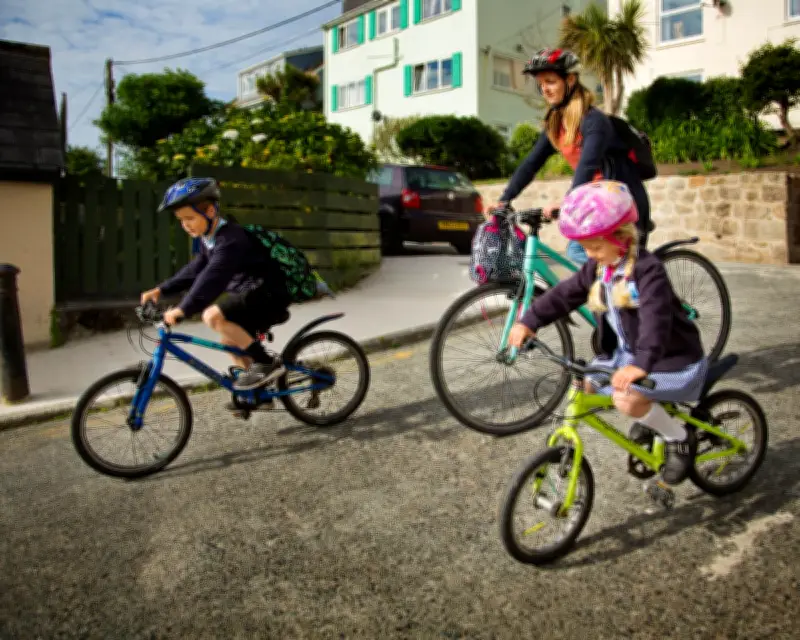
The UK government has announced an ambitious plan to increase active travel among schoolchildren, aiming for 60% of pupils in England to walk, cycle, or wheel to school by 2035. Transport Secretary Heidi Alexander unveiled the new cycling and walking investment strategy on Friday, marking a significant shift in policy since the Boris Johnson era.
Key targets and investment
The strategy includes a target for at least 55% of shorter urban trips to incorporate some form of active travel by 2035. To achieve this, the government has pledged a total active travel spend of £4.5 billion over five years. By 2030, the plan aims to create 5,000 new safe routes and 10,000 crossings around schools in England.
Currently, only about 45% of pupils participate in active travel. Previous targets focused on primary-aged children, who tend to live closer to schools, whereas the new target covers all pupils aged five to 16.

Minister’s personal commitment
Alexander emphasised that the strategy focuses on everyday travel needs, distinguishing it from major infrastructure projects like HS2 and Great British Railways. “There is a world in which you only talk about planes, trains, and automobiles, and I’ve been very clear that I didn’t want that to happen,” she said.
The transport secretary also addressed concerns about a “war on motorists,” stating, “Most people in this country drive, they walk, they cycle, they might use public transport, and so trying to divide people into different categories is a complete waste of time.”
Alexander shared her personal connection to the initiative, describing herself as an “overweight 51 year old woman” who finds it difficult to engage in formal exercise programs like “couch to 5k.” Instead, she advocates for incorporating small amounts of physical activity into daily routines, such as cycling to the supermarket.
Health benefits and public health advice
The strategy aligns with advice from England’s Chief Medical Officer, Chris Whitty, who has stated that the most important public health measure is to get inactive people to do something. Alexander noted that any active travel, even combined with other modes like cycling to a train station, contributes to better health.
Critics had previously slammed an initial draft of the plan for lacking specific targets. The inclusion of measurable goals is seen as a response to that criticism.
The previous active travel strategy under Boris Johnson included a target for 55% of urban trips, but the new version expands this to cover “stages,” meaning that combining active travel with other modes counts toward the goal.