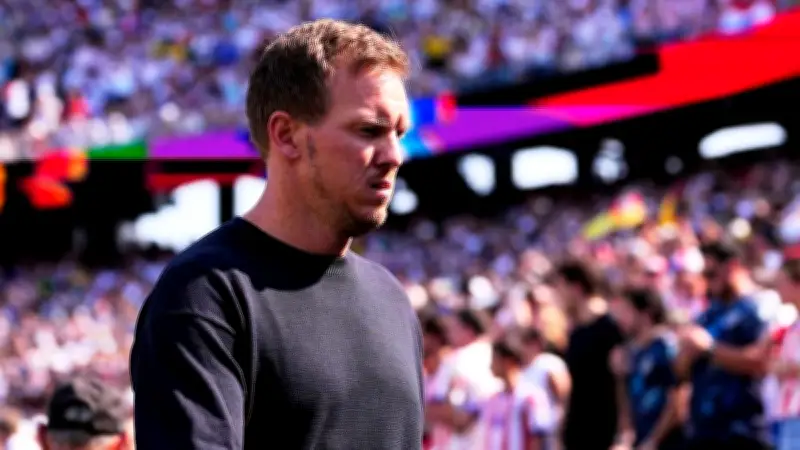
The German Football Federation (DFB) announced on Friday that Julian Nagelsmann has resigned as head coach of the national team, following a disappointing round-of-32 exit at the World Cup. The DFB confirmed it will now seek talks with former Liverpool manager Jurgen Klopp, who has indicated a willingness to take over.
DFB Statement Confirms Nagelsmann's Departure
In a statement, the DFB said: "Stakeholder representatives and the supervisory board of DFB ... on Friday unanimously decided, on the proposal of DFB president Bernd Neuendorf, to immediately terminate the contractual relationship with Germany coach Julian Nagelsmann." The statement added that Nagelsmann had requested to be released from his duties in a confidential conversation the previous day, and the request was granted.
World Cup Exit Sealed Nagelsmann's Fate
Nagelsmann's resignation came after Germany lost 4-3 on penalties to Paraguay in the round of 32 on Monday, ending their World Cup campaign prematurely. Criticism had mounted against Nagelsmann, with the team also losing their final group match against Ecuador, despite winning their first two games against Curacao and Ivory Coast.

Nagelsmann's Tenure: 37 Matches, Mixed Results
Nagelsmann, 38, took over the national team in September 2023, succeeding Hansi Flick. During his tenure, he oversaw 37 matches, winning 23, drawing seven, and losing seven. Highlights included leading Germany to the quarter-finals of the home European Championship in 2024 and into the Nations League finals last year.
Jurgen Klopp Emerges as Frontrunner
Former Borussia Dortmund and Liverpool coach Jurgen Klopp, 59, is now the official frontrunner to replace Nagelsmann. Klopp currently serves as head of Red Bull's global football operations. The DFB statement confirmed: "With regard to filling the coaching post, the DFB leadership will now seek talks with Jurgen Klopp. He has already signalled his fundamental willingness to take on the position."
Germany's Next Fixtures
Germany's next match is their Nations League opener on September 24 against the Netherlands. The group stage also includes matches against Greece and Serbia, running until November.