

The 2026 FIFA World Cup, featuring 48 teams and 104 matches across 16 host cities in the United States, Canada, and Mexico, is projected to be the largest sporting event in history in terms of attendance, revenue, and global viewership. It also promises to be the most technologically advanced, with artificial intelligence (AI) influencing nearly every aspect of the tournament. This reflects a growing trend of AI integration in soccer and elite sports, where tools are used not only to optimise athlete performance but also to enhance match officiating, event security, and fan engagement. Let’s examine how AI will be deployed at the World Cup, who stands to benefit, and what potential risks may arise.
How AI Will Be Used on the Pitch
In a review of AI applications in soccer, several on-pitch uses were identified: tools for player, team, and match evaluation; forecasting match outcomes and in-game events such as expected goals, assists, corners, passes, and opposition tactics; monitoring athlete workload; injury prediction and detection; and talent scouting. At the World Cup, coaches will leverage AI alongside conventional data to shape their game strategies, identifying opposition strengths to neutralise and weaknesses to exploit. High-performance staff will use AI to monitor player health and wellbeing, and to predict potential injuries. The dreaded penalty shoot-out is one area where AI will have a direct impact. Teams will use AI to synthesise historical data and gain insights into goalkeepers’ and penalty takers’ likely strategies. A key advantage is the speed of analysis—what once took days of manual effort can now be accomplished in hours, even for entire squads. If a match goes to a shootout, AI could very well influence the winning kick or save.
What About Referees?
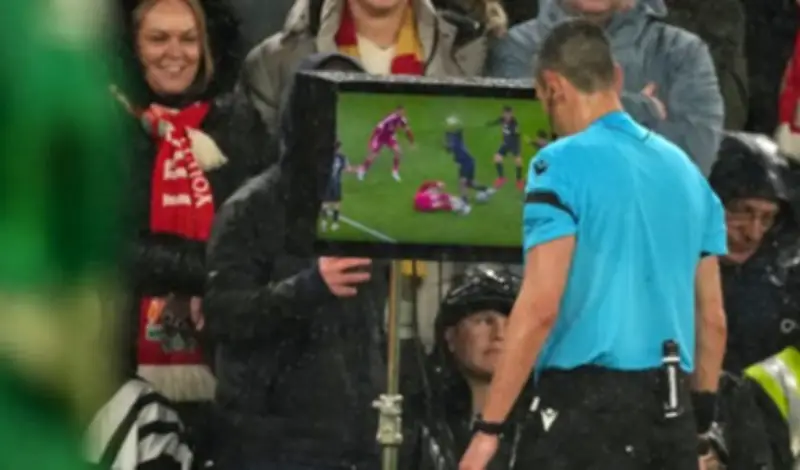
Match officials will also benefit from AI support. While semi-automated offside technology was introduced at the 2022 World Cup, it will be enhanced with AI-enabled 3D avatars of every player. This aims to improve referees’ decision accuracy by using more precise body dimensions of the players involved. The avatars will also provide more engaging content when Video Assistant Referee (VAR) decisions are shown to fans, featuring realistic avatars with players’ faces, kits, and even hairstyles. Another officiating innovation is referee view technology, which uses body cameras to capture in-game footage from the referee’s perspective. AI will stabilise these images to enhance the fans’ immersive experience.

What About Off the Field?
AI will also be deployed for crowd management and logistics. FIFA has built an “Intelligence Command Centre” that connects data across matches, venues, and broadcasters, along with digital twin models of stadiums to monitor and forecast crowd behaviour. This aims to control crowd-related issues such as bottlenecks.
Are There Any Risks?
Despite the many benefits, a broad spectrum of risks must be managed. Key concerns with AI tools include substandard outputs and the loss of skills and meaningful work for humans. To mitigate this, teams should ensure AI is used only to support human decision-making, not replace it. Data privacy and security are critical, as confidential or sensitive information could be leaked or accessed by unauthorised or malicious actors. The use of AI in security and crowd management also opens the door to highly disruptive cyber attacks. Equality could be an issue, with wealthier teams potentially gaining an advantage through more sophisticated tools. To level the playing field, FIFA has introduced Football AI Pro, an AI tool available to all teams. This soccer-specific large language model supports pre- and post-match analysis and provides access to over 2,000 metrics, ensuring all nations have at least some level of AI support. However, it remains to be seen which nations will actually use it. Another potential adverse outcome is tactical homogenisation, where games become predictable because every team follows the same AI-generated game plan. Sadly, AI will likely be used for nefarious purposes, such as ticketing scams involving AI-generated images, deepfakes, websites, and phishing emails. Fans should remain vigilant at all times.

AI Will Be Everywhere
AI is fast becoming a key component of high-performance sport. It will be leveraged throughout the tournament to support preparation, performance, and recovery. While it could widen the gap between larger and smaller nations, it might also give smaller nations a new edge. So could 2026 be the year AI genuinely contributes to a World Cup win? We won’t see an AI agent scoring a goal or a robot coach calling the shots (at least not yet), but there is no doubt the winner of the tournament will have relied on AI along the way. As for who that will be—well, we could always ask AI.